NNTC Implements Virtual Reality Training System for Dubai Municipality
Discover how NNTC implemented a virtual reality training system for Dubai Municipality to improve safety readiness and support plant operations.
Industrial facilities depend on precision, consistency, and safety. At sewage treatment plants, even a small operational mistake can lead to safety incidents, equipment damage, or costly downtime. That is why more organizations are exploring a virtual reality training system to improve workforce readiness before employees enter live operating environments.
In Dubai, the Sewage Treatment Plants and Drainage Network Department at Jebel Ali partnered with NNTC to modernize operator training through immersive simulation. Built as a detailed digital replica of the plant using HTC VIVE technology, the solution gives employees a safe environment to practice plant operations, maintenance procedures, and emergency scenarios before performing them on site.
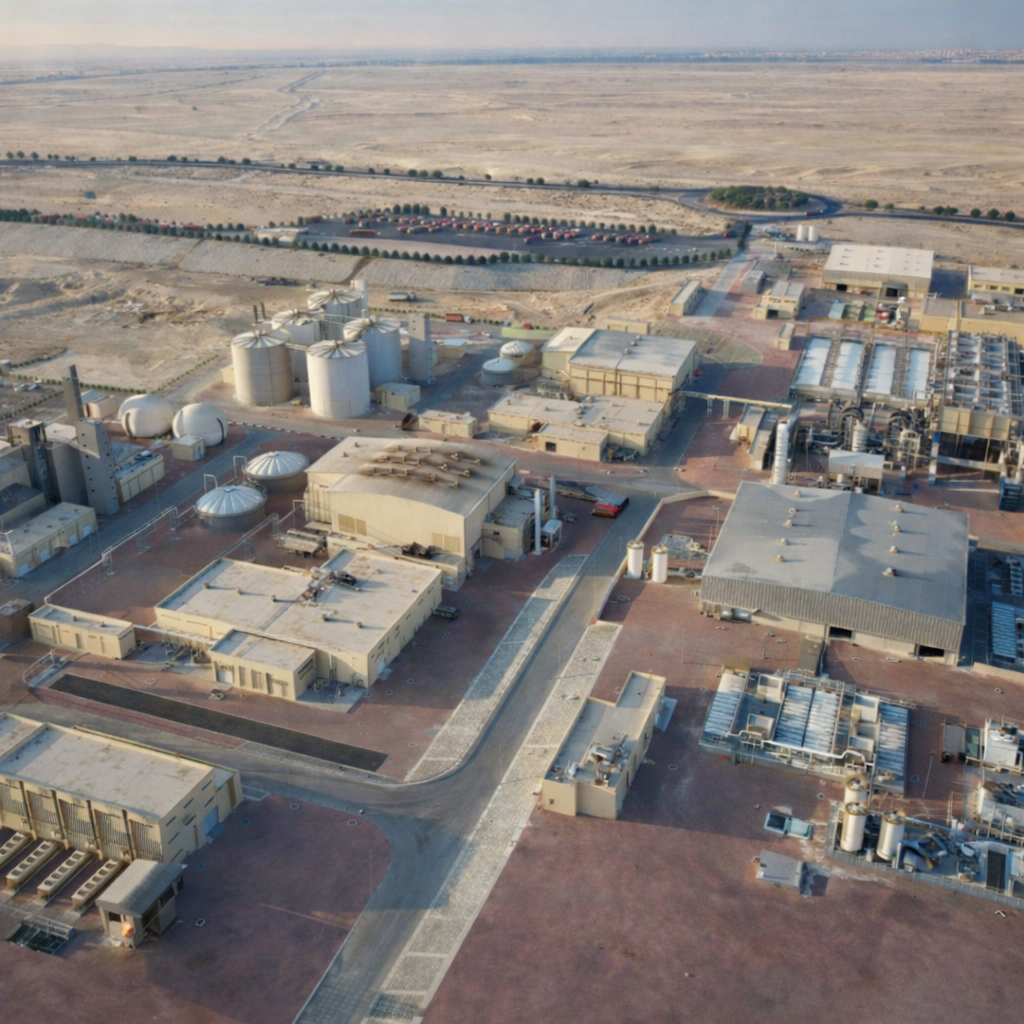
Jebel Ali Sewage Treatment Plant site.
The challenge: training for high-risk industrial operations
Sewage treatment plants are complex environments with strict process requirements, interconnected systems, and limited room for error. Teams need to understand equipment behavior, process flow, interlocks, maintenance steps, and emergency responses, all together and often under pressure.
Traditional training methods can cover theory, but they are less effective when the goal is to build confidence and muscle memory for real work. In live plant environments, mistakes carry consequences.
That creates a clear need for VR safety training that lets employees learn by doing, without affecting active systems or exposing people to unnecessary risk.
The solution: a virtual reality training system built for real plant work
To address this challenge, NNTC implemented an advanced Virtual Reality training system for Dubai Municipality’s Sewage Treatment Plants and Drainage Network Department in Jebel Ali.
The system was designed as a detailed virtual replica of the plant and delivered as a practical training platform, not a demonstration environment. Using HTC VIVE head-mounted displays, trainees can move through three-dimensional models of the facility and perform tasks in a realistic, immersive setting.
This approach allows employees to practice:
- Equipment operation and maintenance procedures
- Process flow and interlocks
- Emergency drills and safety scenarios
- Step-by-step task sequencing for complex interventions
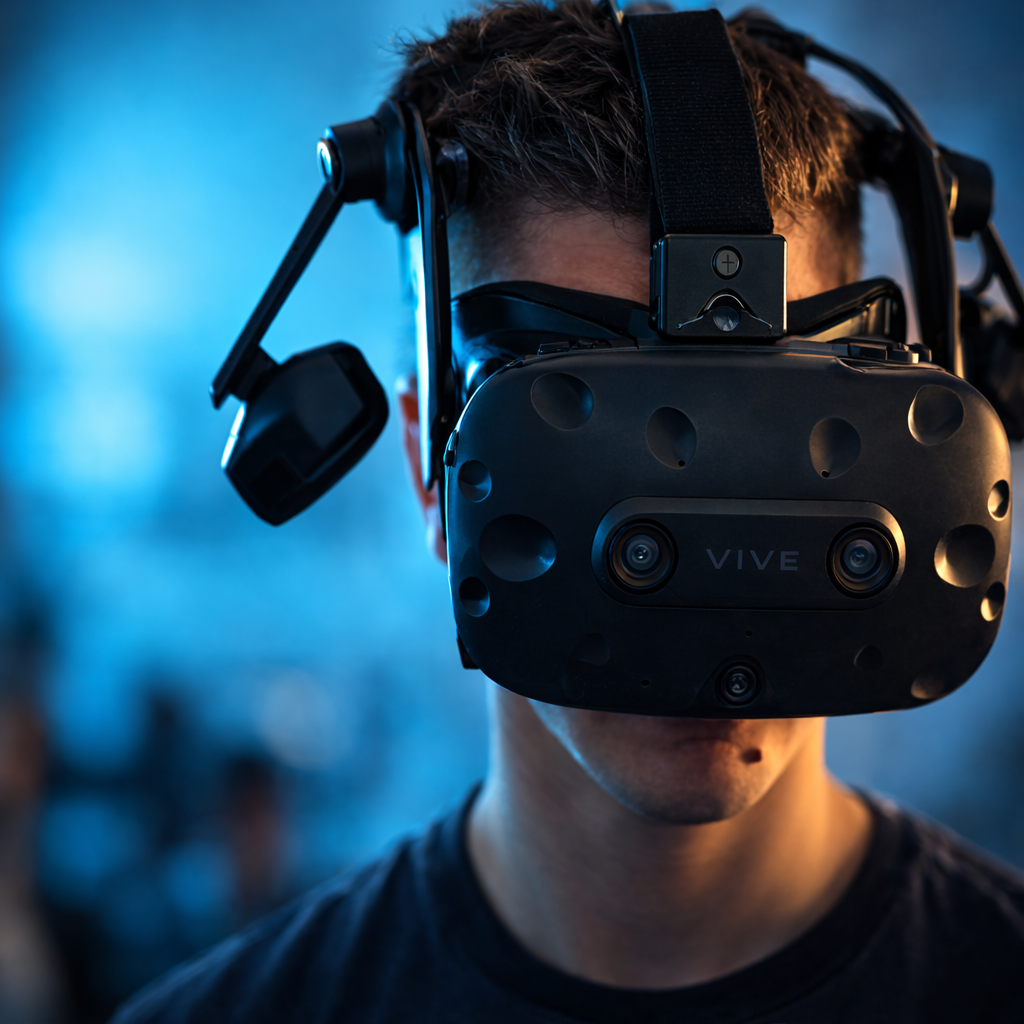
A trainee uses the VR training system to practice plant procedures in a controlled environment.
Key features of the VR training system
A digital twin of the plant:
The implementation includes a digital twin supported by mathematical models of technological processes. This allows the virtual environment to reflect plant logic, operating conditions, and process behavior with a high level of realism.
More than 7,000 interactive elements:
The system includes over 7,000 interactive elements, giving trainees the ability to engage with operational details that matter in practice, not just move through a static visual model.
1:1 scale and realistic interaction:
The training environment is built at 1:1 scale to support recognition, orientation, and realistic task execution. Scenario objects are detailed, background assets are optimized for performance, and textures help distinguish between materials and components clearly.
Immersive training with HTC VIVE:
Using HTC VIVE headsets, trainees can navigate the virtual plant and perform simulated tasks in a way that closely reflects real operator interaction with the environment.
Training analytics and reporting:
Training data is captured automatically. After each scenario, results are displayed to the trainee, while detailed outcomes are saved for review, reporting, and future evaluation.
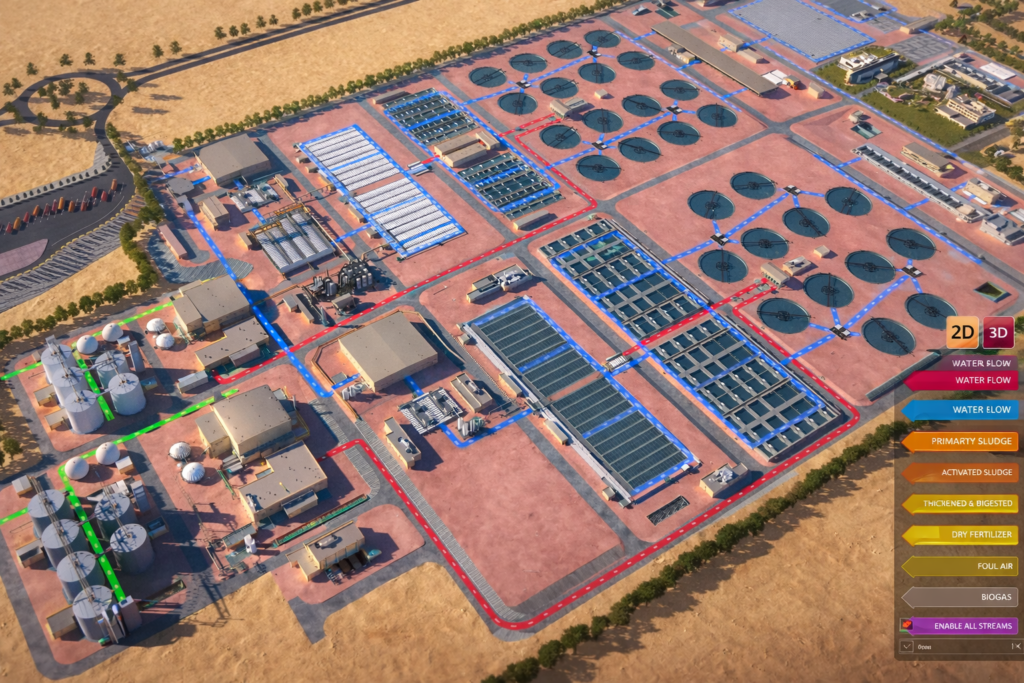
The VR training system includes a 3D digital twin of the plant to support realistic operator training.
How the virtual reality training system works
Operator interaction in a simulated environment:
Employees use VR headsets to move through the plant model and complete procedures as they would on site. This includes operational steps, maintenance tasks, and emergency drills.
Real-time process response:
A key feature of the system is real-time process behavior. Every action taken in the simulation is reflected immediately in an MTS mathematical model running as an independent software layer.
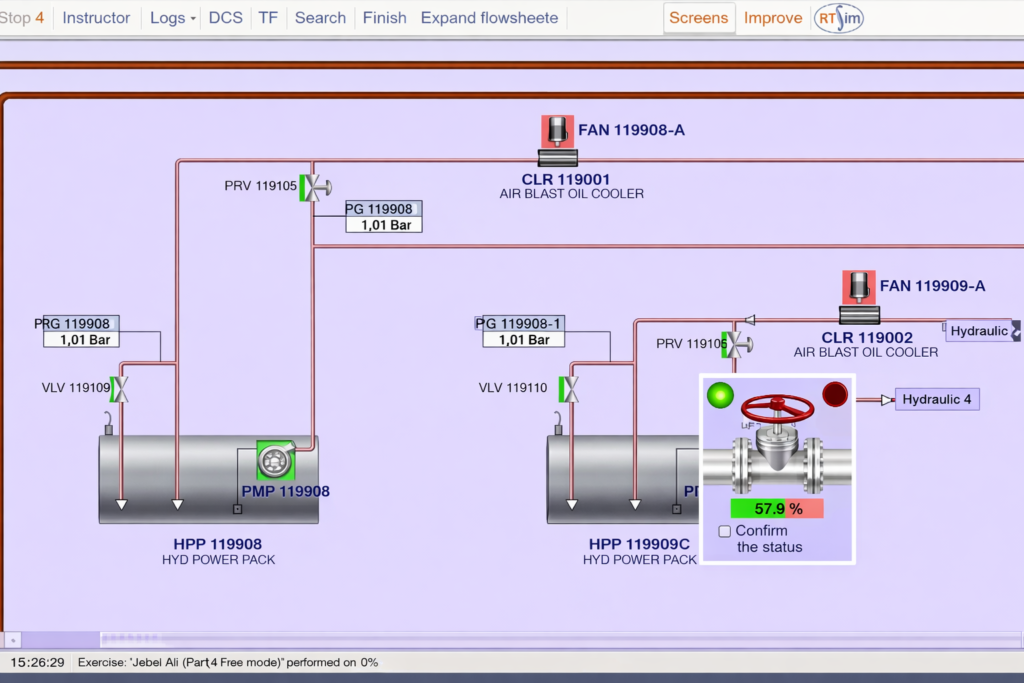
The Mathematical Model Application simulates real-time equipment behavior and process response during training scenarios.
This creates realistic cause-and-effect changes, such as:
- Valve opening and closing
- Equipment state changes
- Process response to operator actions
- Interlock-driven behavior across systems
That makes the platform more than a visual walkthrough. It functions as an immersive training system tied to real process logic.
Structured review after every session
Once a scenario ends, trainees can review their performance and instructors can assess outcomes in a more consistent way. That supports repeatable learning and better long-term skill development.
Project approach: training before risk begins
One of the strongest aspects of the project is the way it changes the timing of learning. In industrial environments, the best time to build competence is before the job begins, not during live work.
That is where VR safety training creates value. Employees can make mistakes, repeat scenarios, and strengthen procedural memory in a setting where errors become lessons instead of incidents.
As Dmitry Doshaniy, General Manager at NNTC, explained, “the system allows enterprises to train personnel in a safe, parallel digital environment where they can practice operations, maintenance procedures, process flow, interlocks, and emergency drills without affecting the operational process.”
Outcomes: measurable impact for plant operations
According to Dubai Municipality, the VR training hub is expected to deliver measurable operational improvements, including:
- up to 7% increase in employee productivity
- 50% reduction in human error
- 30% reduction in emergency downtime
- 5% savings in maintenance and operations budget
These outcomes point to the wider value of a virtual reality training system for sewage treatment plants. The benefit is not limited to training quality. It extends to uptime, process stability, cost control, and the quality and quantity of treated water.
Daniel Khayat, Head of Product at HTC MEA, noted that VR-based training helps build skills and muscle memory, reduce equipment downtime, and allow employees to train safely, including for emergency scenarios.
By combining immersive simulation, digital twin logic, and measurable training outcomes, NNTC helped Dubai Municipality create a safer and more effective way to prepare teams for high-risk plant operations. The project shows how virtual reality training can move beyond experimentation and become a practical tool for infrastructure performance.
About DM STP&N :
Dubai Municipality’s Department of Sewage Treatment Plants and Networks serve the majority of population in Dubai and meet the needs of local businesses and industry. The department also provides a sustainable supply of water for irrigation and district cooling. The department is spearheaded by Eng. Mohammed Ahamed Al Rayees, Director and is responsible for the management of waste water infrastructure and facilities in Dubai. The department headquarter is located strategically at Al Warsan which comprises 900 employees, more than one hundred fleets, well equipped workshop of international standard and 11 major sewer pumping stations, 107 subsidiary sewer pumping stations, 50 storm water stations, 2 major sewage treatment plants, 4000 kms of networks and 97 private sewer treatment plants.
About NNTC :
NNTC is a UAE-based IT solution provider and software developer. NNTC delivers innovations and digital transformation projects with the convergence of best-of-breed technologies and consulting services in areas such as video analytics, VR/AR, AI, robotics, IoT, Industry 4.0, and cyber security. The company serves some of the largest government entities in the UAE and has earned a reputation as a trusted solution provider and innovative technology expert.
View Dubai Municipality’s VR training video:
Read More:
- Location: Dubai
- Customer: Dubai Municipality
- Year: 2022
- Category: Digital Twin
