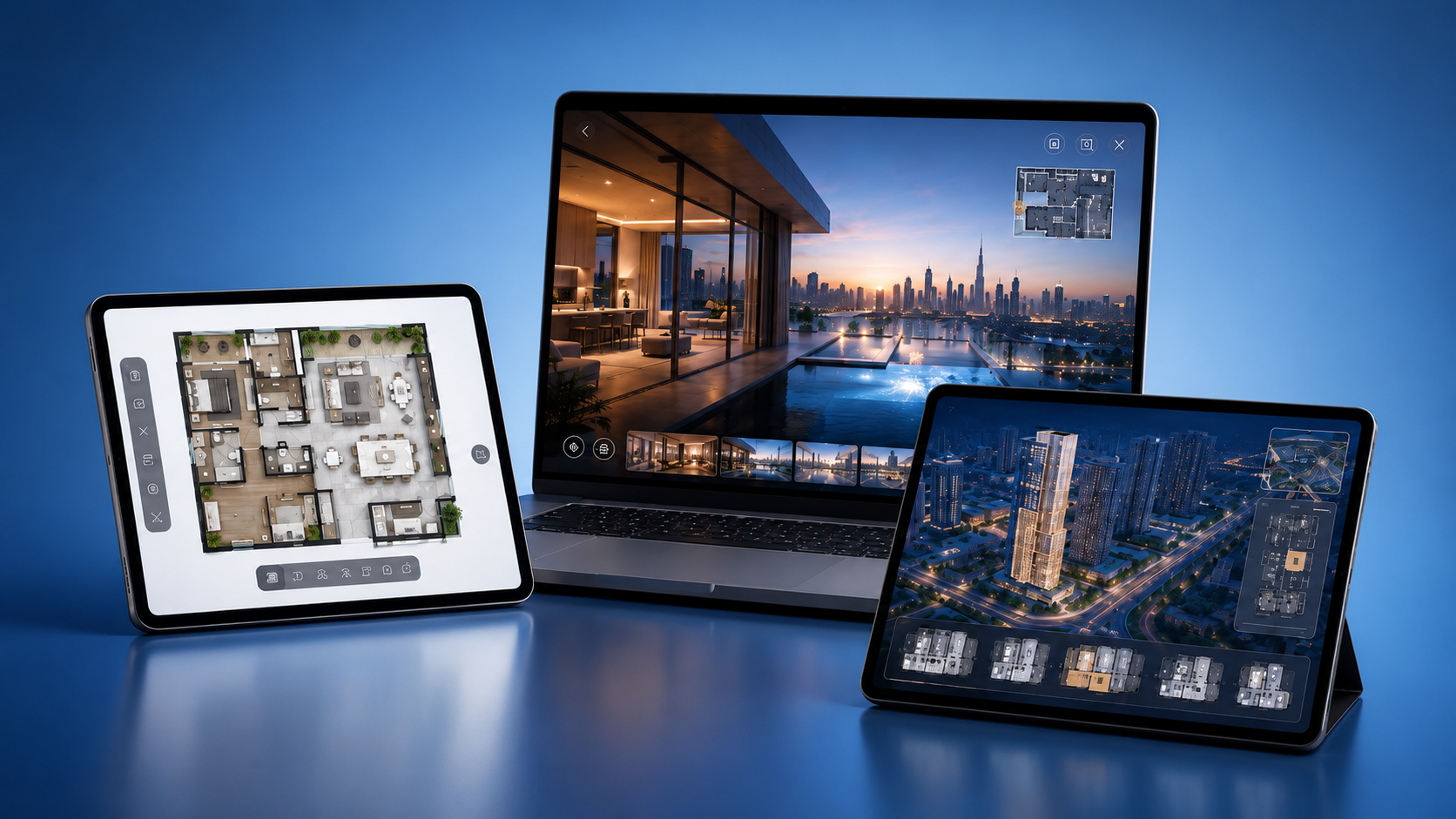
How do you create desire for unbuilt real estate projects when buyers cannot yet step inside them?
It is one of the hardest parts of off-plan sales. Buyers are being asked to connect with a future home, investment, or lifestyle before they can experience it in real life.
In a market like Dubai, where according to Property Finder , off-plan sales reached a record AED 68.8 billion in Q2 2025, that challenge becomes even sharper.
Competition is intense, buyer expectations are rising, and polished launch materials alone are not enough.
Developers need to create more than interest. They need enough clarity, context, and emotional pull to help buyers imagine the future property as something they could genuinely own, use, or invest in.
The Off-Plan Buyer Challenge: Why Attention Does Not Always Turn Into Desire
In off-plan real estate, attention is usually the easy part. The harder part is helping buyers feel that an unbuilt property could actually be theirs.
A project can look impressive in a render or launch campaign and still feel too abstract to act on. Buyers may notice the design, amenities, or location, but still stop short of desire if they cannot picture the property as part of their own future.
That challenge is visible across GCC demand as well. Regional demand research, including Knight Frank’s 2024 study of residential purchase intent in Qatar, reflects a broader pattern developers see across off-plan sales: visual appeal may create interest, but buyers move forward when a project feels relevant, understandable, and personally meaningful.
For developers, the real task is turning visibility into something more personal by helping buyers imagine the property as a place they could realistically live in, choose, or commit to.
What creates desire for unbuilt real estate projects
In off-plan real estate, desire usually comes from a few key elements that make a project feel more understandable, more tangible, and easier to imagine as part of a buyer’s future.
1. Believable visuals
Visual quality still matters when marketing off-plan real estate projects. If a project does not feel credible, it will struggle to build buyer trust or emotional momentum.
But the goal is not only to impress. It is to make the future property feel believable. That usually depends on more than polished renders alone. Details such as ray-traced lighting, physically based materials, and real-time architectural visualization help buyers read the space more naturally, from how light falls across a room to how finishes, scale, and atmosphere feel in context.
Buyers need that level of realism to stop treating the project as a marketing promise and start responding to it as a place they could imagine living in, investing in, or seriously considering for their future.
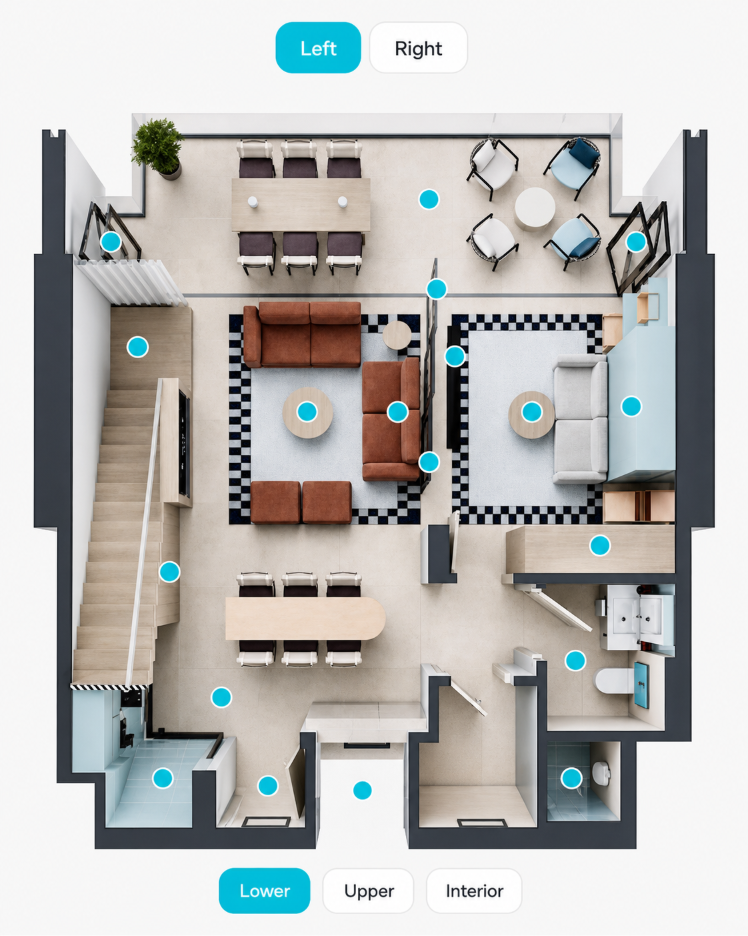
Interactive floor plan for off-plan unit discovery and layout comparison
2. 3D Exploration: Why It Matters in Off-Plan Real Estate
Desire grows when buyers can explore a project, not just look at it. In off-plan real estate, 3D exploration gives buyers something more useful than static visuals alone.
That matters because exploration reduces uncertainty. A 2024 NBER working paper by Miremad Soleymanian and Yi Qian found that virtual tours improve property information accessibility and support information gathering and buyer matching in real estate.
In practical terms, that means buyers move closer to desire when the experience helps them understand a property more actively, rather than leaving them to interpret it from static images alone.
To see how NNTC helps developers build that kind of buyer experience, explore our digital twin solutions for off-plan sales, including web-based 3D walkthroughs, and remote interactive sales tools.
3. Why Context Matters in Off-Plan Real Estate
Unbuilt real estate projects are often presented as isolated objects. A tower may look impressive in a render and still feel detached from the location, surroundings, and daily life around it. That weakens desire.
Buyers do not choose only a unit. They choose a setting, a routine, a neighborhood, a commute, a view, and a lifestyle.
When an off-plan project is shown in context, design becomes more than an image. It becomes relevant. This is especially important in off-plan real estate, where buyer attachment often depends on being able to picture how the future property fits into a real environment.
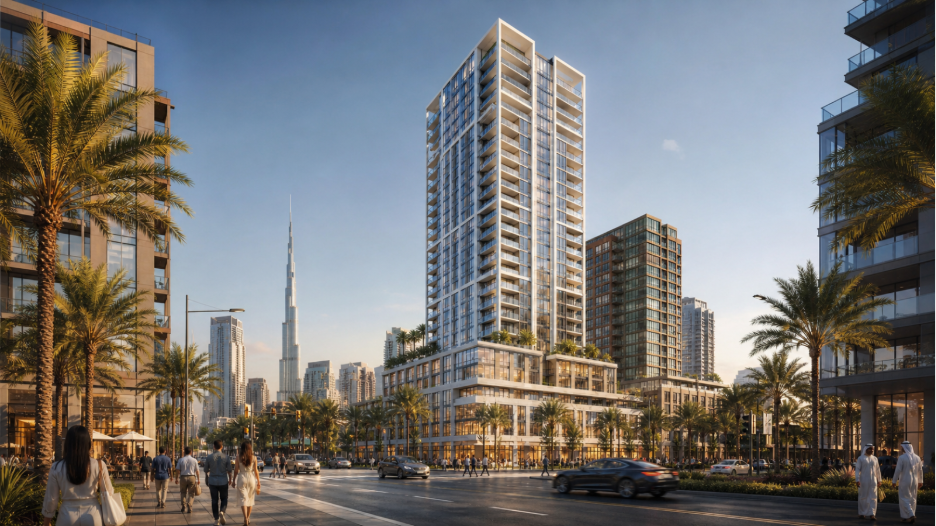
Digital twin of an off-plan tower in city context
4. Lifestyle storytelling that feels specific
Generic luxury language rarely creates much attachment anymore. Buyers have seen too much of it.
What works better is specific storytelling. Not vague claims about premium living, but clear scenes the buyer can imagine: morning light in the living room, a shorter drive, a better entertaining space, a clearer family layout, a quieter view, or amenities that make daily life feel easier and more social.
A strong regional example is Meraas’s positioning for Madinat Jumeirah Living Jomana Instead of relying only on broad luxury language, it describes “sleek, flowing spaces,” “beautiful vistas of the community and Burj Al Arab,” and “an enriching lifestyle with the best of Dubai nearby.”
That is what specific lifestyle storytelling does well: it helps buyers picture how the property fits into their routine, not just how the building looks in a render. The strongest storytelling does not only say a project is desirable. It helps the buyer understand why it would feel desirable to them.
5. Clearer unit discovery
Desire weakens quickly when choice becomes confusing.
In most off-plan launches, buyers are not deciding between one obvious option and another. They are comparing layouts, views, floors, building positions, orientations, and pricing. If that process feels fragmented, emotional momentum gives way to mental effort.
A stronger experience makes unit discovery simpler. It helps buyers narrow choices with less friction and more confidence. That is where an Interactive Sales Tool becomes especially useful, giving buyers and sales teams a clearer way to explore options, compare units, and move from attraction to preference.
Implementation considerations for property developers
To create desire for unbuilt real estate projects, developers need to use immersive content where hesitation usually appears in the buyer journey: when buyers are trying to understand the project, imagine daily life, compare units, and build enough confidence to move forward.
In practice, developers should ask where static materials stop being enough:
- Which moments in the buyer journey need more emotional pull?
Not every stage of the journey needs the same kind of content. Early on, buyers may understand the facts of a project without feeling any real connection to it. This is where immersive tools can help move the experience beyond information and into imagination, making the project feel more personal and easier to care about.
- Which parts of the project need to be explored, not just shown?
Some details are difficult to grasp through renders or brochures alone. Layout, flow, scale, views, and the relationship between different spaces often make more sense when buyers can explore them actively rather than look at them passively.
- Which contextual details make the project feel more real?
Buyers are not only choosing a unit. They are choosing a setting, a routine, and a lifestyle. Showing the surrounding environment, nearby amenities, views, and how the project fits into daily life can make the experience feel more grounded and believable.
- Where does unit comparison become difficult?
Interest can weaken when buyers have to compare too many options without a clear way to do it. Floor levels, layouts, orientations, views, and pricing can quickly become hard to process. A better experience makes comparison simpler and helps buyers move from general interest to a preferred option.
- How will the experience work across web, showroom, follow-up, and remote selling?
Immersive content should not be designed for a single presentation only. It should support the full sales process, from first online discovery to showroom discussions and later follow-up, so buyers can keep exploring and evaluating the project wherever the conversation continues.
Turning Immersive Content Into a Reusable Sales Asset
When immersive content is planned well, it stops being just a launch feature and starts becoming a reusable sales asset. Instead of serving one presentation moment, it can keep supporting the buyer journey across web, showroom, follow-up, and remote selling. That is what allows it to keep helping buyers understand the project, compare options, and move closer to a decision.
Research points in the same direction. In a 2024 study published in Computers in Human Behavior Maurizio Mauri and co-authors compared immersive and non-immersive real estate experiences. They found that immersive VR created a stronger sense of presence, a stronger emotional response, and a better overall user experience than less immersive formats, while also increasing willingness to visit the property in person.
In practical terms, that helps explain why immersive content creates more value when it is designed to support the wider buyer journey, not just the first impression.
How NNTC Helps Off-Plan Developers
NNTC helps property developers turn immersive technology into practical sales tools. Its solutions include Digital Twin experiences, Interactive Sales Tools, and the Virtual Hologram Table, each designed to support a different part of the buyer journey.
Instead of treating immersive formats as one-off visual features, NNTC focuses on making them useful across web, showroom, follow-up, and remote selling. To explore the right setup for your project, visit our solutions pages or get in touch with the team.
Read more:
Continue exploring how immersive technology shapes off-plan sales:
