4IR. How to exploit the Fourth Industrial Revolution

4IR

The majority of business leaders (63%) surveyed by PwC claimed that technologies of the Fourth Industrial Revolution (4IR) provide protection against an economic downturn. But how to find your way around this strange and seemingly unmanageable concept? Be brave, and I’ll show you a way in this blog!

What is 4IR?

4IR became a hot topic a few years back when the world realized how technologies impact everyday life and innovations skyrocketed, giving an optimistic view of the future coexistence of humans and machines.
4IR

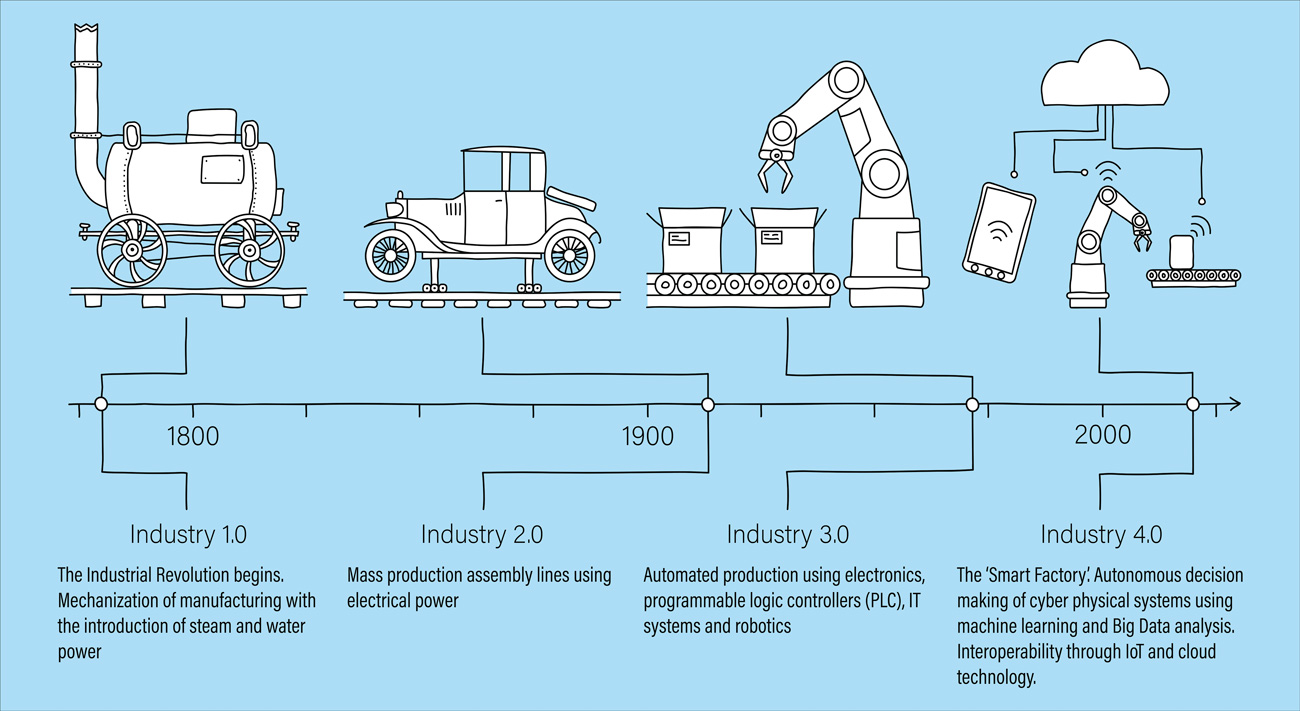
The Fourth Industrial Revolution is building on the Third, the digital revolution that has been occurring since the middle of the last century. It is characterized by a fusion of technologies that is blurring the lines between the physical, digital, and biological spheres.

said Klaus Schwab, Founder and Executive Chairman, World Economic Forum.

The main idea is that technologies do not replace, but rather gradually complement, humans, becoming a new “tool” in the hands of business. At the moment, businesses need to prepare for 4IR to survive amid the post-pandemic crisis. What’s more, companies that can keep up with the times and gain necessary skills in advance will win the race by leveraging the new tools.

4IR for business survival

Companies successfully deploying 4IR technologies now may actually emerge as stronger competitors during a recovery, and will likely be better prepared for a potential economic downturn in the future. 4IR benefits are evident: increased productivity, efficiency and quality of processes, as well as better staff safety, data-driven decision-making, and increased competitiveness thanks to developing customized products.

According to a recent PwC survey of CFOs, while the COVID-19 crisis has led 70% of companies to cut back or defer planned investments, just 22% said their companies are curbing investments in digital transformation. What does digital transformation actually entail?

Digital transformation means preparing an organization for 4IR solutions and then systematically adopting them in the most optimal way to minimize business risks. In fact, it is an organization-specific process which should be supervised by digital transformation specialists. This very approach will help you harness and exploit 4IR.

Stages of digital transformation:

  • Technology digitalization. Create advanced digital infrastructures and RPA-based systems to collect data and control processes.
  • Production digitalization. This stage requires the creation of a digital platform to collect, store, and process data, use some analytics tools (machine learning, digital twins), and engage production planning and management systems using the same models and data from the digital platform.
  • Digital services and apps. They are created on top of the rest to improve efficiency and performance. Data analytics tools allow for prompt and, ideally, automatic adjustment of production and technological processes, thus eventually raising product quality, reducing its cost, and improving other parameters.

How to start adopting 4IR?

As I already mentioned, each organization goes its own way here; however, there is a standard 4IR checklist.

Process automation. Whether at manufacturing facilities or in the office, process automation is one of the key success factors on the path to 4IR adoption. Process automation may include: RPA-based filling out of documentation, automated Big Data collection for subsequent analysis, automation of routine processes and procedures using artificial intelligence, video analytics, and IoT.

Big Data. All business processes are based on analytics. Indeed, data analytics helps determine a business development vector, predict critical situations, and optimize processes. A full-fledged data collection is only possible when information comes from all business process participants, from the production to the sales office or store.

Vision Zero and concern for people. Another pillar of the 4IR approach is personnel safety and care. Manufacturing enterprises adopt Vision Zero, which significantly improves occupational safety. Thus, VR drills fully immerse personnel in any possible scenarios to train them in dealing with emergencies without any risk, while Digital Worker solutions warn in advance about on-site hazards. There are also solutions to ensure office personnel safety and comfort. For example, BIM tools help adjust environmental conditions in the office, while contactless solutions prevent the spread of infections.

Business optimization. As a rule, the transition to 4IR goes along with certain internal restructuring and business optimization, which is unavoidable after adopting better and more cost-effective solutions that free up specialists time. As a result, companies can spur strategic development and planning or strengthen previously understaffed business units.

Read more

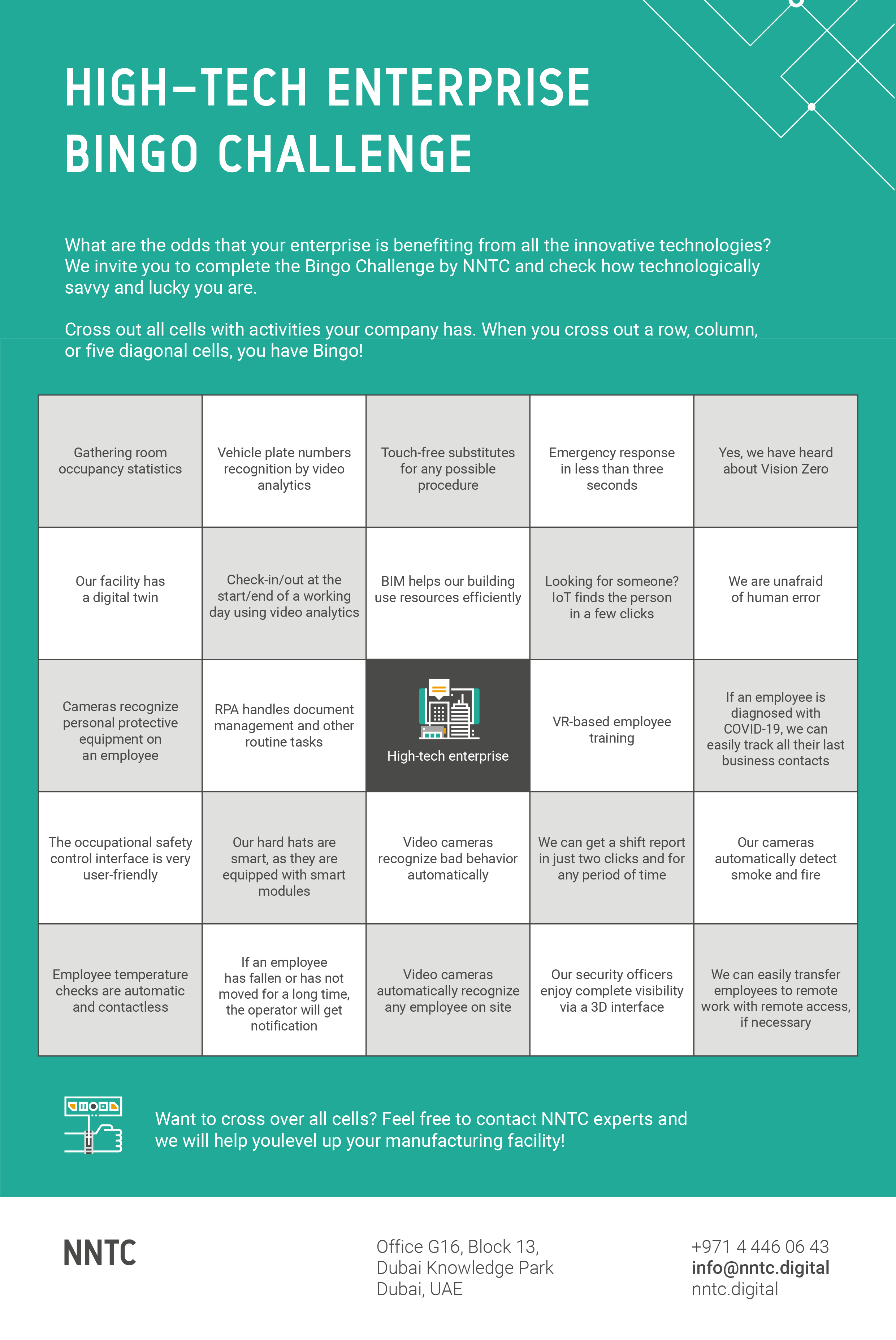
High-tech enterprise bingo challenge

Bingo challenge

What are the odds that your enterprise is benefiting from all the innovative technologies? We invite you to complete the Bingo Challenge by NNTC and check how technologically savvy and lucky you are.

RULES: Cross out all cells with activities your company has. When you cross out a row, column, or five diagonal cells, you have Bingo!

High-tech bingo challenge

You can download this high-tech enterprise bingo challenge in full resolution and share it with your colleagues!

Read more

How Face Recognition System Puts Things Right on Construction Site and Helps Contractor Avoid Penalty 2

A mess on a construction site is quite a common thing and can be tolerated to some extent if it is an organized mess. However, when this mess creeps into core processes, a construction site turns into a hurrah’s nest, and a developer faces risk of large penalties, downtime, and even death toll. In this blog, we’ll tell you how CROC, our strategic partner, implemented a face recognition system on a construction site.

One fine, sunny day, when the site was buzzing with activity and dozens of workers were moving around cheerful and positive, a former workman penetrated the site. He passed through a checkpoint, greeted a guard who knew him well (but did not know that he had been fired already), entered the territory, and went to his friends. Half an hour later, a fire was burning, with the workers drinking tea, resting, and enjoying their lives.

The problem was that they made the fire near two gas cylinders, one of which suddenly exploded. Neither warning nor alert. Just exploded, and that’s it! Fortunately, people were just shocked, not injured, but a police came to the site the same day and initiated an inspection, which revealed some unpleasant facts for a contractor:

  • Many workers used forged documents. In other words, one family member obtained necessary documents, got hired at the construction site, and then his brother went for work instead of him.
  • For each worker using forged documents, a fine of $7,600 or even more may be imposed, and the construction process may be suspended for 14 – 90 days with almost catastrophic consequences for a general contractor and customer.

That is why the contractor asked CROC for help.

How to solve a problem?

Initially, the construction site was equipped with just run-of-the-mill employee recognition systems:

  • Palm vein identification, which performs poorly even in clean offices if people eat some greasy food there. After eating, this vein pattern changes causing recognition errors.
  • Iris identification, which is more expensive and time consuming. It is hardly the best option when every morning buses arrive at a construction site and some 600 workers have to pass the checkpoint within one hour, from 7 to 8 a.m. It’s as slow as a snail!

Therefore, it was the time to try video analytics.

Each turnstile is equipped with two cameras: one aimed at incoming people, and the other, at outgoing.

There is a small cooled server room on site, having a rack with two servers and a switch. The first server receives video stream from cameras and identifies frames containing faces and being of the best quality. The second server receives these “clear” frames with faces and runs a recognition algorithm to find a match in a database.

If a frame contains only one face and this person is authorized to pass through, then the turnstile opens. Otherwise, a guard is alerted.

No Internet connection is needed for the system, just a copper cabling on site. However, if connected, the system allows for continuous monitoring, email reports, and remote second line support for operators.

The system runs perfectly in typical situations:

  • Using a pass card of another person to enter — an alerted guard stops a trespasser and investigates the incident.
  • A former employee attempts to enter the site — a guard does not let him in.
  • An employee attempts to enter the site in wrong time — a guard asks the employee to get a pass card at an access control office and then come back to the checkpoint.

In addition, every evening, executives get a report on how many people were scheduled for work and how many arrived actually. It is very important since contractor’s favorite trick is to schedule 50 workers, provide only 30, and then report on 50.

Moreover, this information — like 600 people scheduled, only 450 arrived — shows if a project is running out of time already. And you see it right now, but not a week or month later.

Outcome

Morning queues have almost disappeared. Instead, it takes one hour for two turnstiles to let 700 people in, even including guard intervention cases. The customer enjoys reports on the actual number of people arrived at the construction site, which was a sad news for some of the contractors. Neither a $7,600 penalty nor work suspension for 14 – 90 days is pending now, with the system itself costing less than this penalty.

NNTC actively partners with CROC and implements face recognition solutions in GCC countries. If you are interested in this technology, feel free to contact our consultants.

WHAT’S THE BUZZ WITH BIM AND WHY ADOPT IT?

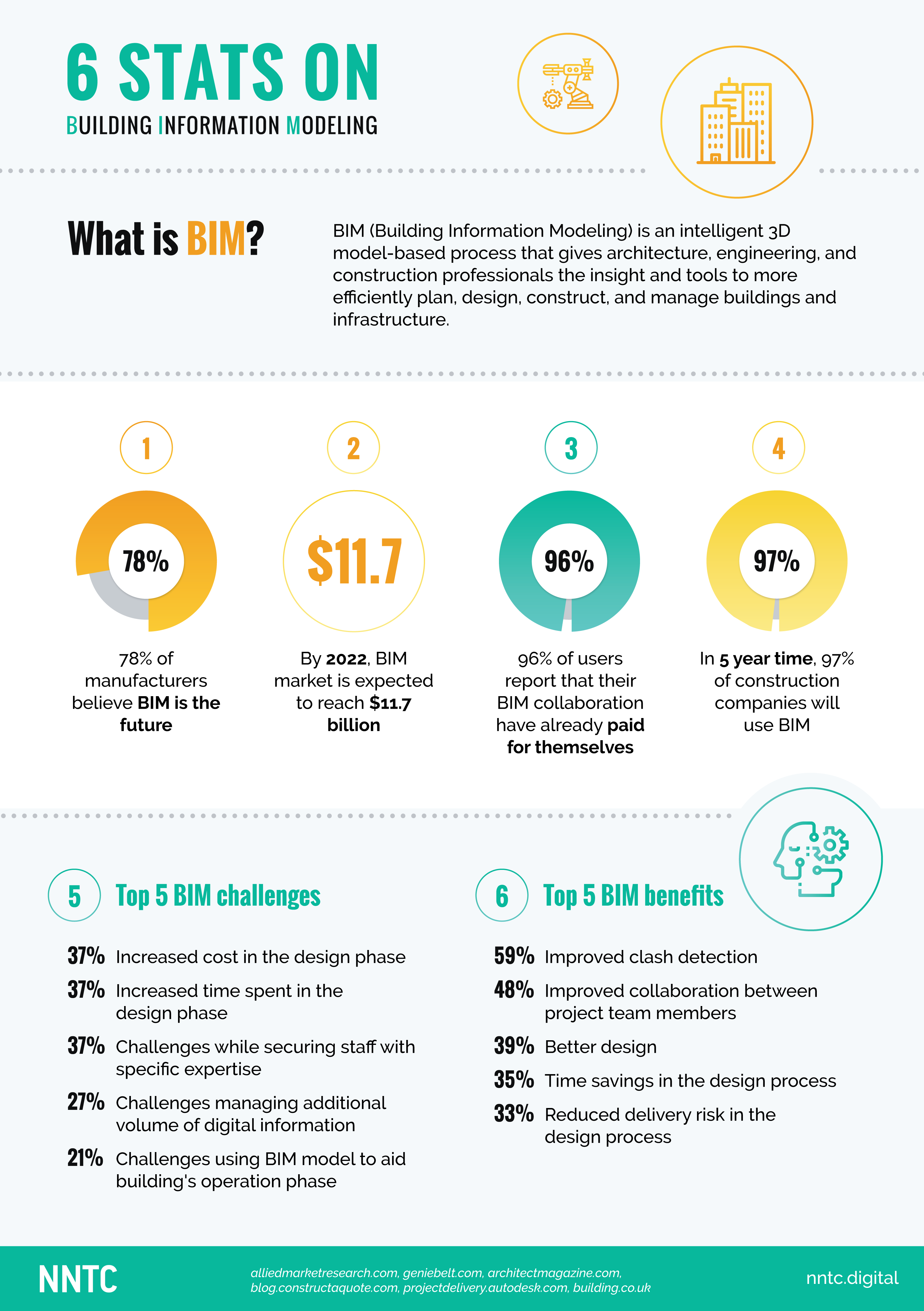
There is a good reason for experts to appreciate the integration of BIM into building management systems. Statistics speak louder than words: almost 30% fewer collisions, costs cut in half, 90% faster reporting on analytical data, with overall project cost savings reaching 50%. So what is BIM and why does it really pay to use it?

To come to the point, let’s dive deep into its main components. Building management stands on three pillars: BMS, FM, and BIM.

BMS means an automated Building Management System that has already been used by the owners of real estate, especially malls, hotels and business centers, as smart resource management helps them reduce building maintenance costs by 30%. BMS can detect certain situations inside a building and respond accordingly in line with prescribed algorithms by regulating temperature, ventilation, water supply, lighting, or turning systems on and off.

FM – Facility Management – is a concept to manage auxiliary indoor resources and processes that do not relate to the site’s primary function, like a ticket system that automatically generates maintenance and repair assignments. FM is primarily designed to:

  • Save maintenance costs
  • Ensure indoor process continuity
  • Prevent emergency

Thanks to electronic document management based on FM, an owner and maintenance team can check consolidated statistics on all financial expenses: maintenance, repairs, property rental management, and service.

BIM – Building Information Modeling – is a technology to create an interactive and truly precise 3D model of a facility.

At the design stage, BIM streamlines both time management and drafting of construction cost estimate. Such a 3D model includes all engineering systems, and a change in one element automatically updates the entire model, including drawings, visualization, and work schedule.

Think of the opportunities that BIM offers in the long run! All three systems – BMS, FM and BIM – integrated via a smart app will make it possible to exchange data in real time (sensor readings, engineering systems’ status or failures). On the one hand, the application and the BMS are interconnected, and on the other, simulated scenarios are applied to process the building information model in a certain way.

bim.png

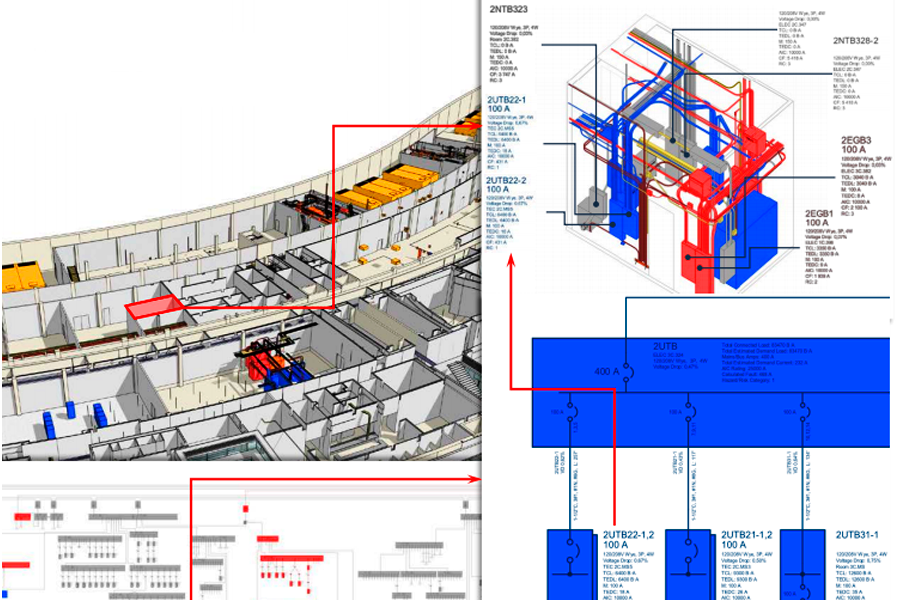
Let’s take a closer look. For example, a clogged air filter alerts BMS, with the faulty unit being highlighted on the 3D model. An operator accurately locates the trouble and gets all the necessary information to fix it, like the model of faulty equipment, adjacent communications, etc. — something that helps drastically optimize both incidental expenses on eliminating emergency and labor efforts of administrative staff. This is particularly the case for operation of high-rise buildings or those with a complicated layout.

Preset scenario can concern any event requiring attention of security service: the current state of equipment (on / off), real-life sensor readings (temperature, pressure, etc.). A certain setting can display all these parameters on a BIM model, thus transforming this digital twin into an interactive model displaying real-life parameters of the facility systems.

If you need to repair equipment being in a hard-to-reach place or covered by engineering structures, a BIM model will show you its exact location, a particular spot to break through the wall or where to dismantle barriers.Thus, by combining BIM, BMS and FM into a single interactive building management model, real estate developers and property owners enjoy cost-effective maintenance and emergency mitigation, save vast sums of money and keep their nerves.