How Face Recognition System Puts Things Right on Construction Site and Helps Contractor Avoid Penalty 4

A mess on a construction site is quite a common thing and can be tolerated to some extent if it is an organized mess. However, when this mess creeps into core processes, a construction site turns into a hurrah’s nest, and a developer faces risk of large penalties, downtime, and even death toll. In this blog, we’ll tell you how CROC, our strategic partner, implemented a face recognition system on a construction site.

One fine, sunny day, when the site was buzzing with activity and dozens of workers were moving around cheerful and positive, a former workman penetrated the site. He passed through a checkpoint, greeted a guard who knew him well (but did not know that he had been fired already), entered the territory, and went to his friends. Half an hour later, a fire was burning, with the workers drinking tea, resting, and enjoying their lives.

The problem was that they made the fire near two gas cylinders, one of which suddenly exploded. Neither warning nor alert. Just exploded, and that’s it! Fortunately, people were just shocked, not injured, but a police came to the site the same day and initiated an inspection, which revealed some unpleasant facts for a contractor:

  • Many workers used forged documents. In other words, one family member obtained necessary documents, got hired at the construction site, and then his brother went for work instead of him.
  • For each worker using forged documents, a fine of $7,600 or even more may be imposed, and the construction process may be suspended for 14 – 90 days with almost catastrophic consequences for a general contractor and customer.

That is why the contractor asked CROC for help.

How to solve a problem?

Initially, the construction site was equipped with just run-of-the-mill employee recognition systems:

  • Palm vein identification, which performs poorly even in clean offices if people eat some greasy food there. After eating, this vein pattern changes causing recognition errors.
  • Iris identification, which is more expensive and time consuming. It is hardly the best option when every morning buses arrive at a construction site and some 600 workers have to pass the checkpoint within one hour, from 7 to 8 a.m. It’s as slow as a snail!

Therefore, it was the time to try video analytics.

Each turnstile is equipped with two cameras: one aimed at incoming people, and the other, at outgoing.

There is a small cooled server room on site, having a rack with two servers and a switch. The first server receives video stream from cameras and identifies frames containing faces and being of the best quality. The second server receives these “clear” frames with faces and runs a recognition algorithm to find a match in a database.

If a frame contains only one face and this person is authorized to pass through, then the turnstile opens. Otherwise, a guard is alerted.

No Internet connection is needed for the system, just a copper cabling on site. However, if connected, the system allows for continuous monitoring, email reports, and remote second line support for operators.

The system runs perfectly in typical situations:

  • Using a pass card of another person to enter — an alerted guard stops a trespasser and investigates the incident.
  • A former employee attempts to enter the site — a guard does not let him in.
  • An employee attempts to enter the site in wrong time — a guard asks the employee to get a pass card at an access control office and then come back to the checkpoint.

In addition, every evening, executives get a report on how many people were scheduled for work and how many arrived actually. It is very important since contractor’s favorite trick is to schedule 50 workers, provide only 30, and then report on 50.

Moreover, this information — like 600 people scheduled, only 450 arrived — shows if a project is running out of time already. And you see it right now, but not a week or month later.

Outcome

Morning queues have almost disappeared. Instead, it takes one hour for two turnstiles to let 700 people in, even including guard intervention cases. The customer enjoys reports on the actual number of people arrived at the construction site, which was a sad news for some of the contractors. Neither a $7,600 penalty nor work suspension for 14 – 90 days is pending now, with the system itself costing less than this penalty.

NNTC actively partners with CROC and implements face recognition solutions in GCC countries. If you are interested in this technology, feel free to contact our consultants.

OUR TOP PICK OF TECHNOLOGY TRENDS FOR 2020

The New Year is coming! It is the time when people make plans and wishes, so we can’t resist the temptation to use our imagination and expert judgment to make a list of key innovation trends for the upcoming year. Our fellow writing experts and research centers hasten to share the dreams and realities of their experience. Studying them all inspired us to make our own list of favorites.

Hyperautomation

The trend derives from robotic process automation (RPA). Though it’s mainly about automation, things are slightly complicated as automated setup is also in the spotlight now. Hyperautomation encompasses machine learning (ML), packaged software, automation tools, and tries to understand how to automate and coordinate them. Though it’s not a full clear trend, it is expected to ‘automate automation’.

DARQ

Experts believe this group of letters, or rather technologies behind it, is a wise choice to develop business. DARQ = distributed ledger technology + artificial intelligence + extended reality (AR/VR) + quantum computing. Whatever the business task, DARQ is the answer.

Multiexperience

The name suggests that this trend is all about empirical exploration. Ever since technologies entered our lives, they have been influencing our cognition. The more we embraced innovations, the stronger was technology impact on our lives. At the dawn of the Digital Age we studied technologies, now they study us. Furthermore, the two-way road of human-technology relations is becoming a highway to a new digital world. According to Gartner, this combined shift in both perception and interaction models leads to the future multisensory and multimodal experience. In other words, the barrier between humans and machines is getting thin, diverse, and sensual.

Transparency and Traceability

Gartner predicts that by 2023 most large players (some 75%) will assign their privacy, behavior forensic, and customer trust tasks to artificial intelligence in order to avoid reputation and brand risk. Although artificial intelligence evolves quickly, people still worry what it may bring in the nearest future. So making AI algorithms more transparent and clear will become top priority along with combating fake news and AI power misuse.

Distributed Cloud

A distributed cloud allocates public cloud services to different data centers, while cloud provider stays solely responsible for cloud performance and quality of service. For what it’s worth, this trend moves us towards cloud computing.

Rapid advances in new technologies open up opportunities for us to learn, grow and evolve, but only time will tell which technologies will stay with us for good.

RPA VS. ROBOTICS: WHAT’S THE DIFFERENCE AND HOW IT WORKS?

Despite the fact that Robotic Process Automation has already entered our everyday life, the term RPA is still widely misused, perhaps because of the tricky word ‘robotic’ inside or a common idea that automation is about intelligent machines. No matter why people think so, RPA just remains the same, and today we are going to sort apples from oranges and explain how to distinguish between RPA and robotics.

What is RPA and how is it different from robotics?

Robotic Process Automation is a distinct category of software developed to automate routine without coding.

Let’s take an accountant’s workplace for example. There is a table, chair, and PC. Normally, an accountant performs a hell lot of work: fill in the documents in a special way, stamp every now and then, and calculate in between, which is all nothing but a time-eater.

Here comes RPA to save the day! The PC gets RPA software installed on it and our user gets a personal account. User’s routines are recorded and then consolidated into a set of actions triggered to do the job automatically. It means no more manual paperwork for our accountant – just one click to run a dedicated algorithm that perfectly fills in every single field of a form automatically.

RPA works with user software interfaces using software agents – “robots”.

Robotics. First and foremost, a robot is a certain mechanism, a machine made of parts. Robots come in different forms and perform various functions, including doing people’s jobs for them. Still, a robot is a mechanism. RPA is an algorithm. Besides, there are RPA-enabled robots, such as mail-sorting robots that automatically run and follow a preprogrammed algorithm to choose the right shelf, print the right code, etc.

A brief example to sum up: an ordinary calculator.

  • Robotic Process Automation will make a calculator automatically press the right buttons and calculate.
  • Robotics will make a robot’s hand press calculator’s buttons.

RPA use cases by NNTC

RPA is becoming more and more popular with large companies. Key routine tasks can be defined and then delegated to a chatbot, thus saving a lot of specialist time and frustration. NNTC actively creates chatbots based on RPA algorithms that help reduce time for routine processes.

Helpdesk chatbots

Our chatbot can take on some routine user requests that technical support specialists have to resolve every day, including locked accounts or lost Wi-Fi passwords. Thus, with initial request analysis and support task distribution, AI saves a specialist three to four hours a day.

Business trips

NNTC chatbot can make the life of a business trip team much easier by preparing necessary documents and booking tickets. All an employee needs to do is fill in place, dates, and other necessary details in the request window, thus avoiding long e-mail communication and talks on the phone.

Another option for a chatbot is corporate shuttle scheduling. Upon request, a bot can track shuttle routes and provide employees with up-to-date information.

Events and corporate training

Another task that can be delegated to a chatbot is signing up for in-house and outside seminars. HR specialists and employees of a marketing department usually spend at least three days to make a list of all those who want to take the course, arrange coffee breaks, and book meeting rooms, while an RPA robot can do this in just several minutes. All you need is to submit necessary information (date, time, and venue) to the bot.

In the event of a corporate English language course at a large company, the number of employees who want to take it can exceed 250–300 people, which means that an HR specialist has to spend two weeks e-mailing to make a list of all enrollees, test their language skills, and gather class dates and time preferences. Why waste all this time? Instead, configure a chatbot or an RPA bot that will do all the above in just two to three hours.

To enroll, an employee fills in an application in the messenger, thus providing the bot with all necessary information, such as:

  • Preferred attendance option
  • Training format (group/individual classes)
  • Current level of English proficiency
  • Preferred class schedule and time

All these data are then summarized in a table for an HR specialist to quickly form training groups.

Financial statements

Unfortunately, most companies spend a lot of time approving and paying invoices. This is due to an enormous flow of emails addressed to an accountant, with each request taking 30 minutes to process, as well as time-consuming request classification and manual logging. Some of incoming emails may remain unnoticed, as no business is protected from human errors.

When it comes to accounting tasks, an RPA bot can log requests, save documents to shared folders, create new folders if necessary, get system notifications, and automatically track and update a request status. This way, an accountant in charge can monitor the progress via a user-friendly interface and promptly address any debts. Ultimately, one request will only take 5 minutes to process, with a very small chance of losing a single email.

Five IT trends in retail business

In the retail sector, competition for customers is becoming tougher year after year, making marketing teams turn to innovations. Here are some promotion solutions of the coming future.

Video analytics and neuromarketing create personalized experience

When used together, video analytics, face recognition, and neuromarketing systems can create personalized experience for each store visitor. Such solutions recognize person’s age and gender and, right away, display on the screen the very goods he/she may be interested in, using bright light in the relevant areas and dimmed light in the others. Indeed, the ability to recognize faces and emotions brings customer communication to a new level. For example, a system can pinpoint regular customers and make them special offers to improve their loyalty.

One large store in Paris already uses ‘smart’ wine display cases. Now, all a visitor needs to do is press a combination of buttons assigned to a particular wine type (say, French semisweet), and the system will spotlight the section with relevant bottles. This service is very convenient and saves customers time, as they no longer need to read all the labels.

Biometrics make payments easier and faster

Payments using biometric data is a hip and happening trend in the banking sector. This way, we already can open an account, get a loan, and, in some cases, transfer money to other people. 

According to Goode Intelligence, over 2.6 billion people will make payments using biometric data by 2023. This is a truly convenient approach that will eliminate waiting lines or the need to show a passport for age confirmation. Moreover, these technologies will keep track of customer preferences to offer them personalized discounts.

Digital Signage ensures interactive communication

In a survey conducted by Ovum, an independent analytics firm, 70% of retailers identified interactive digital customer communications as the number one trend to become widespread by 2020.

In 2018, U.S. grocery retailer Kroger implemented digital displays that show product prices and nutrition values instead of traditional paper price tags, while Bosch flagship store deployed a comprehensive multimedia solution that allows visitors to explore product catalogues, compare functional characteristics of appliances, and place orders using touch panels. In the future, such technologies will become an ordinary part of our everyday lives.

Mathematical models find out customer preferences

In the near future, retailers will be routinely using mathematical models to analyze preferences of their customers and help them choose accordingly. U.S. thrift store thredUP is already living the future! Originally opened as an online store only, thredUP started its offline operations in 2018 and recently launched Goody Boxes clothing subscription service. Mathematical model algorithms memorize preferences of visitors and help put together boxes customized to their individual style and budget.

Robots solve simple tasks for customers

In the future, robots will effectively communicate with store customers helping them navigate and find what they need, thus freeing up human consultants for more creative tasks and customer relationship building.

As an example, Lowe’s, an American retail company specializing in home improvement, launched LoweBot that moves around the store and communicates with visitors helping them find necessary products.

FIVE INNOVATIVE AND CREATIVE IDEAS FOR DATA CENTER SAFETY

Today, businesses need a data center to be compact-size, effective, and cost-efficient, but, above all, perfectly safe to host the most valuable data. Here are five main ways to ensure secure and uninterrupted data center operations.

Free сooling
How to reduce OPEX and improve the performance of a data center? Optimize on-site cooling, which is the second most expensive item on the electricity bill after IT load. 

Solution: Take region’s temperature statistics for the last 50 years, calculate annual energy consumption for equipment from various vendors, and finally… Start using outdoor air to the fullest. This technology is called free cooling. 

How it works: There are two main types of free cooling: direct and indirect. When it comes to the direct method, outdoor air, once filtered, goes directly to computer rooms, with key benefits here being low energy consumption and implementation cost, as well as simple design. Even though indirect free cooling is less effective as it requires heat exchangers to convey the air through, this method ensures that the same clean air circulates in computer rooms.


Li-ion batteries
A question of the day: what can replace lead acid batteries, the most common uninterrupted power supply (UPS) units for data centers? It seems like li-ion batteries, which brought their developers the 2019 Nobel Prize in Chemistry, are the best way to go. Being much lighter than traditional ones, they can even be mounted on ceiling and walls that can hardly sustain the weight of lead. This is very important as many data centers are created in already existing buildings. Moreover, li-ion batteries are considerably smaller and thus don’t occupy much space in a server room.

How it works: UPS units ensure that a data center keeps working in the event of a power shutdown until either the primary power source restoration or switchover to a backup source. In addition to being light and compact, a li-ion battery features high power capacity, long service life (about 10 years) and fast charging.


Liquid cooling
Just a few years ago, this cooling method was only used for supercomputers, while today it is also increasingly the case for regular data centers. Such systems are small and consume minimum energy (power is only needed for several low-flow pumps).

How it works: Server equipment is fully submerged in a leak-proof slightly open tank containing liquid dielectric coolant, which is evenly distributed to keep constant temperature.


Fire-fighting systems
How to put out a fire in a data center? Today’s fire-fighting systems for data centers can be divided into two types: water mist and nitrogen.

Water-mist systems create microscopic droplets (100-150 microns) of distilled water that are considered safe for data center equipment. These systems have minimum water consumption and can be effectively used in both sealed and unsealed rooms, even with people still being nearby.

Nitrogen fire-extinguishing systems displace oxygen by nitrogen generated directly in the protected space, thus completely suppressing fire. This method is also safe for people.

How it works: Modern aspirating fire detection systems can raise alert even before visible smoke particles fill the room. Unlike passive smoke detectors, this system actively draws air samples through holes within pipes that run throughout the protected area to ensure continuous analysis. Thanks to such systems, data centers rarely catch actual fire.


Physical security
Several innovative technologies are widely leveraged at data centers against intruders.

  • Intelligent video analytics based on neural networks already allow data center operators to recognize faces and license plates, locate items that were left unattended, etc.
  • Biometric identification (fingerprint, iris, palm vein pattern, 3D face recognition) is used to control access and prevent impersonation of employees.
  • Security mantraps with weighing platforms are installed in a Turkish earthquake-resistant data center at the building and computer room entrances to prevent multiple people from using a single pass card.

How it works: The above-listed systems ensure multi-tiered security, with each next tier making it more difficult to break into a computer room.

TOP TECHNOLOGY TRENDS OF 2019 BY GARTNER

Gartner, Inc., a research and advisory company, has revealed a list of technology trends that will have an impact on businesses in 2019. Here are the most interesting of them – we are sharing five out of ten technology trends highlighted by Gartner analysts David Cearley and Brian Burke (Top 10 Strategic Technology Trends for 2019, published 15/10/18).

Autonomous Things
Autonomous things, i.e. robots, drones, vehicles, appliances, and agents, use AI to automate functions previously performed by humans. Experts believe that interaction of autonomous devices will be the main path for AI development.

Augmented Analytics 
Augmented analytics enables the testing of a broad range of hypotheses, thus opening up new data processing and analysis opportunities. Moreover, automated insights of augmented analytics can be embedded into enterprise applications to optimize decisions and actions of all employees. Augmented analytics includes:

  • Data preparation using machine learning automation to augment data profiling and quality, harmonization, modeling, manipulation, enrichment, metadata development, and cataloging.
  • Business intelligence enabling business users and citizen data scientists to automatically find information, visualize and narrate relevant findings without building models or writing algorithms.
  • Augmented data science and machine learning that use AI to automate AI modeling and their key aspects, such as feature engineering, model selection, operationalization, explanation, tuning, and management.

AI-Driven Development 
New platforms will allow application developers to integrate AI capabilities and models into a solution without the help of professional data scientists.

Tools used to build AI-powered solutions (AI platforms and services) are expanding to target not only data scientists, but also the community of professional developers. These tools are, in turn, being empowered with AI-driven capabilities that help professional developers and automate tasks related to the development of AI-enhanced solutions.

AI-enabled tools in particular are evolving from assisting in and automating of application development functions to automating more sophisticated business-domain processes (from general development to business solution design).

Digital Twins
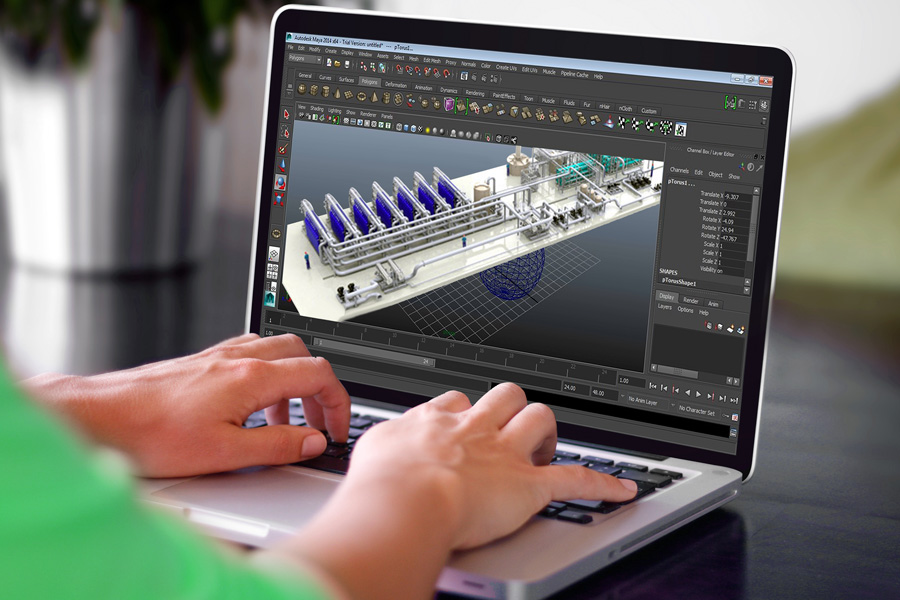
A digital twin refers to the digital representation of a real-world entity, process or system. Separate digital twins can interconnect to form more complex and larger systems. They are mainly used in Internet of Things (IoT) to: monitor system health, show new ways to improve efficiency, and help develop new technologies and services. Experts say that, at the next stage of technology evolution, enterprises will be implementing digital twins of their entire organizations (so called DTOs).

NNTC also created a digital twin for a massive enterprise. In 2018, we have launched our “Digital Worker” safety platform. The platform shows “the big picture” of the enterprise by combining multiple events (3D format included) registered by any systems: video analytics, industrial and wearable IoT, access control, SCADA, and other systems.

Smart Spaces
A smart space is a physical or digital environment in which humans interact with technology-enabled systems and which evolves across five key dimensions: openness, connectedness, coordination, intelligence, and scope. According to David Cearley, a Gartner analyst, this trend has been coalescing for some time around elements such as smart cities, digital workplaces, smart homes, and connected factories.

*Source: Gartner Identifies the Top 10 Strategic Technology Trends for 2019