LIE TO ME: AI TO DETECT DECEPTION

People lie. Statistically, any person of 18 to 44 tells a lie at least twice every 24 hours. Sad but true: some lies can endanger people around. Thus, let us dive deep into innovations that successfully detect deception around the world.

One of the best places to implement such technologies is airport. Automated Virtual Agent for Truth Assessments in Real-Time, or AVATAR, which is basically a lie-detecting computer kiosk system, is installed in some international airports of the USA, Canada, and the European Union. A 3D avatar of a customs officer appears on a terminal’s screen and merely asks travelers a few questions, while the system assesses a respondent and reveals deceptive or risky behaviors:

  • Near-infrared camera under the screen captures eye movement, gaze direction, and eye dilation.
  • Microphone logs voice pitch changes.
  • Touchscreen panel scans fingerprints, when travelers input their data, and automatically checks them against the database of offenders.
  • RFID system can identify what passport the traveler carries in a bag or a pocket.
  • A floor mat in front of the kiosk hides motion sensors that detect signs of nervousness, i.e. when respondents curl their toes.

NNTC_airport.png

According to Aaron Elkins, a professor at the San Diego State University, the AVATAR as a deception-detection judge has a success rate of 60% to 75% and sometimes up to 80%. “Generally, the accuracy of humans as judges is about 54% to 60% at the most,” he said.

Yet another solution was developed by Converus (Lehi, Utah) claiming that their EyeDetect is the most accurate lie detector available. A computer runs this software and a specialized camera captures eye movement of the person being tested. During a 30-minute true/false test, the camera captures changes in pupillary response, eye movement, blinking, staring, and makes other assessments to evaluate how honest a respondent is. The system’s algorithm makes 60 measurements per second, which is about 180,000 per test. The Department of State recently paid Converus $25,000 to use EyeDetect when vetting local hires at the US Embassy in Guatemala, WIRED’s reporting revealed.

iCognative suggests another vision on such case: their technology detects if any specific information is stored in the brain by measuring the brainwaves. Wireless headset is placed on a person’s head – it uses sensors that collect brain responses from the scalp and muscle movements. The person goes through a test with special triggers (words, phases or pictures), that form association and provoke reaction from the brain. The iCognitive software analyzes ECG signals and determine whether information under test is present or absent.

NNTC_crowd.png

Innovative technologies in deception detection can make a difference: more crimes cleared, offenders caught, and which is no less important, fewer violence attempts in the future. If you are interested in implementing AI for security or other purposes, contact NNTC and we will provide all the information and help.
IT’S TIME TO BUST THESE ARTIFICIAL INTELLIGENCE MYTHS

Artificial intelligence (AI), a sharp uptrend from 2018, keeps running high this year. However, many people are still wary of it. No matter how great the scientific innovations are, there are very common myths about the AI, and it is indeed high time to take a close, fresh look at the most popular ones. So let’s bust them.

AI: Much More Than Just a Robot

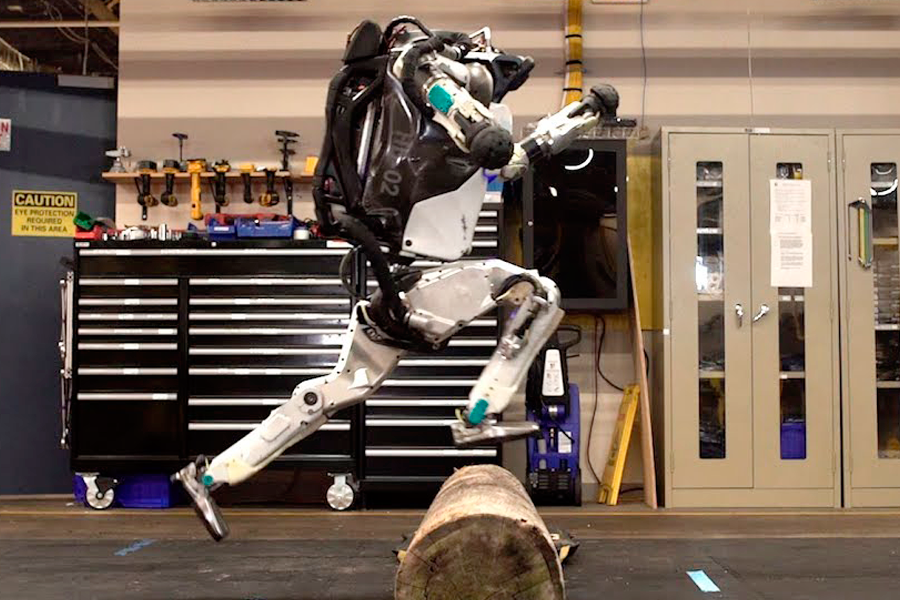
Pop culture actively promotes AI as android robots (Blade Runner; I, Robot; Chappie; Detroit: Become Human; Star Trek, etc.). Robots are truly an outstanding example of what AI can be. Just think of those running, jumping and dancing bad boys made by Boston Dynamics or Pepper robots, famous welcoming assistants. However, AI goes far beyond this, and you encounter this technology even more often than you can imagine.

For example, artificial intelligence recognizes and processes pictures you take on your phone. Surely, more megapixels mean better picture, but the market is taken by the companies whose powerful phones are accompanied by strong processing algorithms (i.e. color correction, white balance, zoom, and blur background), quality of which directly depends on artificial intelligence performance.

Another example of AI application is health service. A neural network by Third Opinion analyzes patient’s medical data (X-rays, ultrasound scans, MRI, blood test results) and detects malconditions as good as medical professionals do. The AI watches over us: a video analysis system by VisionLabs with a help of NNTC identifies individuals in public places, finds matches with the wanted person database, and promptly alerts security service.

Last but not least, AI drives science development. On April 10, 2019, an AI algorithm developed by Katie Bouman, an MIT graduate, enabled scientists to present the first ever black hole image. She created the algorithm for visualizing data from telescopes around the world that followed a black hole, with imaging now achieving angular resolutions as fine as 10 microarcsec.

AI Will Not Take Your Job

Robots will never completely replace humans, that’s for sure, since feelings, emotions, and critical thinking are all beyond machines’ capability. However, robots excel at calculations and simple tasks – no hard choices or emotional investing.

As a rule, AI can perfectly handle one particular task only, like the one that plays chess – it does nothing but plays chess, though this AI is at the top of this game. But if you ask it to distinguish between a kitten and a puppy in the picture, you will see an epic fail of this AI.

Lacking emotional investment, which is synonymous with art professions and inherent in service and teaching, artificial intelligence has absolutely no clue how to act in critical situations when time is running out and critical thinking is a must. AI needs human support and supervision, so it cannot act without guidance yet.

ARTIFICIAL INTELLIGENCE MANAGES DOCUMENTS, OR HOW DBRAIN SPECIALISTS DROP PROCESSING TIME DOWN TO SECONDS

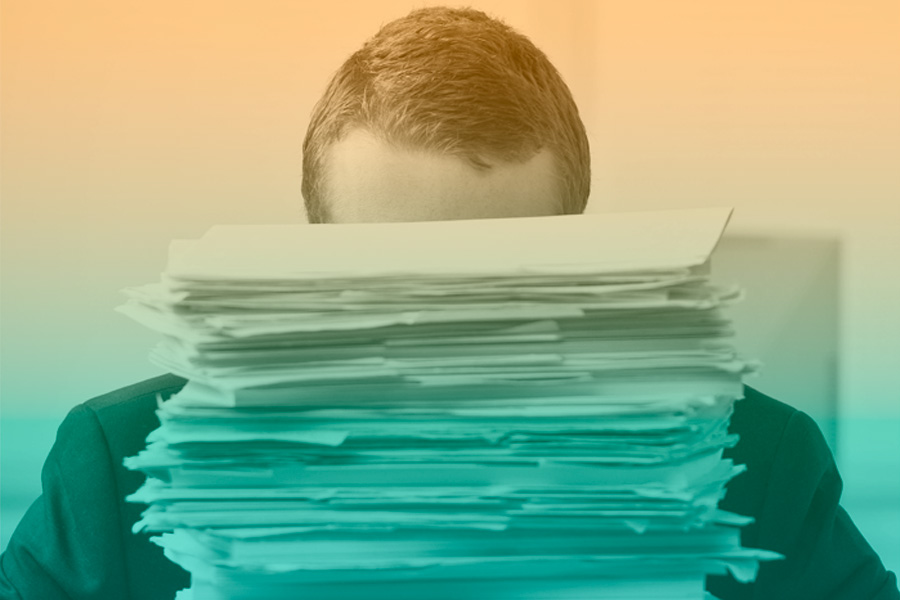
Document submission and processing have always entailed filling heaps of forms, sending scans, and numerous data checks and re-checks – something that requires much time and effort until you opt for OCR-powered AI.

OCR stands for Optical Character Recognition technology that detects an image, breaks it into fields, scans them, and automatically transfers data to respective forms (agreements, applications, CRM bases, etc.).

Imagine that you want to travel abroad. No more long and tedious communication with a travel agent, no more visa applications to fill in, and no more fear of making a mistake and spoiling a form — just scan your passport with OCR, and all your further applications will be automatically populated with necessary data. This technology adopted by major corporations and government agencies can reduce paperwork and alleviate customer stress.

OCR is also used to:

  • automatically read bank cards
  • instantly recognize passports
  • automatically enter invoice details for online payment
  • quickly enter data into agreements
  • reconcile customer data obtained from different sources
  • automatically populate CRM base
  • and do many other things

However, the system is not ideal yet, and Dbrain, the technology developer, admits text recognition errors to be its greatest shortcoming, especially when processing photos with sharp folds, or those affected by backlights, or taken by a low-class phone. To solve the problem, Dbrain added two functions to the OCR technology.

  • Context analysis. A scanned text is additionally processed by a neural network taught to consider a context and automatically correct errors, similar to how Google corrects mistypes in search requests.
  • A human-in-the-loop concept. Text extracted by the system is transmitted, in real time, to skilled experts connected to Dbrain platform, for manual check. Such human-and-machine combination improves recognition accuracy from 85% to 99% in all texts, including handwritten ones. Another remarkable advantage of the manual check is that it solves manuscript-related problems as the algorithm learns to find and correct errors, with recognition quality growing over time.

Users should not worry about their personal data confidentiality, since Dbrain assures personal data to be transmitted in an anonymized form. The algorithm blurs an image and breaks user’s passport into several fields on the client side, with information coming to Dbrain servers in an anonymized form, thus preventing from field-to-person match. Fields are recognized independently from each other and transmitted to a client in an encrypted form over HTTPS, all in less than a second.

ARTIFICIAL INTELLIGENCE: 2018 RESULTS

The year of 2018 brought us many AI discoveries. Let’s recall the most remarkable events of the expiring year and think about near-term prospects.

A neural network passed a reading comprehension dataset better than a human
An experiment held in January 2018 demonstrated the apex of AI evolution over the recent years. A neural network passed the Stanford Question Answering Dataset (SQuAD) containing 100,000 questions and deemed one of the most difficult cognitive data processing tests. AI gave 82.6% of correct answers, thus exceeding the best human result by 0.3%. 

Investments in robotic business process automation
Investors are paying more and more attention to digital workers. In early March, UiPath, an RPA startup, raised 120 million dollars. According to Deloitte, the number of RPA projects will grow by 70% in the next two years due to their practical value and quick payback. Robots save a lot of business hours by optimizing routine processes and releasing people from tedious operations: they populate customer bases, process simple transactions, and answer easy technical support requests. The UAE also invested heavily in technology for improved government service delivery, and recently created the position of Minister of AI. The British University in Dubai launched the first Bachelor Degree in Artificial Intelligence, which tends to prepare more specialists who will work in the field of AI.

AI ethics committee
In 2018, large companies established new unconventional units called AI ethics committees. The initiative was supported by Microsoft, Facebook, Google, and SAP. These committees are to reduce risks of losing jobs by many employees after robot implementation, prevent the aggravation of economic inequality between robotized and not-yet-robotized companies, and develop generally accepted AI operation standards to avoid potential race or gender discrimination associated with the use of AI. The companies decided to make AI operation more transparent to people, exercise even stricter control over security standard compliance, and protect personal data better.

In 2018, Smart Dubai created Ethical AI Toolkit, which provides advice to individuals and organizations offering AI services. Smart Dubai has also launched AI Ethics Self-Assessment Tool – it aims to help AI developers and operators evaluate the ethical level of their AI system. Smart Dubai also plans to start discussions between companies in Dubai to form a unified understanding and reach common agreement on becoming more responsible on the use of AI.

AI can now memorize and recognize
It has finally happened: neural network has learned to memorize and recognize objects under different conditions: environments, viewing angles, and lighting. Thus, for example, a cactus seen by an AI in a desert will be easily recognized in a flowerpot on your window sill. Conventional neural networks cannot learn something new, while keeping old data. In 2018, AI was finally cured of its fatal forgetfulness.

Boston Dynamics anthropomorphic robots
Boston Dynamics robots have learned to run and jump over obstacles. Thanks to special software, they process videos in real time and keep balance with torso and limb movements. These robots can do somersault, stand on one leg, and run across any surface, be it asphalt, sand, or snow. In the nearest future, they will be able to replace people at hazardous enterprises or act as emergency rescuers. 

Disease diagnostics and prediction
According to November announcement, AI can now predict Alzheimer disease at early stage by analyzing the tiniest changes in brain tissues. It appears that AI can identify symptoms six years earlier than a professional radiologist, thus giving doctors a chance to slow down or even stop the progress of disease. AI also helps detect clinical depression signs, diagnoses fractures, and estimates the probability of breast cancer or obesity.

Do you trust AI?
A study of how much (or little) humans trust AI was conducted in the very end of 2018. Scientists used machine learning algorithms to analyze interviewees’ psychophysiological indicators, such as heartbeat and electroencephalograms. Interviewees chose situations when they were ready to entrust themselves to a robot and when they, vice versa, preferred to take responsibility. Today, one human mainly interacts with one robot, while in the future people will have to coordinate their work with groups of robots, which will require higher level of trust to AI.

We believe in breakthrough development of AI-powered and virtual assistants in 2019. Dubai already got an AI-powered smart city advisor ‘Rashid’ this year, which responds to all user queries in Arabic and English, and can be activated using voice commands. AI has learned to solve problems of more complicated nature and interpret and memorize data better, thus allowing companies to embed AI in more processes. It is quite possible that, in 2019, AI will hold phone conversations with customers and AI developers will be in great demand.