High-tech enterprise bingo challenge

Bingo challenge

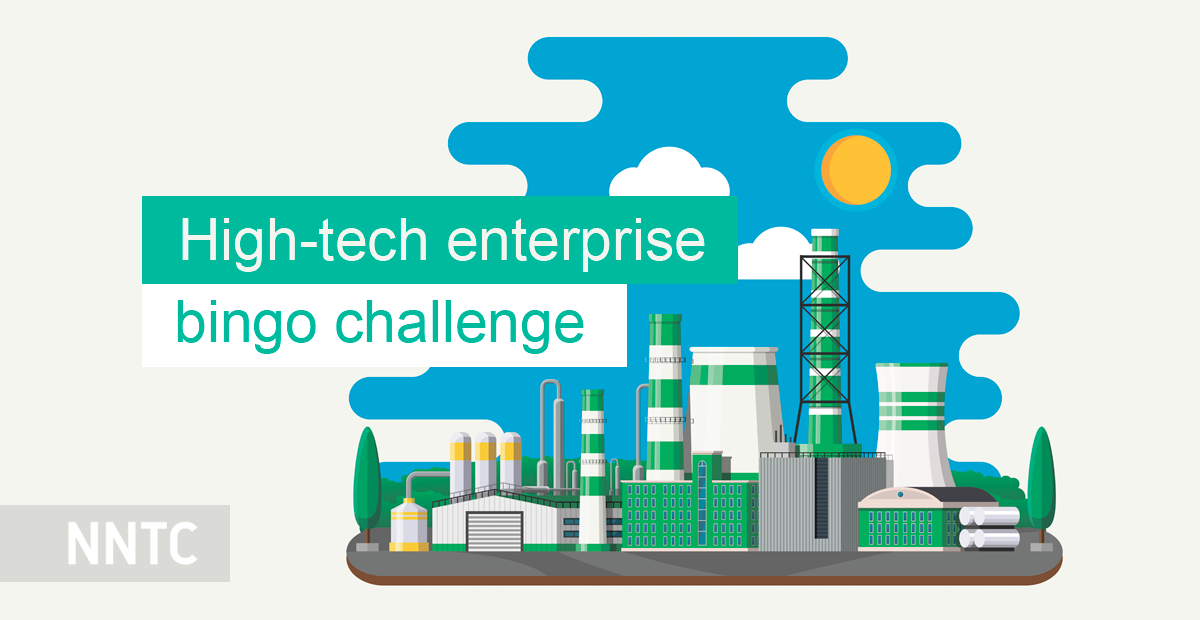
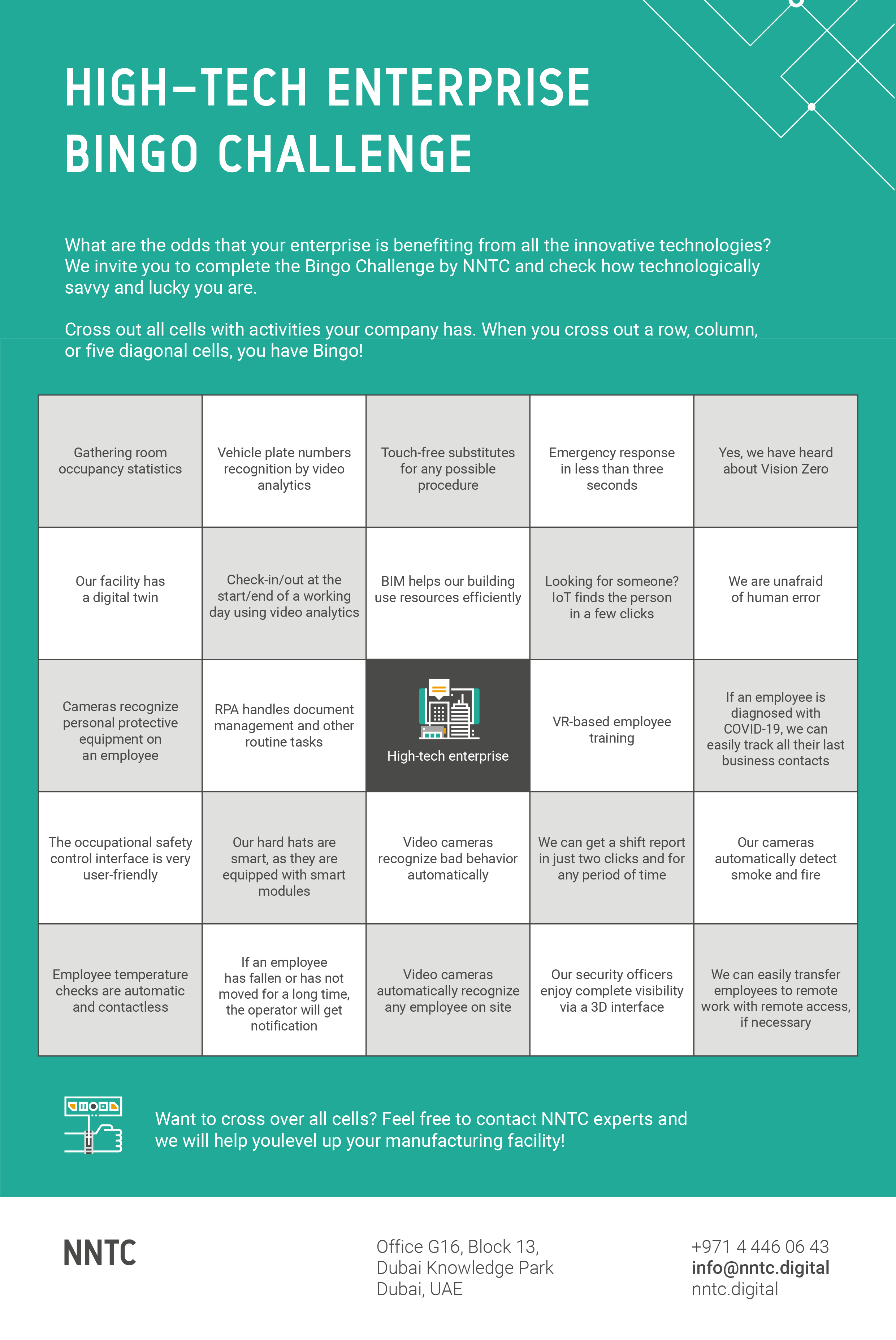
What are the odds that your enterprise is benefiting from all the innovative technologies? We invite you to complete the Bingo Challenge by NNTC and check how technologically savvy and lucky you are.

RULES: Cross out all cells with activities your company has. When you cross out a row, column, or five diagonal cells, you have Bingo!

High-tech bingo challenge

You can download this high-tech enterprise bingo challenge in full resolution and share it with your colleagues!

Read more

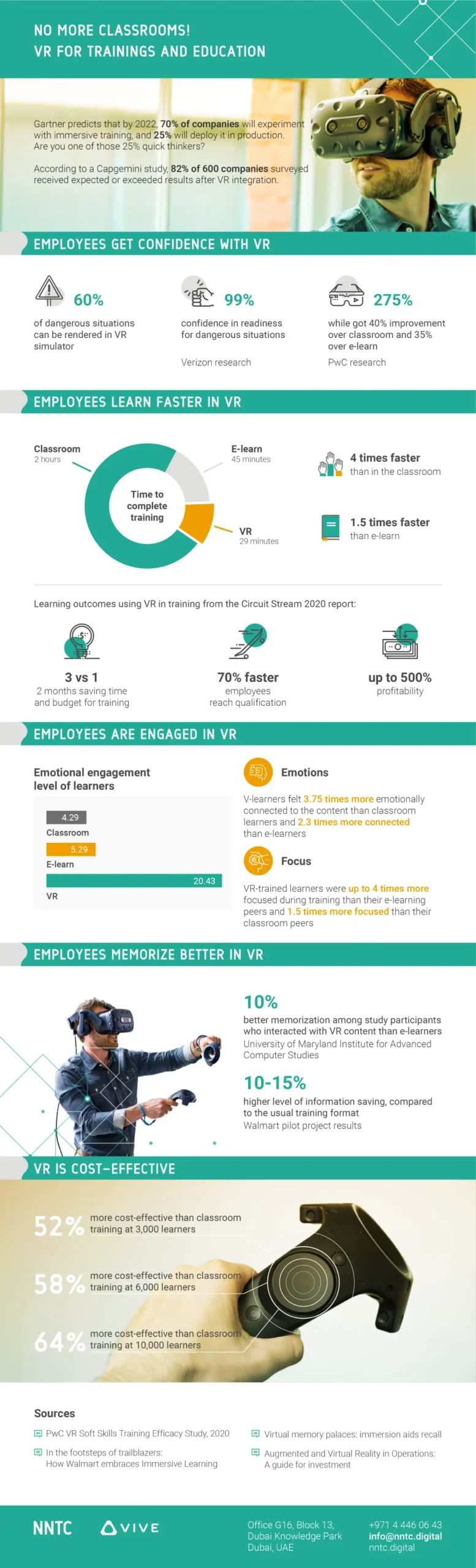
No more classrooms! VR for trainings and education

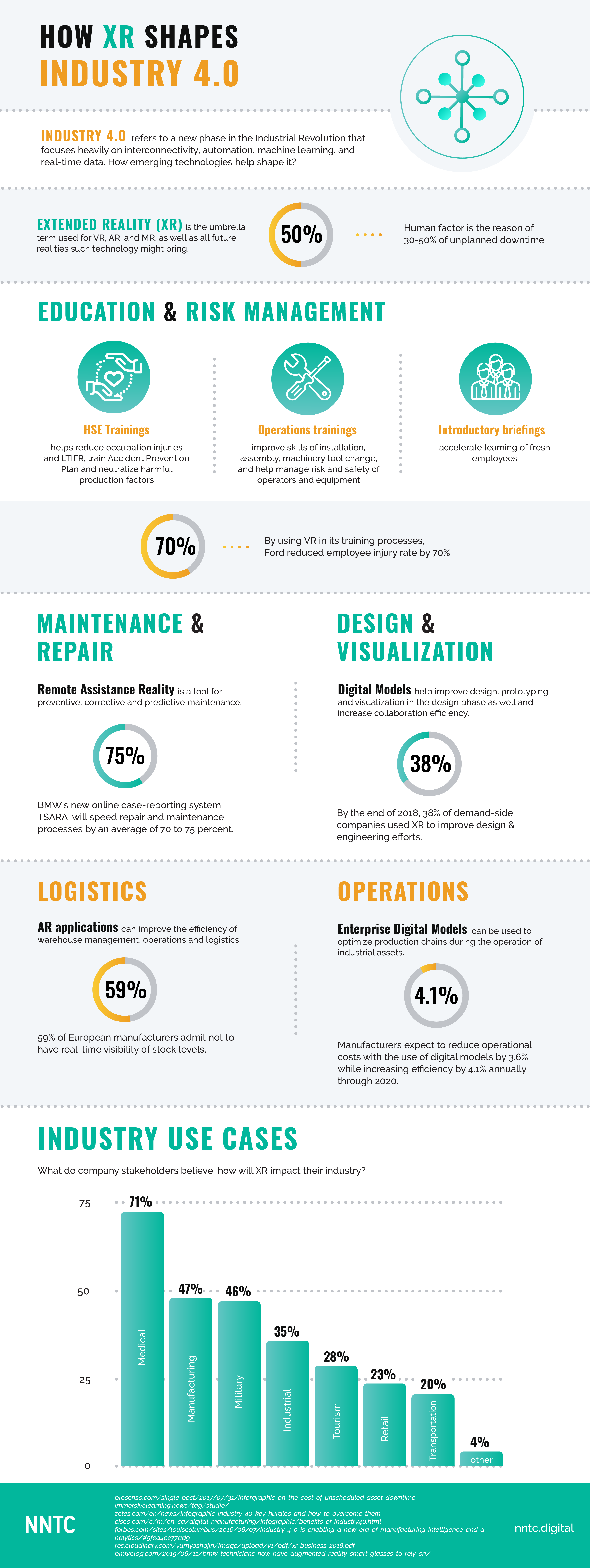
Gartner predicts that by 2022, 70% of companies will experiment with immersive training, and 25% will deploy it in production. Are you one of those 25% quick thinkers?

You can also download a full-resolution version of this infographic in PDF format:

Read more

How Face Recognition System Puts Things Right on Construction Site and Helps Contractor Avoid Penalty 7

A mess on a construction site is quite a common thing and can be tolerated to some extent if it is an organized mess. However, when this mess creeps into core processes, a construction site turns into a hurrah’s nest, and a developer faces risk of large penalties, downtime, and even death toll. In this blog, we’ll tell you how CROC, our strategic partner, implemented a face recognition system on a construction site.

One fine, sunny day, when the site was buzzing with activity and dozens of workers were moving around cheerful and positive, a former workman penetrated the site. He passed through a checkpoint, greeted a guard who knew him well (but did not know that he had been fired already), entered the territory, and went to his friends. Half an hour later, a fire was burning, with the workers drinking tea, resting, and enjoying their lives.

The problem was that they made the fire near two gas cylinders, one of which suddenly exploded. Neither warning nor alert. Just exploded, and that’s it! Fortunately, people were just shocked, not injured, but a police came to the site the same day and initiated an inspection, which revealed some unpleasant facts for a contractor:

  • Many workers used forged documents. In other words, one family member obtained necessary documents, got hired at the construction site, and then his brother went for work instead of him.
  • For each worker using forged documents, a fine of $7,600 or even more may be imposed, and the construction process may be suspended for 14 – 90 days with almost catastrophic consequences for a general contractor and customer.

That is why the contractor asked CROC for help.

How to solve a problem?

Initially, the construction site was equipped with just run-of-the-mill employee recognition systems:

  • Palm vein identification, which performs poorly even in clean offices if people eat some greasy food there. After eating, this vein pattern changes causing recognition errors.
  • Iris identification, which is more expensive and time consuming. It is hardly the best option when every morning buses arrive at a construction site and some 600 workers have to pass the checkpoint within one hour, from 7 to 8 a.m. It’s as slow as a snail!

Therefore, it was the time to try video analytics.

Each turnstile is equipped with two cameras: one aimed at incoming people, and the other, at outgoing.

There is a small cooled server room on site, having a rack with two servers and a switch. The first server receives video stream from cameras and identifies frames containing faces and being of the best quality. The second server receives these “clear” frames with faces and runs a recognition algorithm to find a match in a database.

If a frame contains only one face and this person is authorized to pass through, then the turnstile opens. Otherwise, a guard is alerted.

No Internet connection is needed for the system, just a copper cabling on site. However, if connected, the system allows for continuous monitoring, email reports, and remote second line support for operators.

The system runs perfectly in typical situations:

  • Using a pass card of another person to enter — an alerted guard stops a trespasser and investigates the incident.
  • A former employee attempts to enter the site — a guard does not let him in.
  • An employee attempts to enter the site in wrong time — a guard asks the employee to get a pass card at an access control office and then come back to the checkpoint.

In addition, every evening, executives get a report on how many people were scheduled for work and how many arrived actually. It is very important since contractor’s favorite trick is to schedule 50 workers, provide only 30, and then report on 50.

Moreover, this information — like 600 people scheduled, only 450 arrived — shows if a project is running out of time already. And you see it right now, but not a week or month later.

Outcome

Morning queues have almost disappeared. Instead, it takes one hour for two turnstiles to let 700 people in, even including guard intervention cases. The customer enjoys reports on the actual number of people arrived at the construction site, which was a sad news for some of the contractors. Neither a $7,600 penalty nor work suspension for 14 – 90 days is pending now, with the system itself costing less than this penalty.

NNTC actively partners with CROC and implements face recognition solutions in GCC countries. If you are interested in this technology, feel free to contact our consultants.
HSE TRAININGS IN VIRTUAL REALITY

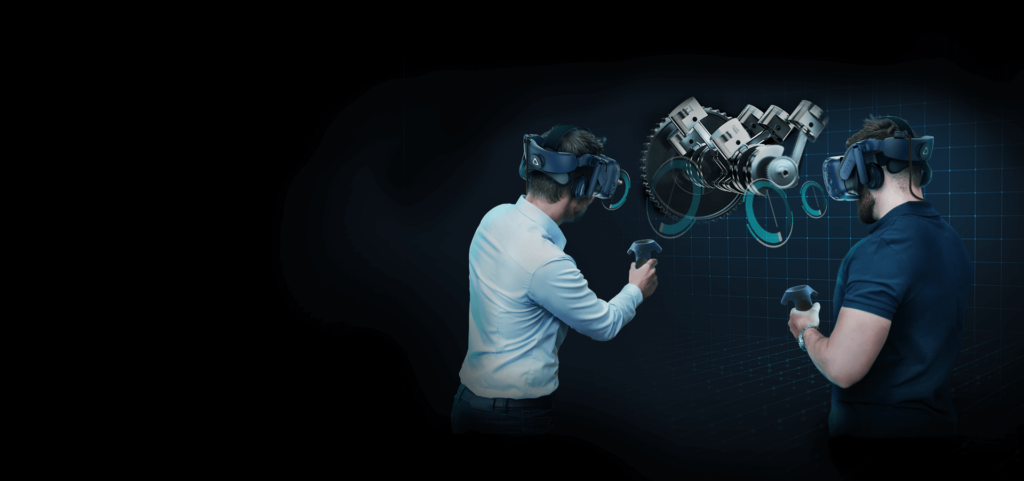
A health, safety & environmental (HSE) training in virtual environment helps employees address sophisticated issues in a more effective way, ensures maximum involvement in the production process, and allows for emergency drills being difficult to conduct in reality. 

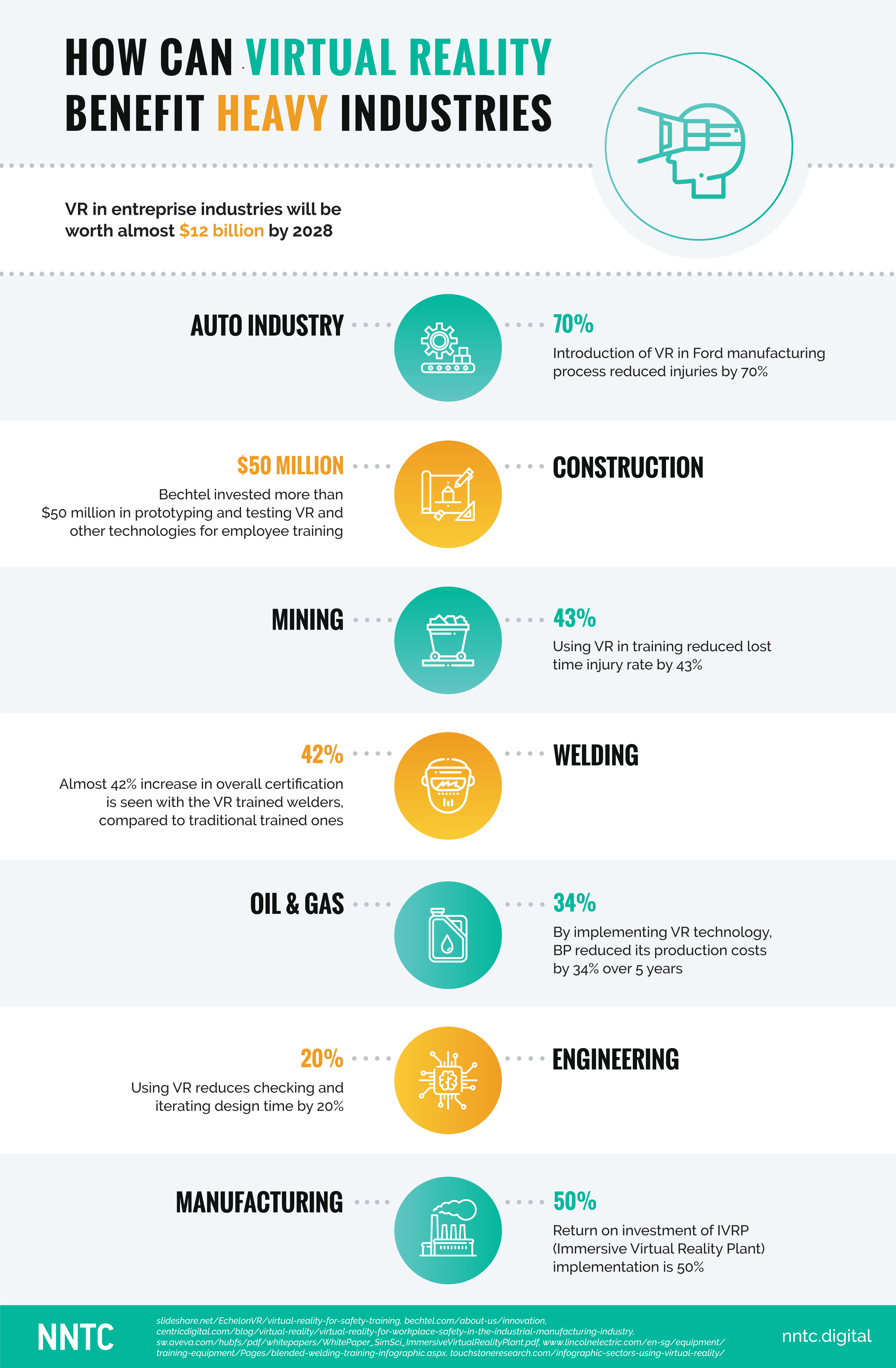
Should it be high voltage equipment failure or fire at the production facility, VR safety training helps reveal employee reaction to any emergency or sudden obstacles, reproduce tricky situations when an incident doesn’t follow the usual scenario, and, more importantly, enables employees to get prepared to such incidents in advance. For example, the introduction of VR in Ford’s manufacturing process reduced injures by 70%.

VR TRAINING

VR training is a virtual reality app developed in line with an emergency response procedure and staff training methodology as prepared by the specialists of the customer’s training center. During such VR trainings, employees obtain necessary knowledge and skills and pass tests in a computer simulation, with the test results being available for the supervisor who thus can speed up onboarding and new knowledge perception through practice.

Any hazardous situation or emergency, such as accidents on electrical distribution networks, can be easily reproduced in a computer simulation, with virtual reality technologies being capable of showing almost any content, including even “playback” of past accidents to prevent them in the future. 

The consequences of any HSE breach can be reinforced in virtual reality through visual effects, like a full-screen explosion accompanied by bruising, thus impacting psycho-emotional state of employees to make them be more careful in their routine activities. 

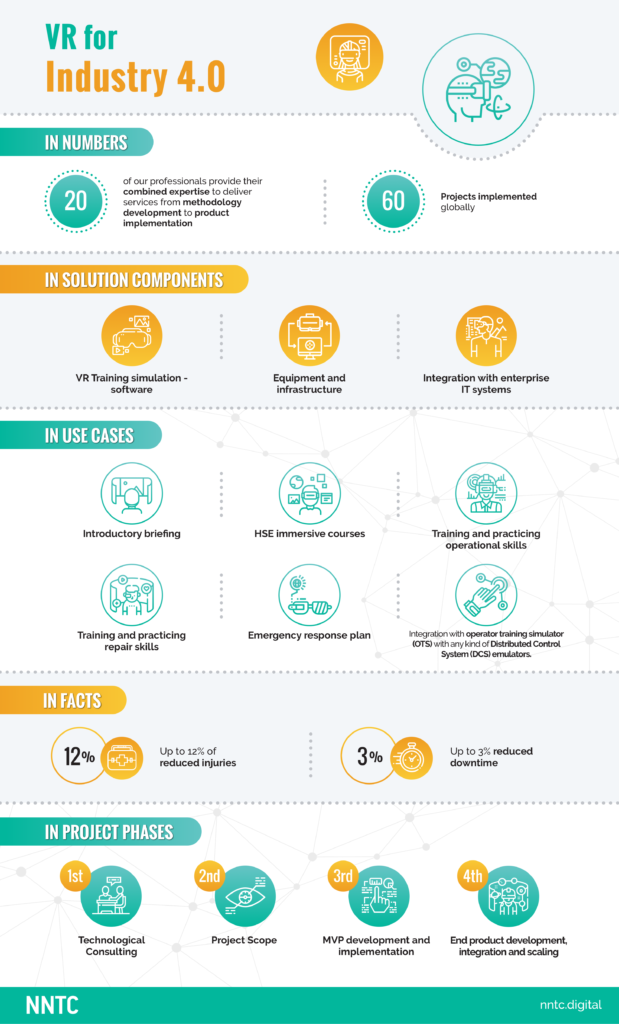
01.png

VR TRAINING FORMATS

VR training formats may differ depending on a particular task, each having certain advantages and limitations.

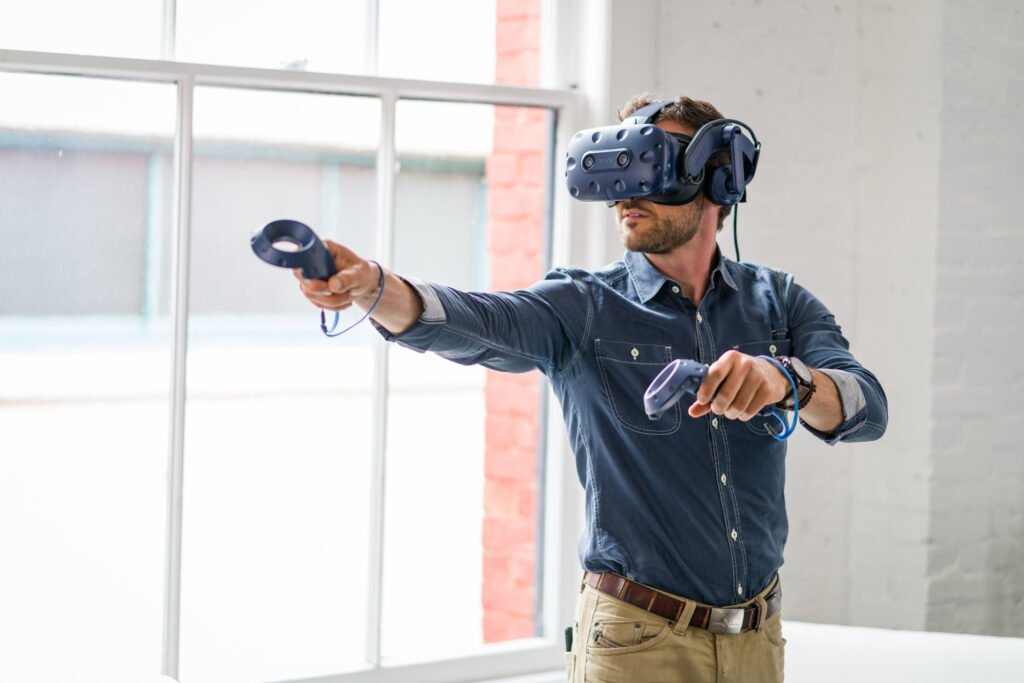
VR trainings can be tailored to various platforms: PC, VR glasses and headsets, industrial VR systems or multi-user devices with VR support. Each scenario differs in terms of user immersion, content adaptability for mobile use, and the quality of graphics.

Augmented reality 3D apps for smartphones and tablets can be used almost anywhere; however, the mobility advantage is balanced by rather poor quality of graphics.

Training on desktops (PCs) and laptops boasts the highest possible quality of graphics with an average level of immersion and mobility and is the most common format used by corporate training centers today.

VR tools are usually divided into:

  • VR glasses using a mobile device (“mobile VR”)
  • VR systems (“stationary VR”), including helmets, joysticks, space positioning systems and powerful workstations (VR Ready laptops or powerful PCs) for the highest possible content broadcasting

Each format has its advantages and limitations. Thus, mobile VR has a high level of mobility, as users need just a smartphone or VR glasses themselves, and a high degree of immersion, since employee’s peripheral vision is not distracted. Both elements easily fit in a backpack, medium-sized bag or a classic briefcase. As a result, coaches are not tied to a specific training location and can easily conduct field demonstrations almost anywhere.

However, VR glasses do not support physical movement, with all content being perceived just from one point in a 360-degree format. 

VR systems (HMD) offer the best possible graphics and the ability to move within a space of nine square meters, thus making it possible to get oneself truly immersed into virtual reality and interact with the surrounding virtual space using joysticks.

This format can be considered mobile as well because the equipment itself does not take much space and is not very heavy, but installation and configuration takes time and effort. This tool is perfect for classrooms at corporate training centers. In addition, a multiplayer solution is available for collective training where users can see avatars of each other, communicate and perform collective actions in a virtual world, thus achieving the maximum degree of immersion.

02.png

MUSEUM 2.0: NEW MUSEUM TOURS POWERED BY INNOVATIVE TECHNOLOGY

Museums are providing increasingly interactive and personalized experience to attract digitally oriented visitors. Simply looking at an exhibit is no longer enough as today’s guests want to interact with the exhibit, watch it closely and at different angles, as well as learn more about its historical context. IT augments traditional expo formats with a brand-new museum space.

QR and bar codes
The easiest way to digitalize an exhibit and make museum environment more interactive is to add a QR code containing extra multimedia content, such as landings, videos, images and audios, which are however for information purposes only and don’t boost visitor involvement. The solution coverage is rather difficult to predict.

Navigation apps
Navigation via a mobile app using Bluetooth beacons installed throughout a museum allows visitors to arrange a tour all by themselves, easily navigate and quickly find halls and exhibits desired. While a visitor is moving from one exhibit to another, whether randomly or along a predefined route, the app tracks his/her movement and automatically provides information about exhibits being closest to the visitor. 

Augmented reality and holography
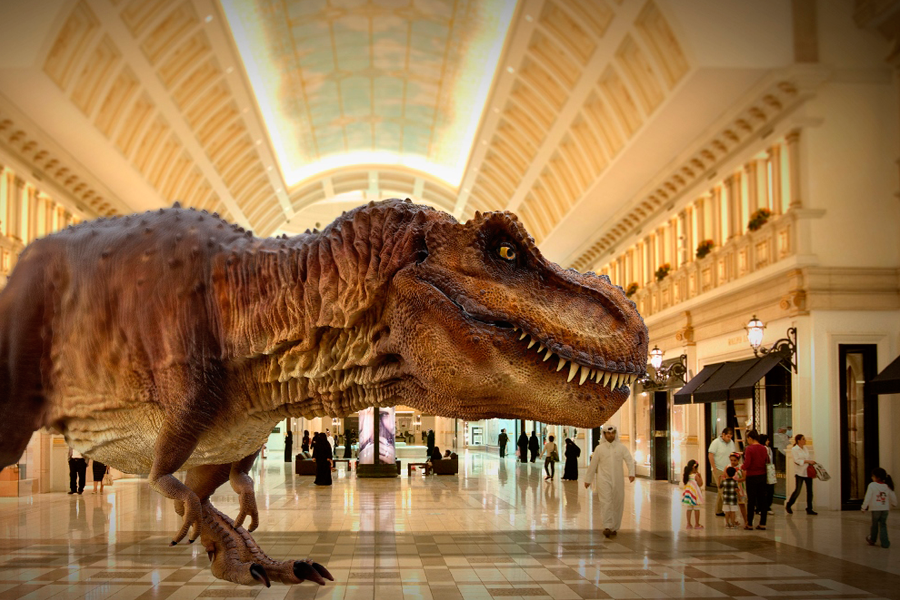
Augmented reality and holography successfully bring exhibits in the user’s world. The Smithsonian National Museum of Natural History leveraged this solution to demonstrate the Earth in the Jurassic period. The eye-catching show was powered by Broadcast AR and unveiled the life of holographic dinos going along an enclosure and interacting with spectators and each other. The system operation is of no secret: An individual approaches a special system of video cameras capturing all his/her movements and a large screen demonstrating the show. Thus, a visitor gets immersed into the plot and can be either observer or a character.

Virtual reality
Virtual reality is an ideal message-sending tool for museums as VR technologies impact multiple senses and generate a brand-new experience. The key to success here is our brain that believes everything it sees, thus reproducing sensory feelings accordingly. This turns museums into a dynamic, almost-real and interactive space.

Our partners have completed a similar project for the State Hermitage Museum, accurately simulating its Jupiter Hall in virtual reality. As a result, people can now watch any sculpture at all angles, see all the exhibits and “visit” the museum even when living in a different city. This digital cultural heritage approach is gaining momentum among museums. (To learn more, read the blog about the project )

Biometrics
Although biometrics technology is still on its way to museum space, it has great potential here. In 2015, the technology was tested by FST Biometrics in the ICER (Industry, Culture, Education and Recreation) Innovation Center, Denmark. A visitor checks in via a terminal at the entrance, with user’s name and biometric data being saved in a database.  Throughout the tour, the system addresses users by their names and provides exhibition details.

“Museum tour format has already changed. To attract and retain the audience, today’s museums have to revise their approach and move from a traditional place where collections live to an interactive technological cultural center,” said Pavel Tatarintsev, NNTC expert.

HOLOGRAMS AS EFFECTIVE PROMOTION TOOL FOR REAL ESTATE DEVELOPMENT

Dubai is a fast-growing city, with the government planning to invest some $7 billion in the municipal infrastructure in 2019. In the course of intensive preparations for 2020, Dubai faces an ever-increasing number of infrastructure projects. With high demand for accommodation and jobs in Dubai, both real estate developers and agencies are vigorously competing to win new clients. This post is about an innovative solution for real estate developers to improve their competitive edge.

Sometimes, we do not even realize how the tiniest details can be critical for the overall success. This is especially true for cutting-edge technology since many businesses still consider innovations as a hobby of geek scientists, while high-tech solutions ceased to be tycoons’ toys or science fiction very long ago. For example, a hologram table, an affordable and effective presentation tool, has been commercially available for three years already. 

What is a hologram table?

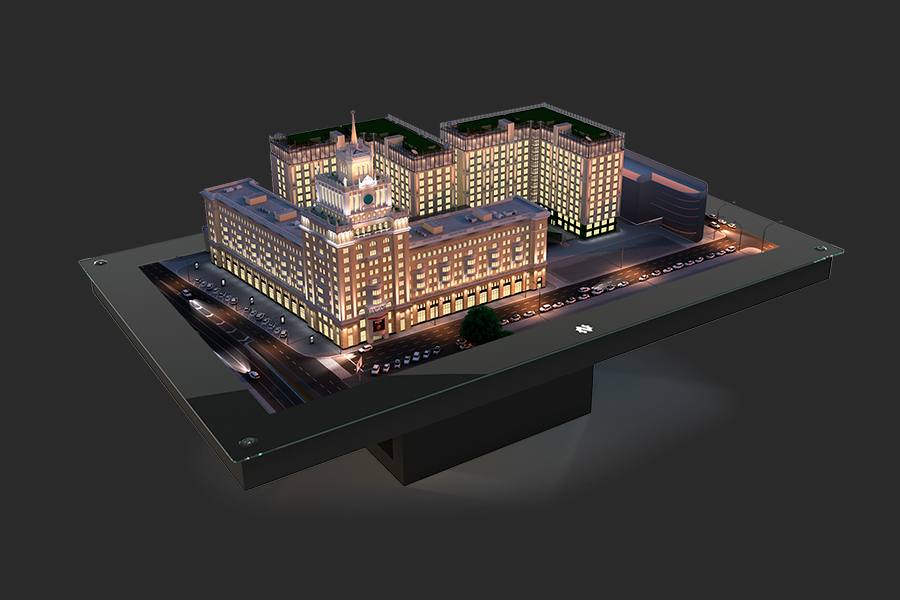
This is a table with a holographic panel displaying a precise 3D model of buildings or campuses. The technology users can interact with the content, get immersed into the design and focus on critical details: turn, zoom in or out, ‘take off’ the roof and look at floor and room layouts, see how future residents will park their cars in the underground parking lot, and enjoy a bird’s-eye view of their entire district.

Why not traditional mock-up?

WOW effect
Hologram table is a good way to achieve wow effect. It attracts many people and looks great compared to conventional mock-ups.

In 2016, our customer, a large real estate development company in GCC, was one of the first industry players to showcase their projects on a hologram table. During an industry trade show, visitors got immersed into augmented reality to scrutinize both interior and exterior of villas in a new elite district being still under design. Actually, the customer couldn’t get prepared for the trade show on time, but our international team of 3D developers helped it to meet the deadlines by completing the task within just two weeks.

The fastest always wins
Being fast is a key to success in a competitive battle. How to measure the speed when it comes to expos? Let’s take the number of projects showcased in a certain period as a reference, and you’ll see how a hologram table makes the difference. It can download several models in a few seconds and demonstrate a company’s entire portfolio by switching between different 3D models. 

Visibility
Unlike traditional mock-ups, a 3D model is of interactive nature (a hologram table speeds up a consultation by up to 10-30 minutes). 3D models can show construction sites and their environment in a precise and realistic manner, while also integrating various scenarios to be played back. The model demonstrates all project aspects and provides the customer with a big comprehensive picture detailed down to a particular spare part laying on the table in the factory shop.

Scale
The solution can display designs of any scale, from a single facility to the entire district, making it possible to zoom in and out various structures and cover much more project details during the presentation. Unlike traditional mock-ups, a hologram table can accommodate both a building and entire city.

You are welcome to get a look at and feel for the technology in our NNTC office where we have already installed a hologram table and uploaded various designs provided by our vendor NettleBox.