“THE DRONE ILLUSION” FROM THE ENGINEERING PERSPECTIVE

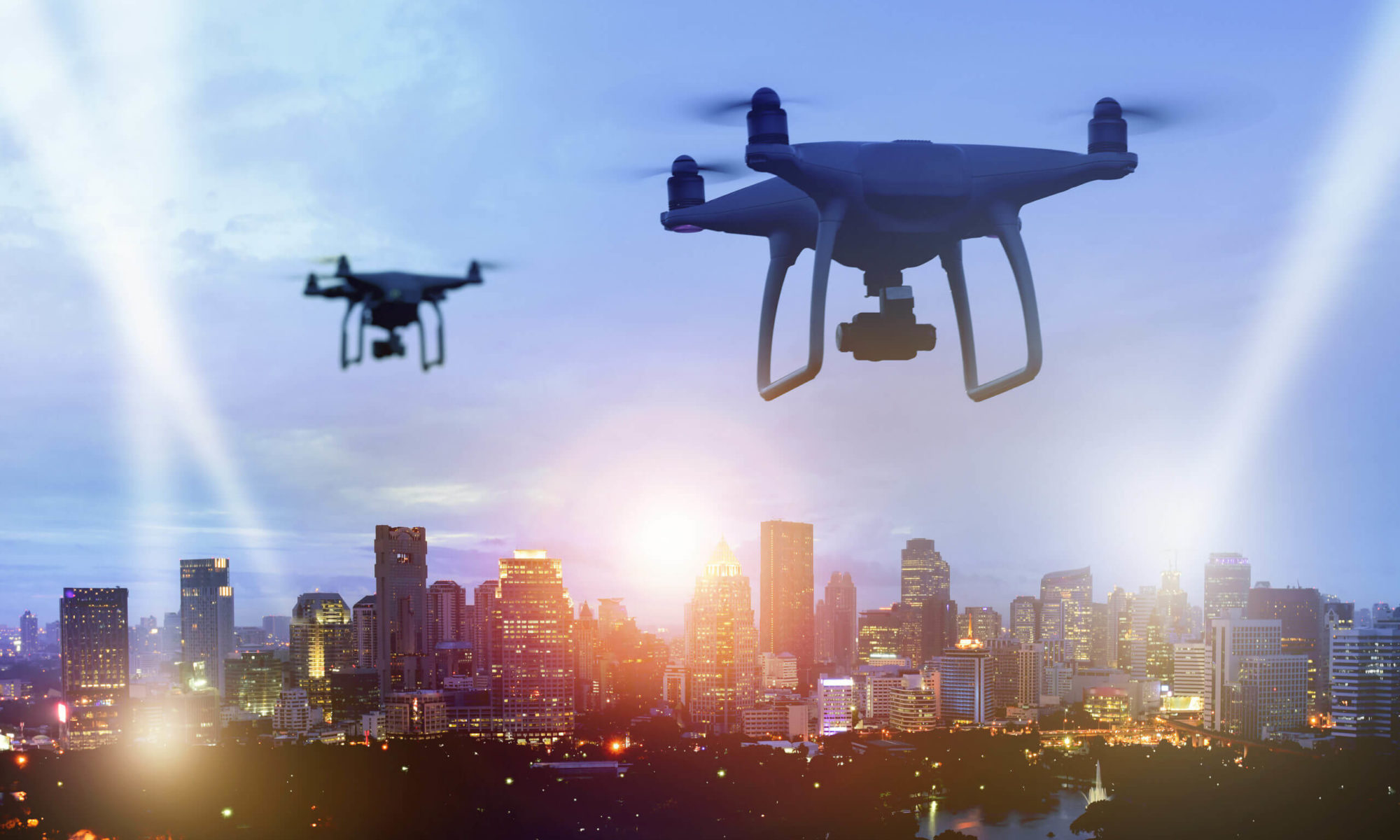
Drones are modestly sized unmanned aerial vehicles making headline news and buzzing around. They are featured in spy action movies and video games playing the role of enemy technology or helping a protagonist to outplay enemies. Either way, this stunning fictional representation lures our minds into a trap of “the drone illusion”. To pierce this veil, let’s take a look from the engineering perspective.

Engineering considers aerodynamic efficiency of a drone design and numerous factors, including the laws of nature equally applying to everyone and everything.

We need a vehicle perfectly performing functional tasks, which, in our case, takes off at once, hovers steadily, and transports cargo over long distances. We need…a helicopter. During the last 50-60 years, the appearance of all helicopters remains virtually the same, in general, there are two main aerodynamic designs. Why so? Helicopter is the proven golden standard in fuel efficiency, agility, and effective load-carrying capability. Coaxial rotor helicopters, for instance, are the most fuel-efficient. (Coaxial rotors are a pair of helicopter rotors mounted one above the other, with the same axis, but rotating in opposite directions). Such a sophisticated machine design requires not one, not a dozen, but a huge task force that includes specialists highly qualified for the job.

As for drones, they are compact, lightweight, and easy to assemble – you don’t need an engineer’s degree to make such a flying device for yourself. And let’s make it clear: all drones are aerial vehicles, but not every drone is created by professional engineers specializing in aerodynamics. The industry has a few companies engaged seriously with drone designing. Though there are many young talents bubbling with enthusiasm to write an excellent code and solve challenges and, of course, impatient to field-test it. Sometimes, a team intentionally sacrifices aerodynamic efficiency in favor of easier and faster development. However, even if they installed a software masterpiece on such a drone, its power would still be limited by design. Plenty of original ideas remain untranslated into reality without a professional engineer in a team.

Drones come in a great number of shapes and sizes, but the majority has two weaknesses:

  • Low energy efficiency, as compared to helicopters, which limits both the flight time and load carrying capability
  • Poor flexibility and balance, as compared to the bigger brother

When it comes to business tasks, people start talking about drones and fall into the trap of their own illusions about drones. It goes like this: “We want you to develop for us a drone that can…blah-blah-blah”. Is it really a good way to solve a business problem?

Let me tell you one story about agricultural business. Thirty or so years ago, small helicopters were actively used to spray the fields. Since then, their market share has been slashed, while drones’ share has increased. Back to the business task: transportation of chemicals to spray the fields. To be more or less effective, a drone has to be capable of spraying 15-20 liters per flight. Before drones, the market supplied radio-controlled helicopters carrying 15-30 liters of chemicals, thus significantly dropping the cost of treating one hectare, as compared to conventional methods. Today, an agricultural drone – a bulky and barely transportable vehicle worth of $25,000 to 30,000 USD – can carry some 15-16 liters of liquid. Just compare: a modern helicopter with the same load carrying capacity costs $10,000 USD, but it flies faster and more flexibly, and its battery works longer. Moreover, it is easy to transport – you can fold the rotors and put its body in a car trunk. This is the trap of “the drone illusion”: helicopter costs less and works better, but drones grow in demand.

“The drone illusion” hurts the industry. In fact, the existing drone design simply can’t get better, as technology evolves evenly for all aerial vehicles. Should the drone battery improve, the helicopter’s will improve too. Thus, the developers with more experienced in-house engineers will have a competitive edge.

How to avoid “the drone illusion” trap? Actually, it’s easy. Drones can effectively solve certain tasks. Take logics to a new level: don’t try to adapt drones. Start searching for the right flying vehicle and consult with an engineer. This will help you save money, avoid hassle, and expand the technological capacity. Discover the richness of technology of the 21st century.

by Pavel Tatarintsev, NNTC R&D Head

INFOGRAPHIC: DIGITAL WORKER FOR SMARTER AND SAFER HSE

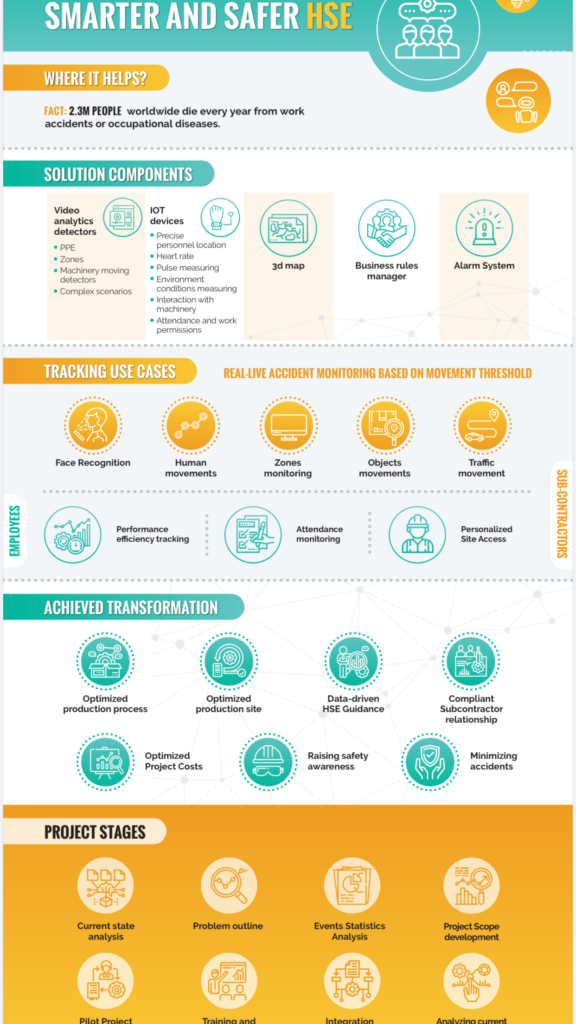
Everyone at work is entitled to be provided with an environment where risks of health and safety are professionally controlled. Employers carry primary responsibility for safe and accident-free working sites. 

What are the key factors that have a direct impact on the number of accidents, people’s injuries, incurring unplanned costs and breaching projects’ timelines?

This list comprises but not limited to: 

  • Processes inefficiency 
  • Lack of visibility of specific areas in the processes and working sites 
  • Human factors
  • Inefficiency in security and safety guidelines
  • Employees performance 

NNTC’s Digital Worker is an IoT and video analytics-based platform that addresses these critical factors providing all required insights and allows to build a fully efficient, accident free industrial or construction site as well as eliminates breaches of projects’ scopes and timelines.

Here is why:

Learn how Digital Worker helps prevent workplace accidents and safety violations.

How Face Recognition System Puts Things Right on Construction Site and Helps Contractor Avoid Penalty 7

A mess on a construction site is quite a common thing and can be tolerated to some extent if it is an organized mess. However, when this mess creeps into core processes, a construction site turns into a hurrah’s nest, and a developer faces risk of large penalties, downtime, and even death toll. In this blog, we’ll tell you how CROC, our strategic partner, implemented a face recognition system on a construction site.

One fine, sunny day, when the site was buzzing with activity and dozens of workers were moving around cheerful and positive, a former workman penetrated the site. He passed through a checkpoint, greeted a guard who knew him well (but did not know that he had been fired already), entered the territory, and went to his friends. Half an hour later, a fire was burning, with the workers drinking tea, resting, and enjoying their lives.

The problem was that they made the fire near two gas cylinders, one of which suddenly exploded. Neither warning nor alert. Just exploded, and that’s it! Fortunately, people were just shocked, not injured, but a police came to the site the same day and initiated an inspection, which revealed some unpleasant facts for a contractor:

  • Many workers used forged documents. In other words, one family member obtained necessary documents, got hired at the construction site, and then his brother went for work instead of him.
  • For each worker using forged documents, a fine of $7,600 or even more may be imposed, and the construction process may be suspended for 14 – 90 days with almost catastrophic consequences for a general contractor and customer.

That is why the contractor asked CROC for help.

How to solve a problem?

Initially, the construction site was equipped with just run-of-the-mill employee recognition systems:

  • Palm vein identification, which performs poorly even in clean offices if people eat some greasy food there. After eating, this vein pattern changes causing recognition errors.
  • Iris identification, which is more expensive and time consuming. It is hardly the best option when every morning buses arrive at a construction site and some 600 workers have to pass the checkpoint within one hour, from 7 to 8 a.m. It’s as slow as a snail!

Therefore, it was the time to try video analytics.

Each turnstile is equipped with two cameras: one aimed at incoming people, and the other, at outgoing.

There is a small cooled server room on site, having a rack with two servers and a switch. The first server receives video stream from cameras and identifies frames containing faces and being of the best quality. The second server receives these “clear” frames with faces and runs a recognition algorithm to find a match in a database.

If a frame contains only one face and this person is authorized to pass through, then the turnstile opens. Otherwise, a guard is alerted.

No Internet connection is needed for the system, just a copper cabling on site. However, if connected, the system allows for continuous monitoring, email reports, and remote second line support for operators.

The system runs perfectly in typical situations:

  • Using a pass card of another person to enter — an alerted guard stops a trespasser and investigates the incident.
  • A former employee attempts to enter the site — a guard does not let him in.
  • An employee attempts to enter the site in wrong time — a guard asks the employee to get a pass card at an access control office and then come back to the checkpoint.

In addition, every evening, executives get a report on how many people were scheduled for work and how many arrived actually. It is very important since contractor’s favorite trick is to schedule 50 workers, provide only 30, and then report on 50.

Moreover, this information — like 600 people scheduled, only 450 arrived — shows if a project is running out of time already. And you see it right now, but not a week or month later.

Outcome

Morning queues have almost disappeared. Instead, it takes one hour for two turnstiles to let 700 people in, even including guard intervention cases. The customer enjoys reports on the actual number of people arrived at the construction site, which was a sad news for some of the contractors. Neither a $7,600 penalty nor work suspension for 14 – 90 days is pending now, with the system itself costing less than this penalty.

NNTC actively partners with CROC and implements face recognition solutions in GCC countries. If you are interested in this technology, feel free to contact our consultants.

DRONE SHOW: WHO’S PULLING THE STRINGS?

Sorry, fireworks, it’s been a pleasure looking at you, but you are out. We are looking for something else to take our breath away. Dancing drones is a new trendy thing, giving people a thrill of fresh experience – same sparkling lights, but smart. But how does it work? Let’s take a peep behind the scenes and watch show creators at work.

If there is a swarm of 300 or 1,000 drones, imperfections in their position against one another and the ground are scarcely noticeable – this vigorous whirling formation of pieces of light, each separated by a few meters from the rest, is too big, and any error or desync is almost invisible. Even if a couple of drones just fall down, it’s no bother. Though it’s not the case for hotels and parks preferring drone show of 20 to 90 flying dancers. There is no margin for error and drones are expected to move in perfect harmony. So, how to prepare a drone show? You can’t just make these vehicles pirouette in the air with perfect timing, can you?

Step one. Drones
For a start, you need to set your fleet ready for the show, i.e. make sure every drone is unbroken, properly configured, and nothing is missing after transporting. We at NNTC prefer to operate ready-to-use DJI drones or assemble them ourselves. 

Step two. Staging the show
It all starts with 3D modeling.

Motion graphics created in Blender, for example, is converted from animation trajectories to a format readable by the autopilot. Before going to the field, we perform thorough testing involving simulators. We put virtual instances of drones into necessary coordinates and operate them as real appliances using our software. This way we can evaluate their flight in real-time, as well as visualize the outcome in a 3D scene.

Here, have a look:

Step three. Harmony
To ensure precise movements and perfect timing, you will need a special software, for example, Drone Dance Controller produced by our vendor UgCS. The programming team worked hard on the autopilot that navigates the ballet of drones along random trajectories with accurate GPS time synchronization. The trajectories can be drawn using either a 3D computer graphics software or scripts. Now, when everything is set, all an operator needs to do is press ‘Start’ and watch the show closely.

Step four. Test
We can finally test everything in practice and see what drones can actually do. We deploy our infrastructure (ground control station and communications), arrange drones, and check if all of them are OK after transportation and can be connected to our station. The software will then automatically determine a route for each particular drone. Finally, we set a start time, and off we go!

Step five. The show
Now you’re ready. During the flight, both the operator and other people in charge need to monitor the fleet condition and, if necessary, decide to perform the emergency landing of a drone, which is out. Remember, you should mind certain restrictions before starting the show. No ‘whatever the weather’: rain or wind speed of over 5 m/s is likely to ruin the accuracy of drone’s position in the air. To communicate with drones, we need radio frequencies being rather free from other signals. Spectators need to be at a certain distance from the show venue for their own safety.

Watch how the drone show must go on:

We bring the most ambitious fantasies, ideas and dreams to life with drone and laser shows. Visit this page for more information, if you are looking for how to order a drone show, or if you want to talk to an expert and learn how the drone show will work for your occasion and venue.

How Face Recognition System Puts Things Right on Construction Site and Helps Contractor Avoid Penalty 6

A mess on a construction site is quite a common thing and can be tolerated to some extent if it is an organized mess. However, when this mess creeps into core processes, a construction site turns into a hurrah’s nest, and a developer faces risk of large penalties, downtime, and even death toll. In this blog, we’ll tell you how CROC, our strategic partner, implemented a face recognition system on a construction site.

One fine, sunny day, when the site was buzzing with activity and dozens of workers were moving around cheerful and positive, a former workman penetrated the site. He passed through a checkpoint, greeted a guard who knew him well (but did not know that he had been fired already), entered the territory, and went to his friends. Half an hour later, a fire was burning, with the workers drinking tea, resting, and enjoying their lives.

The problem was that they made the fire near two gas cylinders, one of which suddenly exploded. Neither warning nor alert. Just exploded, and that’s it! Fortunately, people were just shocked, not injured, but a police came to the site the same day and initiated an inspection, which revealed some unpleasant facts for a contractor:

  • Many workers used forged documents. In other words, one family member obtained necessary documents, got hired at the construction site, and then his brother went for work instead of him.
  • For each worker using forged documents, a fine of $7,600 or even more may be imposed, and the construction process may be suspended for 14 – 90 days with almost catastrophic consequences for a general contractor and customer.

That is why the contractor asked CROC for help.

How to solve a problem?

Initially, the construction site was equipped with just run-of-the-mill employee recognition systems:

  • Palm vein identification, which performs poorly even in clean offices if people eat some greasy food there. After eating, this vein pattern changes causing recognition errors.
  • Iris identification, which is more expensive and time consuming. It is hardly the best option when every morning buses arrive at a construction site and some 600 workers have to pass the checkpoint within one hour, from 7 to 8 a.m. It’s as slow as a snail!

Therefore, it was the time to try video analytics.

Each turnstile is equipped with two cameras: one aimed at incoming people, and the other, at outgoing.

There is a small cooled server room on site, having a rack with two servers and a switch. The first server receives video stream from cameras and identifies frames containing faces and being of the best quality. The second server receives these “clear” frames with faces and runs a recognition algorithm to find a match in a database.

If a frame contains only one face and this person is authorized to pass through, then the turnstile opens. Otherwise, a guard is alerted.

No Internet connection is needed for the system, just a copper cabling on site. However, if connected, the system allows for continuous monitoring, email reports, and remote second line support for operators.

The system runs perfectly in typical situations:

  • Using a pass card of another person to enter — an alerted guard stops a trespasser and investigates the incident.
  • A former employee attempts to enter the site — a guard does not let him in.
  • An employee attempts to enter the site in wrong time — a guard asks the employee to get a pass card at an access control office and then come back to the checkpoint.

In addition, every evening, executives get a report on how many people were scheduled for work and how many arrived actually. It is very important since contractor’s favorite trick is to schedule 50 workers, provide only 30, and then report on 50.

Moreover, this information — like 600 people scheduled, only 450 arrived — shows if a project is running out of time already. And you see it right now, but not a week or month later.

Outcome

Morning queues have almost disappeared. Instead, it takes one hour for two turnstiles to let 700 people in, even including guard intervention cases. The customer enjoys reports on the actual number of people arrived at the construction site, which was a sad news for some of the contractors. Neither a $7,600 penalty nor work suspension for 14 – 90 days is pending now, with the system itself costing less than this penalty.

NNTC actively partners with CROC and implements face recognition solutions in GCC countries. If you are interested in this technology, feel free to contact our consultants.

How Face Recognition System Puts Things Right on Construction Site and Helps Contractor Avoid Penalty 5

A mess on a construction site is quite a common thing and can be tolerated to some extent if it is an organized mess. However, when this mess creeps into core processes, a construction site turns into a hurrah’s nest, and a developer faces risk of large penalties, downtime, and even death toll. In this blog, we’ll tell you how CROC, our strategic partner, implemented a face recognition system on a construction site.

One fine, sunny day, when the site was buzzing with activity and dozens of workers were moving around cheerful and positive, a former workman penetrated the site. He passed through a checkpoint, greeted a guard who knew him well (but did not know that he had been fired already), entered the territory, and went to his friends. Half an hour later, a fire was burning, with the workers drinking tea, resting, and enjoying their lives.

The problem was that they made the fire near two gas cylinders, one of which suddenly exploded. Neither warning nor alert. Just exploded, and that’s it! Fortunately, people were just shocked, not injured, but a police came to the site the same day and initiated an inspection, which revealed some unpleasant facts for a contractor:

  • Many workers used forged documents. In other words, one family member obtained necessary documents, got hired at the construction site, and then his brother went for work instead of him.
  • For each worker using forged documents, a fine of $7,600 or even more may be imposed, and the construction process may be suspended for 14 – 90 days with almost catastrophic consequences for a general contractor and customer.

That is why the contractor asked CROC for help.

How to solve a problem?

Initially, the construction site was equipped with just run-of-the-mill employee recognition systems:

  • Palm vein identification, which performs poorly even in clean offices if people eat some greasy food there. After eating, this vein pattern changes causing recognition errors.
  • Iris identification, which is more expensive and time consuming. It is hardly the best option when every morning buses arrive at a construction site and some 600 workers have to pass the checkpoint within one hour, from 7 to 8 a.m. It’s as slow as a snail!

Therefore, it was the time to try video analytics.

Each turnstile is equipped with two cameras: one aimed at incoming people, and the other, at outgoing.

There is a small cooled server room on site, having a rack with two servers and a switch. The first server receives video stream from cameras and identifies frames containing faces and being of the best quality. The second server receives these “clear” frames with faces and runs a recognition algorithm to find a match in a database.

If a frame contains only one face and this person is authorized to pass through, then the turnstile opens. Otherwise, a guard is alerted.

No Internet connection is needed for the system, just a copper cabling on site. However, if connected, the system allows for continuous monitoring, email reports, and remote second line support for operators.

The system runs perfectly in typical situations:

  • Using a pass card of another person to enter — an alerted guard stops a trespasser and investigates the incident.
  • A former employee attempts to enter the site — a guard does not let him in.
  • An employee attempts to enter the site in wrong time — a guard asks the employee to get a pass card at an access control office and then come back to the checkpoint.

In addition, every evening, executives get a report on how many people were scheduled for work and how many arrived actually. It is very important since contractor’s favorite trick is to schedule 50 workers, provide only 30, and then report on 50.

Moreover, this information — like 600 people scheduled, only 450 arrived — shows if a project is running out of time already. And you see it right now, but not a week or month later.

Outcome

Morning queues have almost disappeared. Instead, it takes one hour for two turnstiles to let 700 people in, even including guard intervention cases. The customer enjoys reports on the actual number of people arrived at the construction site, which was a sad news for some of the contractors. Neither a $7,600 penalty nor work suspension for 14 – 90 days is pending now, with the system itself costing less than this penalty.

NNTC actively partners with CROC and implements face recognition solutions in GCC countries. If you are interested in this technology, feel free to contact our consultants.

INNOVATIVE MEDICAL KIOSK FOR THREE-MINUTE HEALTH CHECK

Any hazardous occupation calls for continuous health checks to make sure that manufacturing workers, bus drivers and pilots are medically fit to deal with their jobs, as well as nuclear operators are clean and sober before the shift. This job list can be continued.

Many plants make medical examinations a must for rank-and-file employees, too many for one physician to conduct but not so thorough as for pilots or nuclear operators. Such a health check includes measuring blood pressure, heart rate, temperature, blood oxygenation, and basic reflexes. Some local regulations prohibit robots from examining these health indicators, some do allow it, but still require a medical professional to approve the results. Thus, humans remain in change, but may enjoy great automation benefits.

Medical kiosk is a comprehensive solution to measure all relevant indicators allowing workers to undergo every morning’s medical examination in just three minutes.

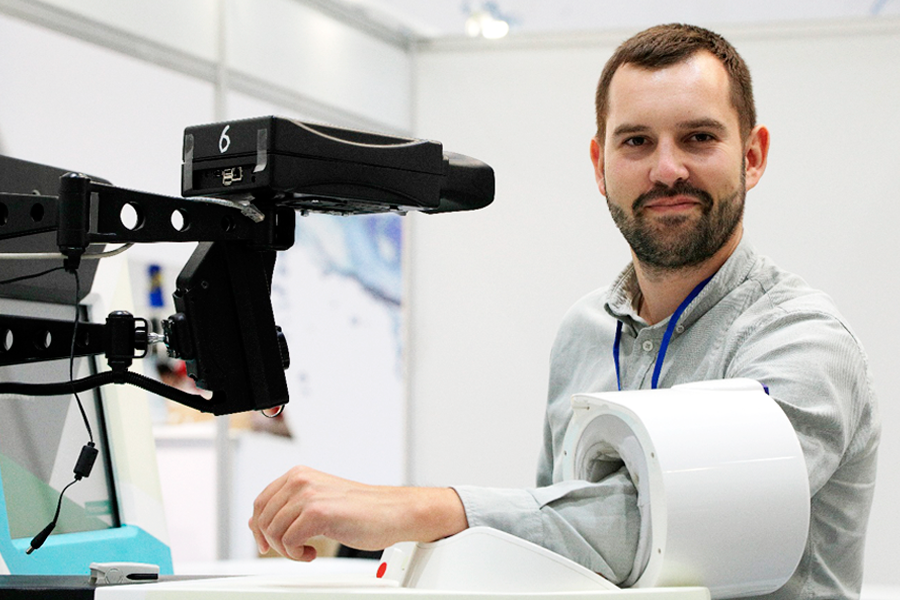
What is a medical kiosk? It is a Linux machine with a variety of medical sensors and the software to identify patients by a card, fingerprint, face or eye, run examinations, enter the results into a database, and even print them out. The database can either be inside the kiosk or stored in the company’s HR system or on another external server. 

Basic configuration consists of a case, vandal-proof touch screen (16 mm glass), printer, and camera for a doctor to supervise the examination or detect patient change after authentication. The default sensors measure heart rate, blood oxygenation by transillumination, blood pressure (a cuff), and alcohol intoxication. The advanced configuration provides additionally a pupillometer, touch-free thermometer, scales and any sensors of choice, like glucose meter or contact thermometer, etc.

Default sensors

The breathalyzer is a device consisting of an ethanol (or rather alcoholic fumes) sensor connected to the access control system. If a person is OK, the turnstile opens. If alcohol intoxication is detected, then security is notified and the turnstile remains closed.

Such kiosk at the entry turnstiles doesn’t substitute medical personnel but significantly reduces their workload and minimizes human factor impact on result accuracy.

Additional sensors

Thermal imaging cameras are not the news, so we decided to adapt them for touch-free thermometers that use the forehead to take a temperature. The point sensor is located right above a breathalyzer. Our test subject was savvy enough to quickly find a way of cheating the system by rubbing the forehead before examination, with the terminal immediately triggering an alarm and offering to call an ambulance, a quarantine control and neutralizing teams.

A pupillometer measures pupil response time: a flash – and the count begins. The response time helps determine nervous system condition, particularly nervous exaltation or slowness, which are usually caused by diseases, alcohol, drugs, medication, fatigue, sleepiness or mental disorders.

Summary

Full health check session takes three minutes (the more sensors, the longer it takes).

Doctors concur that the terminal can quickly identify hypertensive crisis with potential to develop into myocardial infarction or stroke, tachycardia (increased pulse rate) or bradycardia (decreased pulse rate), fever caused by acute infection, ARVI, influenza, and alcohol intoxication (a usual suspect for any plant).

Generally, this kiosk is a kind of a construction set that you can turn into a full-fledged and handy medical tool of choice. You can even choose the case.

Medical terminals are used for daily staff checks before shifts. The three-step employee identification process includes an individual USB key reading, photo recognition, and fingerprint scanning, while the comprehensive medical examination consists of blood pressure and heart rate measurement, and respiratory alcohol level testing.

The customer confirmed that daily pre-shift health checks via medical terminals help to reduce industrial injury and emergency risks, and improve staff behavior.

How Face Recognition System Puts Things Right on Construction Site and Helps Contractor Avoid Penalty 4

A mess on a construction site is quite a common thing and can be tolerated to some extent if it is an organized mess. However, when this mess creeps into core processes, a construction site turns into a hurrah’s nest, and a developer faces risk of large penalties, downtime, and even death toll. In this blog, we’ll tell you how CROC, our strategic partner, implemented a face recognition system on a construction site.

One fine, sunny day, when the site was buzzing with activity and dozens of workers were moving around cheerful and positive, a former workman penetrated the site. He passed through a checkpoint, greeted a guard who knew him well (but did not know that he had been fired already), entered the territory, and went to his friends. Half an hour later, a fire was burning, with the workers drinking tea, resting, and enjoying their lives.

The problem was that they made the fire near two gas cylinders, one of which suddenly exploded. Neither warning nor alert. Just exploded, and that’s it! Fortunately, people were just shocked, not injured, but a police came to the site the same day and initiated an inspection, which revealed some unpleasant facts for a contractor:

  • Many workers used forged documents. In other words, one family member obtained necessary documents, got hired at the construction site, and then his brother went for work instead of him.
  • For each worker using forged documents, a fine of $7,600 or even more may be imposed, and the construction process may be suspended for 14 – 90 days with almost catastrophic consequences for a general contractor and customer.

That is why the contractor asked CROC for help.

How to solve a problem?

Initially, the construction site was equipped with just run-of-the-mill employee recognition systems:

  • Palm vein identification, which performs poorly even in clean offices if people eat some greasy food there. After eating, this vein pattern changes causing recognition errors.
  • Iris identification, which is more expensive and time consuming. It is hardly the best option when every morning buses arrive at a construction site and some 600 workers have to pass the checkpoint within one hour, from 7 to 8 a.m. It’s as slow as a snail!

Therefore, it was the time to try video analytics.

Each turnstile is equipped with two cameras: one aimed at incoming people, and the other, at outgoing.

There is a small cooled server room on site, having a rack with two servers and a switch. The first server receives video stream from cameras and identifies frames containing faces and being of the best quality. The second server receives these “clear” frames with faces and runs a recognition algorithm to find a match in a database.

If a frame contains only one face and this person is authorized to pass through, then the turnstile opens. Otherwise, a guard is alerted.

No Internet connection is needed for the system, just a copper cabling on site. However, if connected, the system allows for continuous monitoring, email reports, and remote second line support for operators.

The system runs perfectly in typical situations:

  • Using a pass card of another person to enter — an alerted guard stops a trespasser and investigates the incident.
  • A former employee attempts to enter the site — a guard does not let him in.
  • An employee attempts to enter the site in wrong time — a guard asks the employee to get a pass card at an access control office and then come back to the checkpoint.

In addition, every evening, executives get a report on how many people were scheduled for work and how many arrived actually. It is very important since contractor’s favorite trick is to schedule 50 workers, provide only 30, and then report on 50.

Moreover, this information — like 600 people scheduled, only 450 arrived — shows if a project is running out of time already. And you see it right now, but not a week or month later.

Outcome

Morning queues have almost disappeared. Instead, it takes one hour for two turnstiles to let 700 people in, even including guard intervention cases. The customer enjoys reports on the actual number of people arrived at the construction site, which was a sad news for some of the contractors. Neither a $7,600 penalty nor work suspension for 14 – 90 days is pending now, with the system itself costing less than this penalty.

NNTC actively partners with CROC and implements face recognition solutions in GCC countries. If you are interested in this technology, feel free to contact our consultants.

How Face Recognition System Puts Things Right on Construction Site and Helps Contractor Avoid Penalty 3

A mess on a construction site is quite a common thing and can be tolerated to some extent if it is an organized mess. However, when this mess creeps into core processes, a construction site turns into a hurrah’s nest, and a developer faces risk of large penalties, downtime, and even death toll. In this blog, we’ll tell you how CROC, our strategic partner, implemented a face recognition system on a construction site.

One fine, sunny day, when the site was buzzing with activity and dozens of workers were moving around cheerful and positive, a former workman penetrated the site. He passed through a checkpoint, greeted a guard who knew him well (but did not know that he had been fired already), entered the territory, and went to his friends. Half an hour later, a fire was burning, with the workers drinking tea, resting, and enjoying their lives.

The problem was that they made the fire near two gas cylinders, one of which suddenly exploded. Neither warning nor alert. Just exploded, and that’s it! Fortunately, people were just shocked, not injured, but a police came to the site the same day and initiated an inspection, which revealed some unpleasant facts for a contractor:

  • Many workers used forged documents. In other words, one family member obtained necessary documents, got hired at the construction site, and then his brother went for work instead of him.
  • For each worker using forged documents, a fine of $7,600 or even more may be imposed, and the construction process may be suspended for 14 – 90 days with almost catastrophic consequences for a general contractor and customer.

That is why the contractor asked CROC for help.

How to solve a problem?

Initially, the construction site was equipped with just run-of-the-mill employee recognition systems:

  • Palm vein identification, which performs poorly even in clean offices if people eat some greasy food there. After eating, this vein pattern changes causing recognition errors.
  • Iris identification, which is more expensive and time consuming. It is hardly the best option when every morning buses arrive at a construction site and some 600 workers have to pass the checkpoint within one hour, from 7 to 8 a.m. It’s as slow as a snail!

Therefore, it was the time to try video analytics.

Each turnstile is equipped with two cameras: one aimed at incoming people, and the other, at outgoing.

There is a small cooled server room on site, having a rack with two servers and a switch. The first server receives video stream from cameras and identifies frames containing faces and being of the best quality. The second server receives these “clear” frames with faces and runs a recognition algorithm to find a match in a database.

If a frame contains only one face and this person is authorized to pass through, then the turnstile opens. Otherwise, a guard is alerted.

No Internet connection is needed for the system, just a copper cabling on site. However, if connected, the system allows for continuous monitoring, email reports, and remote second line support for operators.

The system runs perfectly in typical situations:

  • Using a pass card of another person to enter — an alerted guard stops a trespasser and investigates the incident.
  • A former employee attempts to enter the site — a guard does not let him in.
  • An employee attempts to enter the site in wrong time — a guard asks the employee to get a pass card at an access control office and then come back to the checkpoint.

In addition, every evening, executives get a report on how many people were scheduled for work and how many arrived actually. It is very important since contractor’s favorite trick is to schedule 50 workers, provide only 30, and then report on 50.

Moreover, this information — like 600 people scheduled, only 450 arrived — shows if a project is running out of time already. And you see it right now, but not a week or month later.

Outcome

Morning queues have almost disappeared. Instead, it takes one hour for two turnstiles to let 700 people in, even including guard intervention cases. The customer enjoys reports on the actual number of people arrived at the construction site, which was a sad news for some of the contractors. Neither a $7,600 penalty nor work suspension for 14 – 90 days is pending now, with the system itself costing less than this penalty.

NNTC actively partners with CROC and implements face recognition solutions in GCC countries. If you are interested in this technology, feel free to contact our consultants.