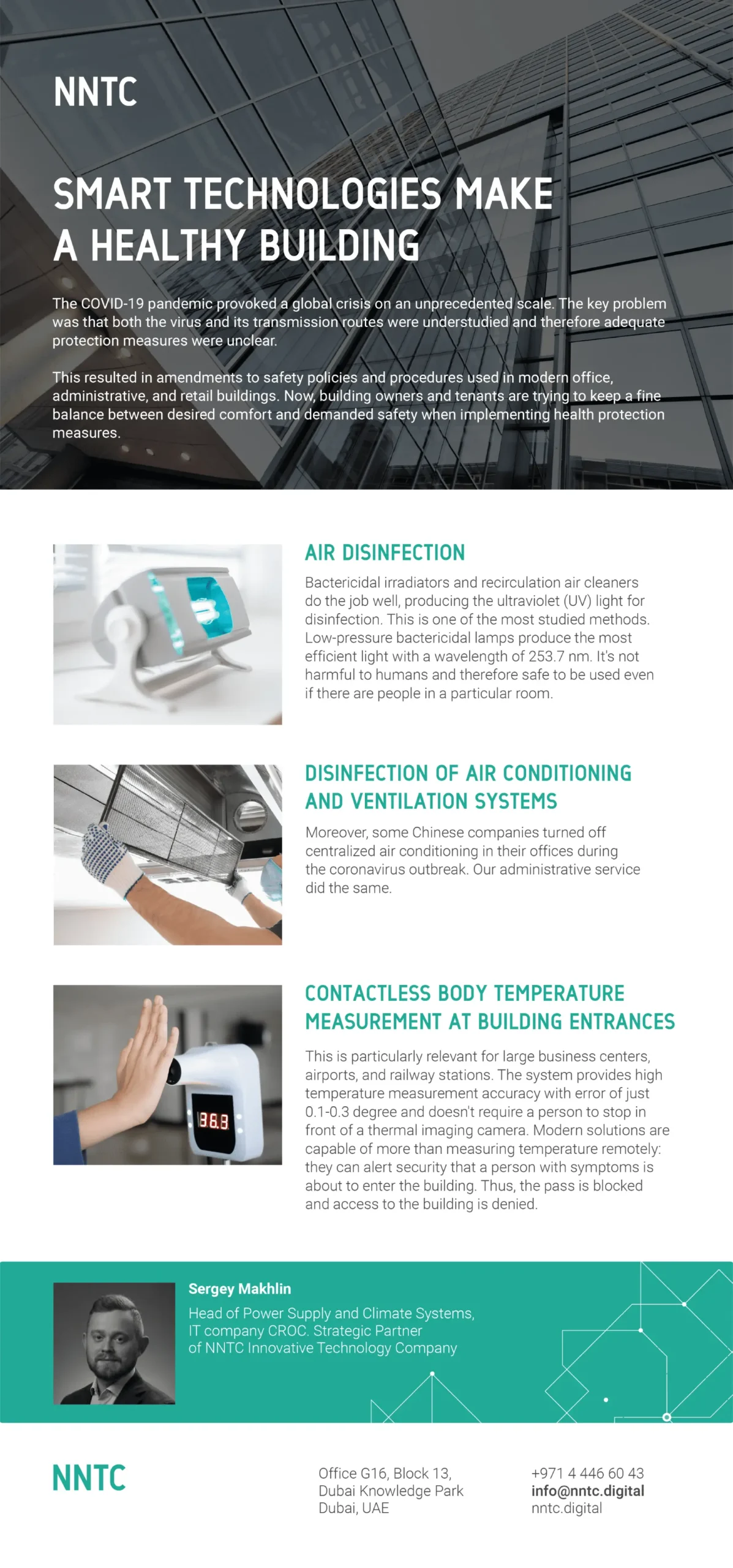
The COVID-19 pandemic provoked a global crisis on an unprecedented scale. The key problem was that both the virus and its transmission routes were understudied and therefore adequate protection measures were unclear. This resulted in amendments to safety policies and procedures used in modern office, administrative, and retail buildings.
Now, building owners and tenants are trying to find new solutions for workplace safety and health. How to keep a fine balance between the desired comfort and demanded safety?
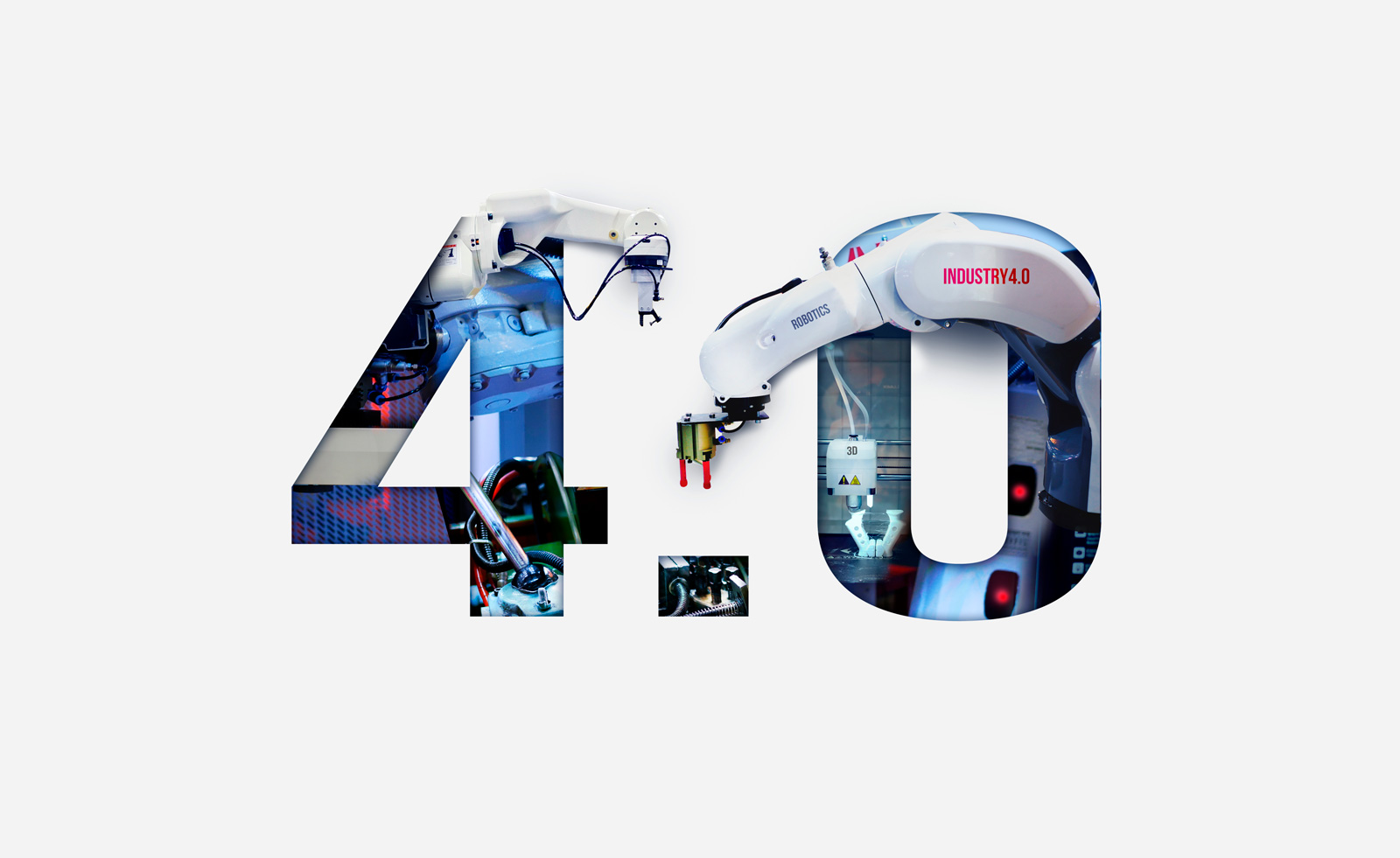
The majority of business leaders (63%) surveyed by PwC claimed that technologies of the Fourth Industrial Revolution (4IR) provide protection against an economic downturn. But how to find your way around this strange and seemingly unmanageable concept? Be brave, and I’ll show you a way in this blog!
What is 4IR?
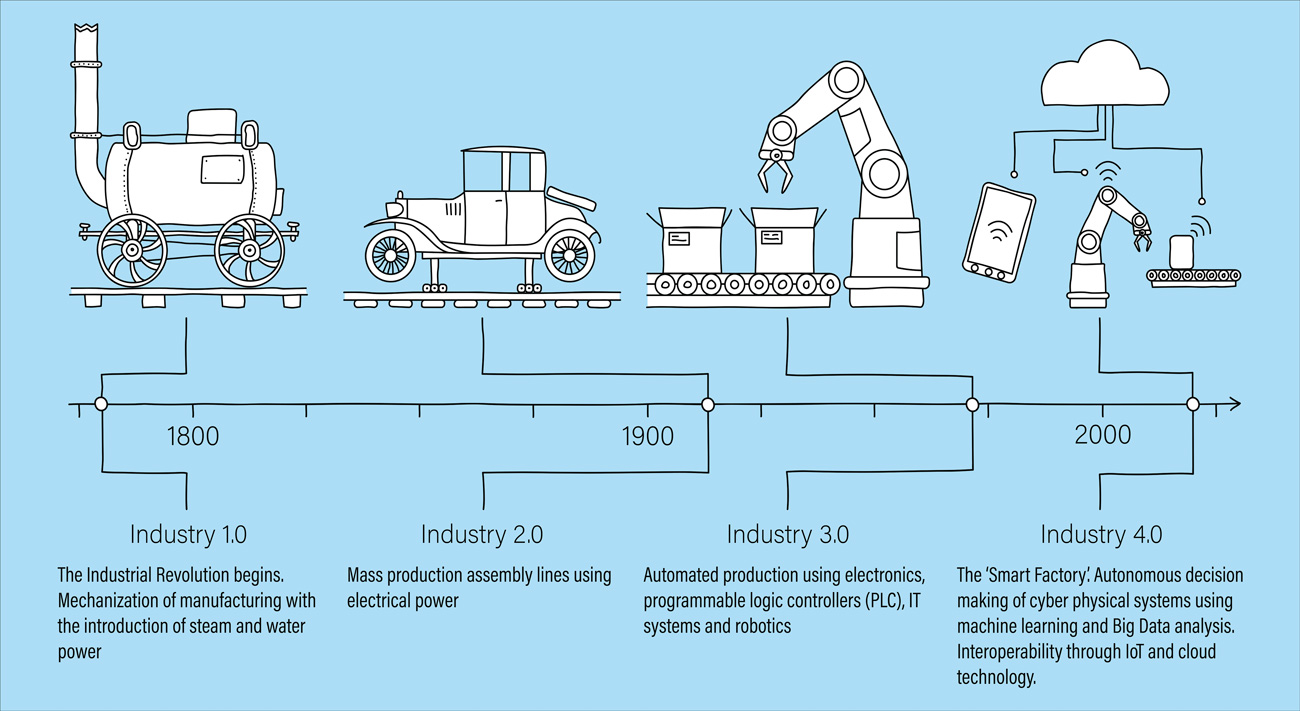
4IR became a hot topic a few years back when the world realized how technologies impact everyday life and innovations skyrocketed, giving an optimistic view of the future coexistence of humans and machines.
The Fourth Industrial Revolution is building on the Third, the digital revolution that has been occurring since the middle of the last century. It is characterized by a fusion of technologies that is blurring the lines between the physical, digital, and biological spheres.
said Klaus Schwab, Founder and Executive Chairman, World Economic Forum.
The main idea is that technologies do not replace, but rather gradually complement, humans, becoming a new “tool” in the hands of business. At the moment, businesses need to prepare for 4IR to survive amid the post-pandemic crisis. What’s more, companies that can keep up with the times and gain necessary skills in advance will win the race by leveraging the new tools.
4IR for business survival
Companies successfully deploying 4IR technologies now may actually emerge as stronger competitors during a recovery, and will likely be better prepared for a potential economic downturn in the future. 4IR benefits are evident: increased productivity, efficiency and quality of processes, as well as better staff safety, data-driven decision-making, and increased competitiveness thanks to developing customized products.
According to a recent PwC survey of CFOs, while the COVID-19 crisis has led 70% of companies to cut back or defer planned investments, just 22% said their companies are curbing investments in digital transformation. What does digital transformation actually entail?
Digital transformation means preparing an organization for 4IR solutions and then systematically adopting them in the most optimal way to minimize business risks. In fact, it is an organization-specific process which should be supervised by digital transformation specialists. This very approach will help you harness and exploit 4IR.
Stages of digital transformation:
Technology digitalization. Create advanced digital infrastructures and RPA-based systems to collect data and control processes.
Production digitalization. This stage requires the creation of a digital platform to collect, store, and process data, use some analytics tools (machine learning, digital twins), and engage production planning and management systems using the same models and data from the digital platform.
Digital services and apps. They are created on top of the rest to improve efficiency and performance. Data analytics tools allow for prompt and, ideally, automatic adjustment of production and technological processes, thus eventually raising product quality, reducing its cost, and improving other parameters.
How to start adopting 4IR?
As I already mentioned, each organization goes its own way here; however, there is a standard 4IR checklist.
Process automation. Whether at manufacturing facilities or in the office, process automation is one of the key success factors on the path to 4IR adoption. Process automation may include: RPA-based filling out of documentation, automated Big Data collection for subsequent analysis, automation of routine processes and procedures using artificial intelligence, video analytics, and IoT.
Big Data. All business processes are based on analytics. Indeed, data analytics helps determine a business development vector, predict critical situations, and optimize processes. A full-fledged data collection is only possible when information comes from all business process participants, from the production to the sales office or store.
Vision Zero and concern for people. Another pillar of the 4IR approach is personnel safety and care. Manufacturing enterprises adopt Vision Zero, which significantly improves occupational safety. Thus, VR drills fully immerse personnel in any possible scenarios to train them in dealing with emergencies without any risk, while Digital Worker solutions warn in advance about on-site hazards. There are also solutions to ensure office personnel safety and comfort. For example, BIM tools help adjust environmental conditions in the office, while contactless solutions prevent the spread of infections.
Business optimization. As a rule, the transition to 4IR goes along with certain internal restructuring and business optimization, which is unavoidable after adopting better and more cost-effective solutions that free up specialists time. As a result, companies can spur strategic development and planning or strengthen previously understaffed business units.
Dmitry Doshaniy, NNTC General Manager, summarized 2020’s results and determined development strategy for the next year. What 2020 has taught us and what strategy to follow in 2021? In today’s blog, we will share the main insights from Dmitry’s interview.
Article by Dmitry Doshaniy, NNTC General Manager LinkedIn | Mail
2020’s online survival is 2021’s new normal
Online communication services, messengers, and platforms have won extra audience as a result of self-isolation and business events going online, which is the case for both B2C and B2B sectors. For example, we at NNTC also felt the need to enhance online communication with our audience. Thus, we held webinars for customers and partners, which was a great and rewarding experience for our team.
After 2020, it’s even easier for tech companies to sell online. If, for example, you sell software a customer doesn’t need to “touch and feel”, all you need to do is provide a demo version or deliver an online presentation, and then close the deal through Zoom. This was not possible before and has only recently turned into a common business practice, and we believe these changes also bring us business development opportunities. The fact that online business meetings have become a new normal can unlock new development opportunities and boost our geographic expansion.
Technology is a lifesaver – and 2020 has proved it
During the lockdown, society has become more technologically advanced. Even the most stagnant skeptics appreciated the importance of technology and learned how to use its benefits. This interest will continue after people return to the offices. We are happy with that, since NNTC sells its solutions to people who are not afraid of technology and strive to use it for good.
In addition, we will see growing investments in healthcare and infectious disease control solutions, both organizational and technological. Indeed, this year, Apple and Google have developed an API to track contacts with virus carriers. NNTC also already offers a solution for manufacturing and construction sites that detects social distancing violations and helps identify contacts with infected people, so that affected personnel can be promptly sent to quarantine and receive medical treatment. Indeed, technologies save people’s lives.
Make decisions wisely in 2021
2020 has been a good year to cultivate morale and find new ideas and approaches for business development. Moreover, our specialists had such a good practice in implementing ideas that they have reached a brand-new level of product development speed.
Now, it is time to adopt a more balanced and less opportunistic business approach. The year 2020 has shown that we need to carefully calculate and consider response time in advance. When a demand arises for a certain type of development, the temptation is to meet this demand as soon as possible using R&D resources. However, we need to look beyond and carefully consider the next steps to avoid wasting precious time and resources in pursuit of such demand. We need to be preparing for the post-crisis time right now and think long-term rather than short-term. We are actively reviewing our solution portfolios taking into account the company activities completed in 2020. From now on, our strategy involves fewer products and more active product development.
I try to be optimistic and believe that the next year will be better than 2020. Also, in 2021 we’ll face a very intense deferred demand, as after any crisis. After the pandemic, people will be even more eager to live better life, traveling, meeting with peers shopping, and completing professional projects.
The hospital of the future may look quite different from what we are used to. Rapidly evolving technologies, along with demographic and economic changes, are expected to transform hospitals worldwide. Building the digital hospital of the future requires investments in people, technologies, processes, and premises. Therefore, hospital management should not expect ROI right away. However, in the long run, digital technologies will improve care quality, operational efficiency, and patient and staff experience.
Thank you, doctors!
With the COVID-19 spreading, hospitals worldwide are working at full capacity, and healthcare workers are saving lives every day. We admire and thank those heroes for their commitment and hard work. We wish them to stay strong in this hard time!
Moving towards hospital of the future
There is a range of solutions to improve customer experience and make hospitals more comfortable for patients and personnel. It will become a new normal sooner or later.
Digital experience
Digital solutions improve patient experience by providing real-time access to medical knowledge. The best way for hospitals to establish good relations with their customers is to become open and user friendly. Digital and AI technologies streamline the process of making appointments with doctors and reduce the number of forms patients need to fill out, while analytics, machine learning, IoT solutions, and portable devices analyze patient health condition and suggest treatment procedures to doctors.
Healing and well-being
Wristbands for patients and doctors plus visitor badges with RFID tags ensure appropriate access levels, while CCTV cameras with AI features recognize faces to locate patients who look unwell and need help, and accelerate recovery. Moreover, AI-enabled video analytics solutions can identify threatening situations as, or even before, they occur.
Hospital operational efficiency
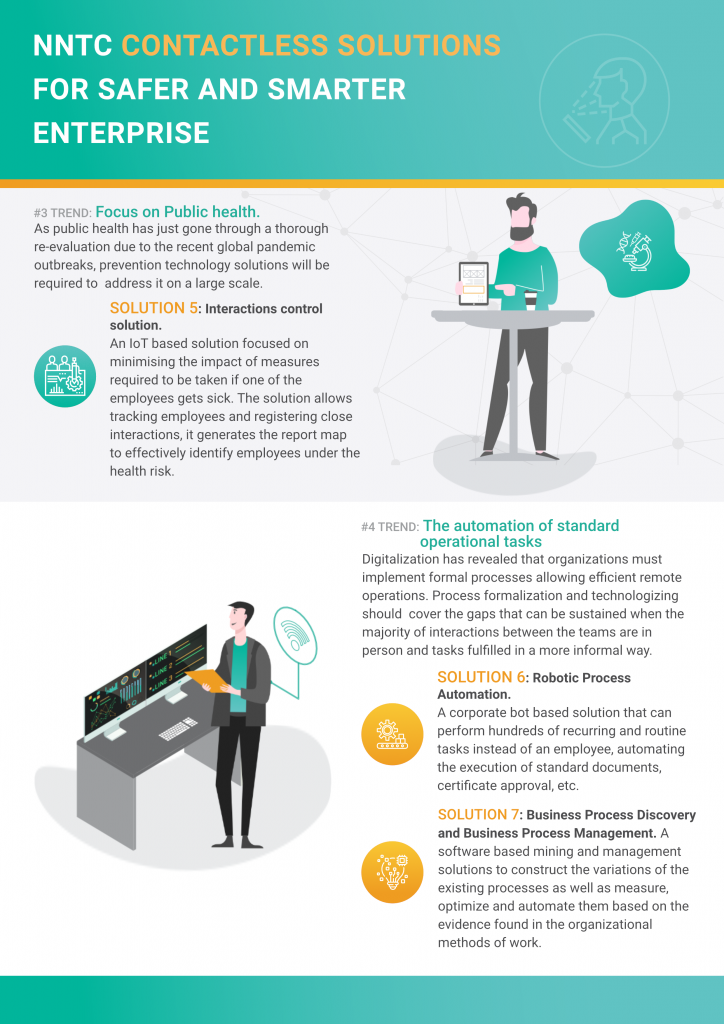
RPA (Robotic Process Automation) solutions automate hospital’s ancillary and back-office services, considerably reducing costs and personnel work effort and improving service reliability; AI systems and electronic health records populated with data from various sources improve decision-making; while cognitive analytics tools sort through and find the most important personalized data points, thus boosting work speed and quality.
Talent development
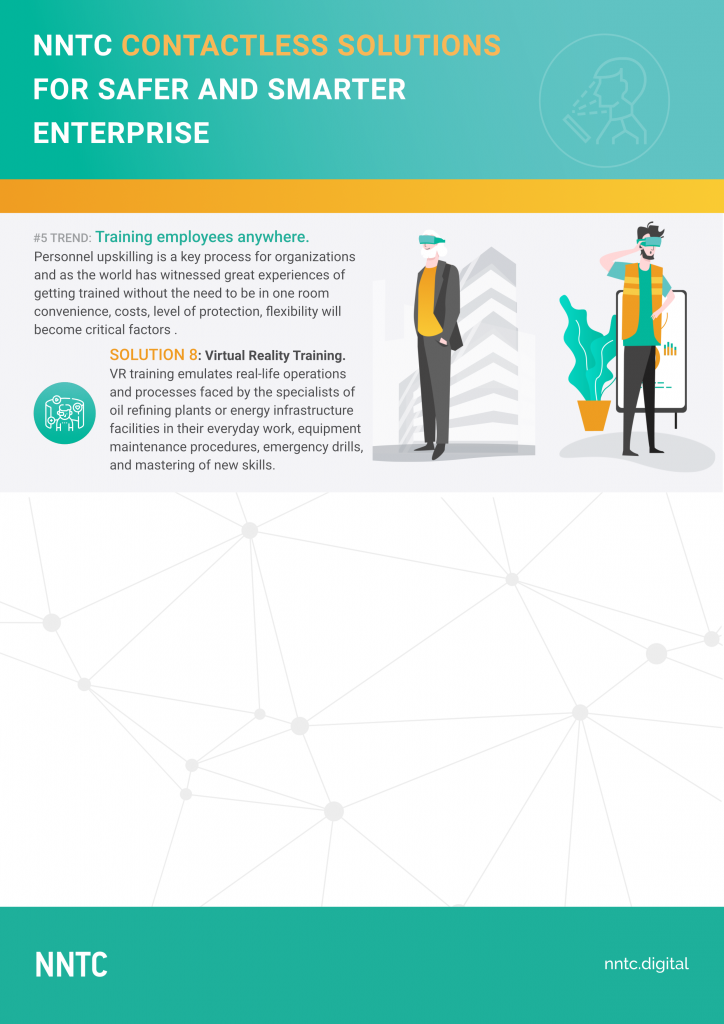
VR solutions help surgeons practice upcoming surgeries, while Learning Management Systems transcend geographical boundaries and reduce costs allowing them to share their surgery footage and specialized expertise with a larger audience of students and colleagues. Cognitive analytics and RPA solutions automate hospital personnel recruitment and study patient information and requirements to match patients with doctors having appropriate competencies.
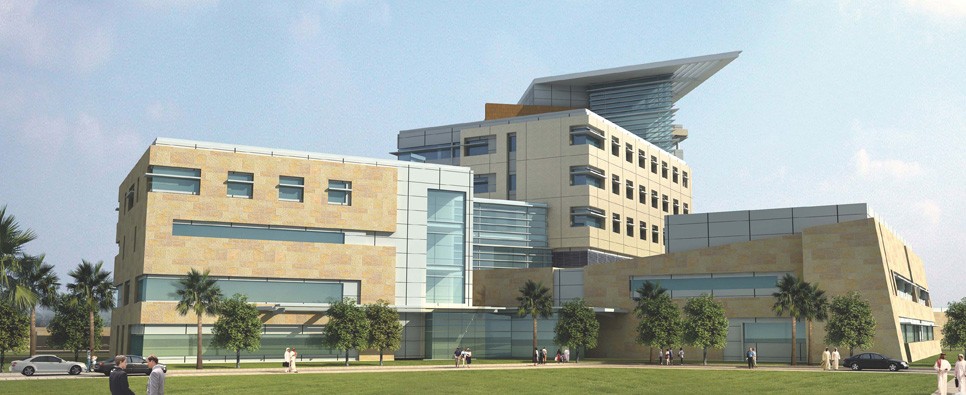
Project: Mohammed Bin Khalifa Cardiac Center
Our team was lucky to take part in the joint project with our strategic partner NGN International (Bahrain). We provided general design, control, and implementation of the end-to-end technology infrastructure for the Mohammed Bin Khalifa Cardiac Center in Manama, Bahrain, under the patronage of His Excellency Lieutenant General Doctor Sheikh Mohammed bin Abdullah Al Khalifa, President of the Supreme Council of Health.
Mohammed Bin Khalifa Cardiac Center
The Center has a floor space of 172,765 sq.m and one of the fastest-growing IT networks in the world. It uses a sophisticated technology to combine resources of physical and virtual servers and connect the entire work environment to the cloud.
In addition, Vocera Communications smart badges enable effective hands-free information exchange between doctors in real time. Data analysis and business intelligence solutions gather data from all systems of the Center and provide accurate results for better decision-making. Redundant IT systems ensure business continuity during various internal and external emergencies, effective data flow, and data availability anytime, anywhere.
Step by step
The hospital of the future is not built in a day. It requires consistent development and global expansion of innovations. Increasing healthcare investments and concerns about lives and health of patients and medical personnel will make hospitals more and more technologically advanced, which, we believe, will save and improve people’s lives.
In this year’s Global Consumer Insights Survey PwC polled city dwellers on their purchasing behavior in two separate studies, one before and one after the coronavirus outbreak. The survey resulted in certain insights that demonstrate new buying habits to emerge. How technologies can help save customers after COVID-19?
The COVID-19 situation has deeply affected urban consumers’ views on spending.
Before the outbreak, consumer confidence was sky-high. Almost half (46%) of PwC’s survey respondents said they expected to spend more in the next 12 months. After the outbreak had begun, the percentage of those who said they were going to spend less in the next few months almost doubled. The number who said they were going to spend more dropped by more than 10 percentage points.
Even in locations where lockdowns have been partially lifted, urban consumers are making fewer shopping trips, consuming more at-home entertainment. For consumers to feel confident enough to return to physical interactions with retailers, the first thing they need is solid assurance that places of business have a plan to make their customer experience as safe as possible.
Customer behavior after the Pandemic
COVID-19 outbreak reinforced the already growing trend of online shopping. People explore different ways to access products and services.
86% of polled consumers are likely to continue to shop online/by phone when social distancing measures will be removed.
This trend shows a high popularity in the Middle East: 58% of customers after COVID-19 said they’ve started shopping more on mobile phones.
The survey data demonstrates emerging behavior patterns and new consumer preferences. We’re facing the importance of developing new ways to reach out to customers after COVID-19, and not taking them on a merry-go-round of hectic ads and irrelevant content. That’s why transactions deserve better security, especially those related to banking apps and online shopping. Wire payments grow in number (53% of respondents used mobile phones to make payments, and 90% are going to keep it this way).
Win customers with biometrics-based apps
Biometrics facilitates onboarding, helping app users to become your clients. We launched a biometric onboarding module for a mobile wallet app in Oman, leveraging video analytics to help people benefit from financial services without visiting a branch office. The app is a mobile wallet, where you can add a card issued by any bank and perform all necessary financial transactions. It is available to the general public in official app stores. Bank receives information about the interests and preferences of users to make special offers. It helps to convert app users into bank clients.
Reinforcing online operations protection
Hackers are skillful in capturing security codes from SMS or PUSH notifications. Digital signature for smartphones can really save the day if your clients prefer paying online. The private key can’t be captured by any hacker because it’s generated in the user’s smartphone and safely encrypted. According to PayConfirm, they provide client-server software for transaction confirmation that suits any digital channel. It includes online/mobile banking, one-time passwords, and works online and offline (even in airplane mode). This solution can prevent phishing, social engineering, data switching, and SIM-module switching attacks, which gained momentum during COVID-19.
Less shopping time with video analytics
Video analytics can be of use in creating personalized offers targeted at a specific audience.
Previously, customized points of sale (POS) used to recognize customers at the entrance and generate specially-for-you offers. This technology evolved during COVID-19. Now consumers can place an order in a personal account or set a rule for a particular POS. With this feature, visitors can automatically get a preferred type of coffee entering a cafe or pick a packaged order without excessive human contact. Video analytics will even recognize a customer wearing a medical mask.
Amazon has been working on biometric identification for a long time to enable face-initiated payments. Visitors take products they need and leave the store. Cameras recognize the products and the shopper to automatically charge their bank card. Shopping takes less time and involves fewer encounters – even eliminating contacts with salesmen – meanwhile ensuring a safe customer experience.
Temperature checks
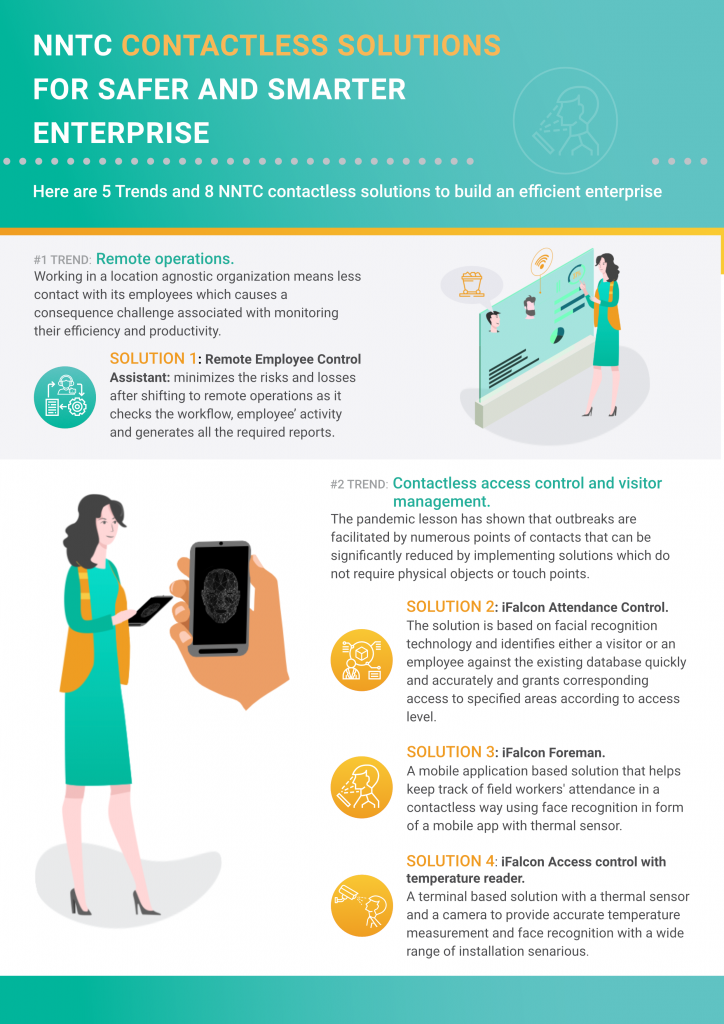
In addition to facial recognition, a POS can be equipped with a temperature measuring tool and improve overall safety, retaining customers after COVID-19. One sick person at work can stop activities of an entire shopping mall or office and quarantine hundreds of people. We have developed a compact contactless solution for the timely detection of visitors with fever. It combines the thermal scanner functionality and face recognition accuracy. The scanner – a thin screen with a built-in camera – is installed at the entrance to scan visitors’ faces. It identifies them (successfully, if a visitor is in a customer’s database) and checks their temperature with up to 0.2-degree accuracy. If a person with high temperature enters a building, security personnel immediately gets notification.
The research and assessment of the pandemic impact on the world are still under way, revealing new interesting changes extending to every aspect of our everyday lives. The business faces a real challenge to respond to these changes as soon as possible by listening to consumers and meeting their new expectations of comfort, security, and service.
As the world is exiting the global pandemic crisis, technology providers have managed to demonstrate that the right solution is what it takes to work efficiently in a geo agnostic world. As much as a crisis-driven shift it has been, it accelerated most of the organizations to promptly adopt advantages of digitization.
The obvious success of remote working operations in many cases shows that this trend, as well as a few other technologies, can prevent potential virus outbreaks and build safer and smarter enterprises. For sure, it is expected to become a new normal in the post-pandemic world.
On April 29th our experts presented recent developments that help to minimize the current risks for the organization and its employees.
Timestamps:
01:55 – 21:22 – IoT-based contact tracing for labor-intensive industries 21:37 – 36:00 – Access control solution with face recognition and thermal sensors 36:15 – 49:15 – Contactless field worker attendance with a mobile app 49:27 – 01:03:26 – Time control and data leak prevention for office employees