IoT Systems Integration in Industrial Metaverse Solutions

IoT Systems Integration in Industrial Metaverse Solutions

A New Era of Smart Infrastructure Management with Industrial Metaverse Solutions

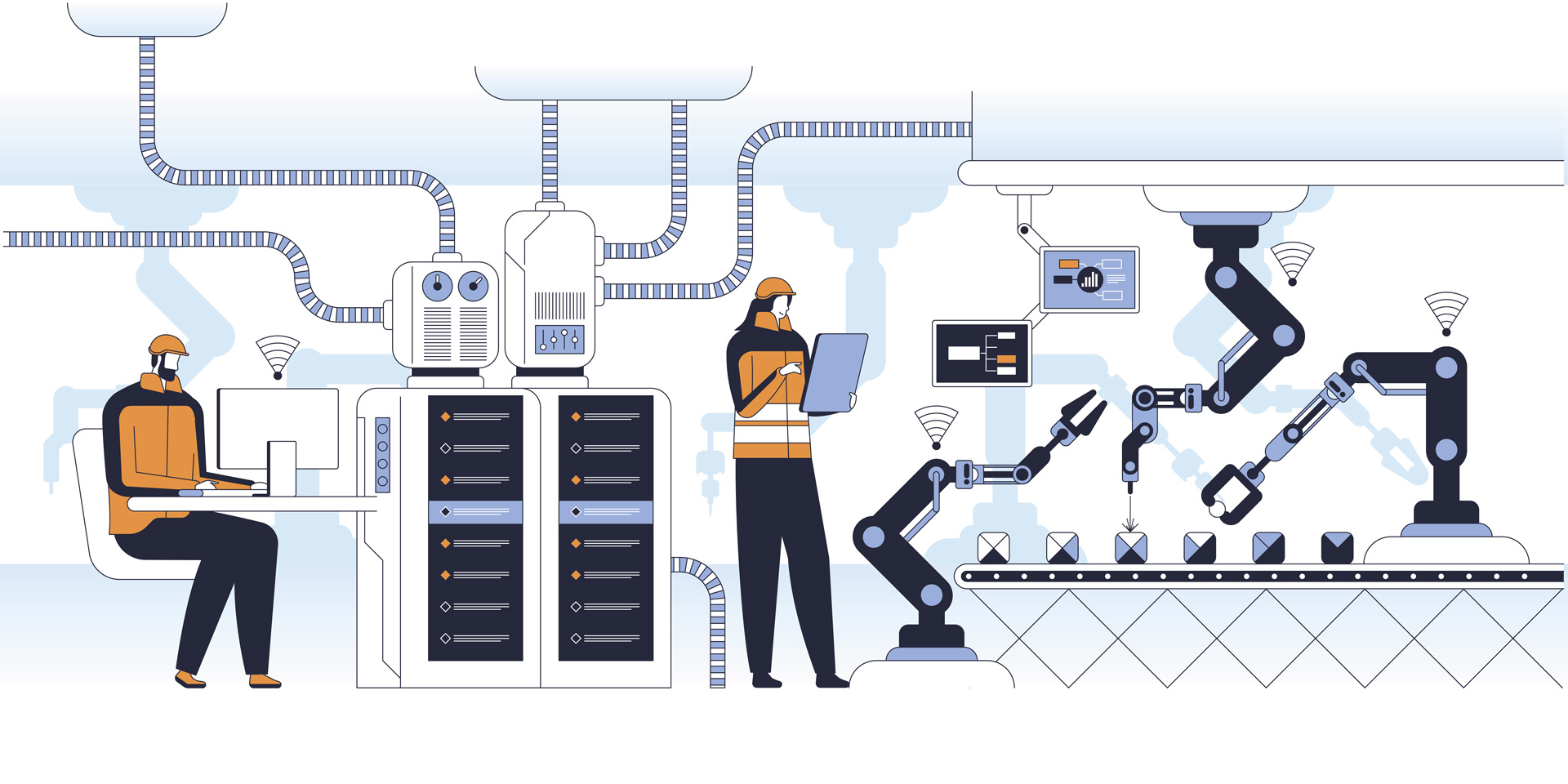
In today’s rapidly-evolving digital landscape, there is a growing demand for innovative solutions that can optimize infrastructure management, increase efficiency, and reduce costs. One emerging technology that holds significant promise in this area is Industrial Metaverse, a virtual replica of a physical asset that can be used to monitor, analyze, and optimize its performance. While Industrial Metaverse have been around for some time, the integration of IoT systems is taking this technology to a whole new level. By leveraging IoT sensors and devices, Industrial Metaverse can capture real-time data about a physical asset’s performance, enabling advanced analytics and predictive maintenance.

Daniil Gudkov,
Technology expert | Industrial Metaverse
Book consultation

IoT systems integration in Industrial Metaverse solutions allows for a comprehensive, real-time view of an asset’s performance. By combining data from multiple sources, including sensors, machine learning algorithms, and predictive analytics, organizations can gain a deeper understanding of their infrastructure, and make informed decisions that can drive efficiency, cost savings, and operational improvements.

For example, in the field of smart buildings, Industrial Metaverse solutions can help building owners and operators optimize energy consumption, reduce maintenance costs, and improve occupant comfort. By integrating IoT sensors and devices, building management systems can collect data on factors like temperature, humidity, air quality, and occupancy, allowing for real-time monitoring and optimization of building performance.

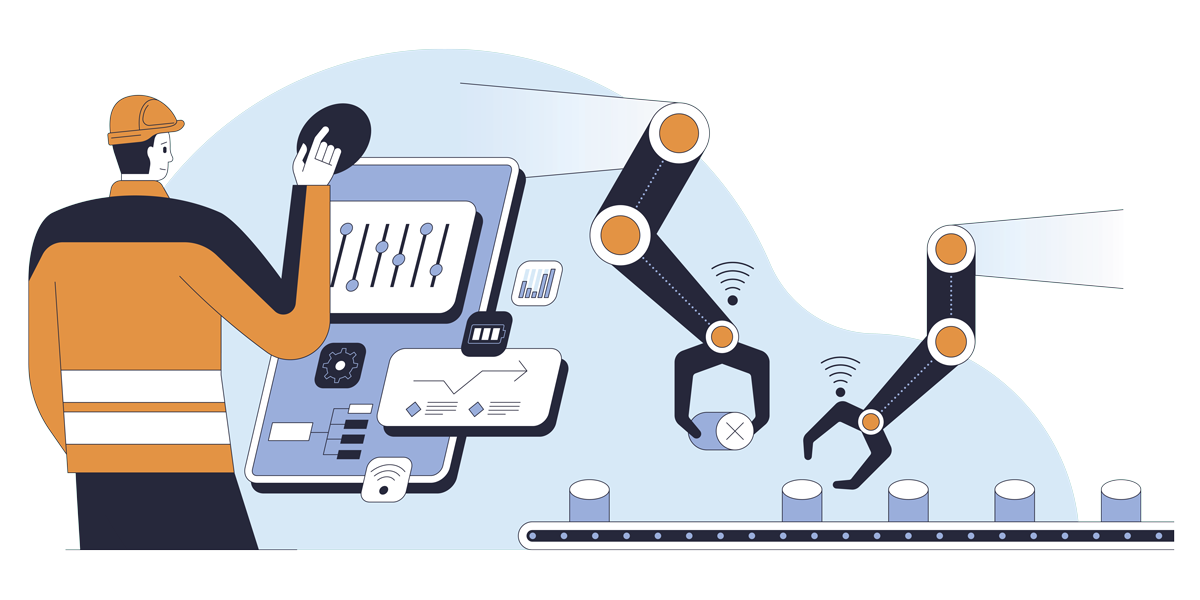
Similarly, in the field of smart manufacturing, Industrial Metaverse solutions can help improve production efficiency, reduce downtime, and optimize maintenance schedules. By integrating IoT sensors and devices, manufacturers can capture real-time data on equipment performance, and use this data to predict and prevent failures, and optimize production processes.

The benefits of IoT systems integration in Industrial Metaverse solutions are clear. By combining the power of Industrial Metaverse with the insights generated by IoT devices, organizations can gain a comprehensive, real-time view of their infrastructure, and make data-driven decisions that drive operational efficiency, cost savings, and performance improvements.

As the IoT continues to evolve, and Industrial Metaverse technology becomes more sophisticated, we can expect to see even more innovative applications of this powerful combination. From smart cities to transportation, healthcare, and beyond, IoT systems integration in Industrial Metaverse solutions is paving the way for a new era of smart infrastructure management.

Are you ready to take advantage of the power of digital twins and IoT systems integration? Contact us today to learn more about how our innovative solutions can help you optimize your infrastructure, reduce costs, and drive performance improvements.

Read more

What is a Digital Twin?

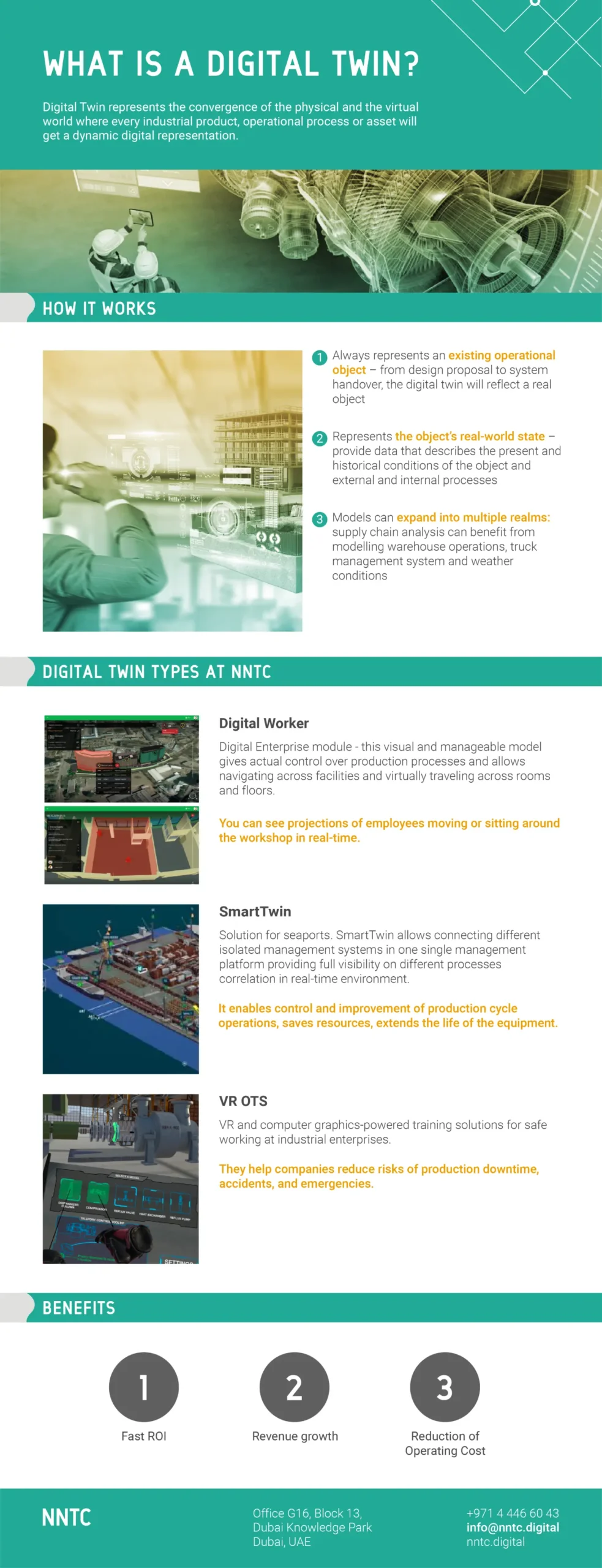
Digital Twin is one of the most exciting business optimization solutions. An exact copy of any building or territory is a set of data, which can be analyzed in real-time. Business processes can be predicted with this solution: from equipment depreciation to the production cycle operations. Read more in our today’s infographic.

Digital Twin integration results:

  • See the best combination of cost of operations\min number of cranes or trucks\min required time
  • Digital Twin improves the efficiency of operations
  • Predicting work completion time, operating hours, downtime
  • Forecasting the machinery utilization, which allows the most efficient movements without queues
  • Assessment of the influence of factors on the machinery downtime, number of accidents, optimal routes, movements of railway/auto trains, distribution of works between cranes
  • Reducing cost for the equipment maintenance
  • Increasing business transparency and manageability

Read more

4IR. How to exploit the Fourth Industrial Revolution

4IR

The majority of business leaders (63%) surveyed by PwC claimed that technologies of the Fourth Industrial Revolution (4IR) provide protection against an economic downturn. But how to find your way around this strange and seemingly unmanageable concept? Be brave, and I’ll show you a way in this blog!

What is 4IR?

4IR became a hot topic a few years back when the world realized how technologies impact everyday life and innovations skyrocketed, giving an optimistic view of the future coexistence of humans and machines.

4IR

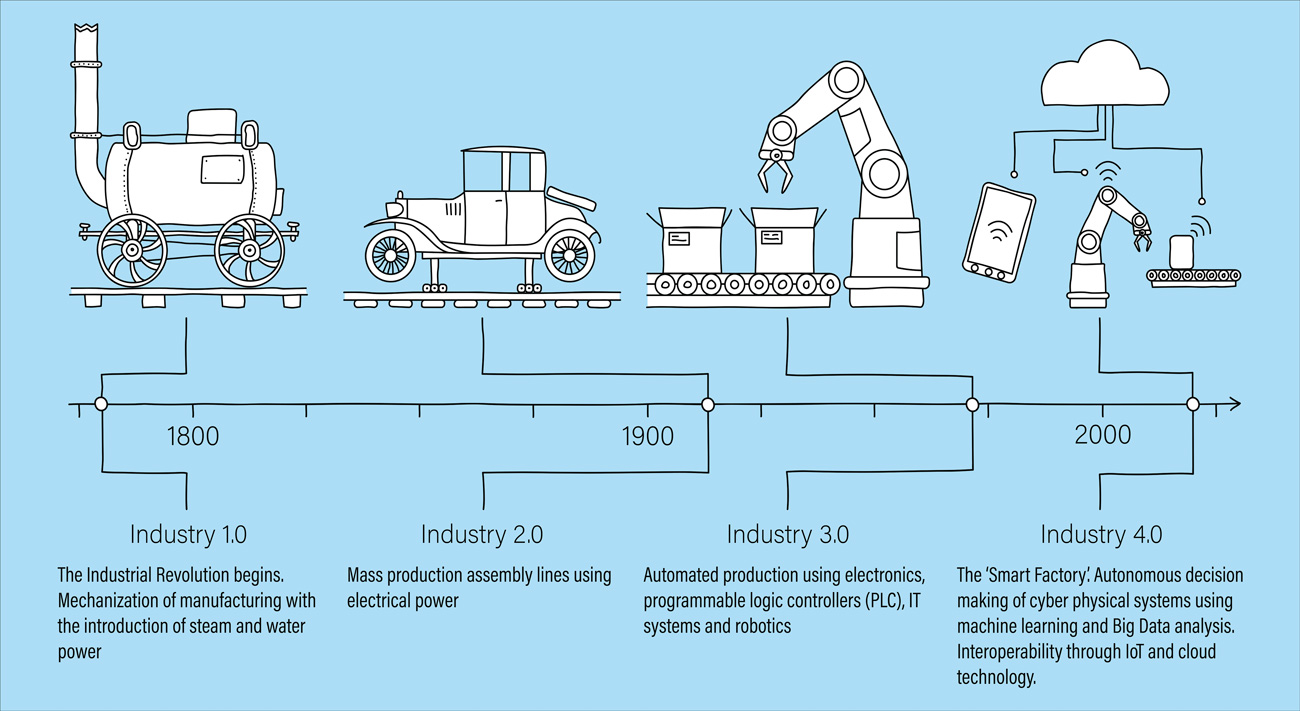
The Fourth Industrial Revolution is building on the Third, the digital revolution that has been occurring since the middle of the last century. It is characterized by a fusion of technologies that is blurring the lines between the physical, digital, and biological spheres.

said Klaus Schwab, Founder and Executive Chairman, World Economic Forum.

The main idea is that technologies do not replace, but rather gradually complement, humans, becoming a new “tool” in the hands of business. At the moment, businesses need to prepare for 4IR to survive amid the post-pandemic crisis. What’s more, companies that can keep up with the times and gain necessary skills in advance will win the race by leveraging the new tools.

4IR for business survival

Companies successfully deploying 4IR technologies now may actually emerge as stronger competitors during a recovery, and will likely be better prepared for a potential economic downturn in the future. 4IR benefits are evident: increased productivity, efficiency and quality of processes, as well as better staff safety, data-driven decision-making, and increased competitiveness thanks to developing customized products.

According to a recent PwC survey of CFOs, while the COVID-19 crisis has led 70% of companies to cut back or defer planned investments, just 22% said their companies are curbing investments in digital transformation. What does digital transformation actually entail?

Digital transformation means preparing an organization for 4IR solutions and then systematically adopting them in the most optimal way to minimize business risks. In fact, it is an organization-specific process which should be supervised by digital transformation specialists. This very approach will help you harness and exploit 4IR.

Stages of digital transformation:

  • Technology digitalization. Create advanced digital infrastructures and RPA-based systems to collect data and control processes.
  • Production digitalization. This stage requires the creation of a digital platform to collect, store, and process data, use some analytics tools (machine learning, digital twins), and engage production planning and management systems using the same models and data from the digital platform.
  • Digital services and apps. They are created on top of the rest to improve efficiency and performance. Data analytics tools allow for prompt and, ideally, automatic adjustment of production and technological processes, thus eventually raising product quality, reducing its cost, and improving other parameters.

How to start adopting 4IR?

As I already mentioned, each organization goes its own way here; however, there is a standard 4IR checklist.

Process automation. Whether at manufacturing facilities or in the office, process automation is one of the key success factors on the path to 4IR adoption. Process automation may include: RPA-based filling out of documentation, automated Big Data collection for subsequent analysis, automation of routine processes and procedures using artificial intelligence, video analytics, and IoT.

Big Data. All business processes are based on analytics. Indeed, data analytics helps determine a business development vector, predict critical situations, and optimize processes. A full-fledged data collection is only possible when information comes from all business process participants, from the production to the sales office or store.

Vision Zero and concern for people. Another pillar of the 4IR approach is personnel safety and care. Manufacturing enterprises adopt Vision Zero, which significantly improves occupational safety. Thus, VR drills fully immerse personnel in any possible scenarios to train them in dealing with emergencies without any risk, while Digital Worker solutions warn in advance about on-site hazards. There are also solutions to ensure office personnel safety and comfort. For example, BIM tools help adjust environmental conditions in the office, while contactless solutions prevent the spread of infections.

Business optimization. As a rule, the transition to 4IR goes along with certain internal restructuring and business optimization, which is unavoidable after adopting better and more cost-effective solutions that free up specialists time. As a result, companies can spur strategic development and planning or strengthen previously understaffed business units.

Read more

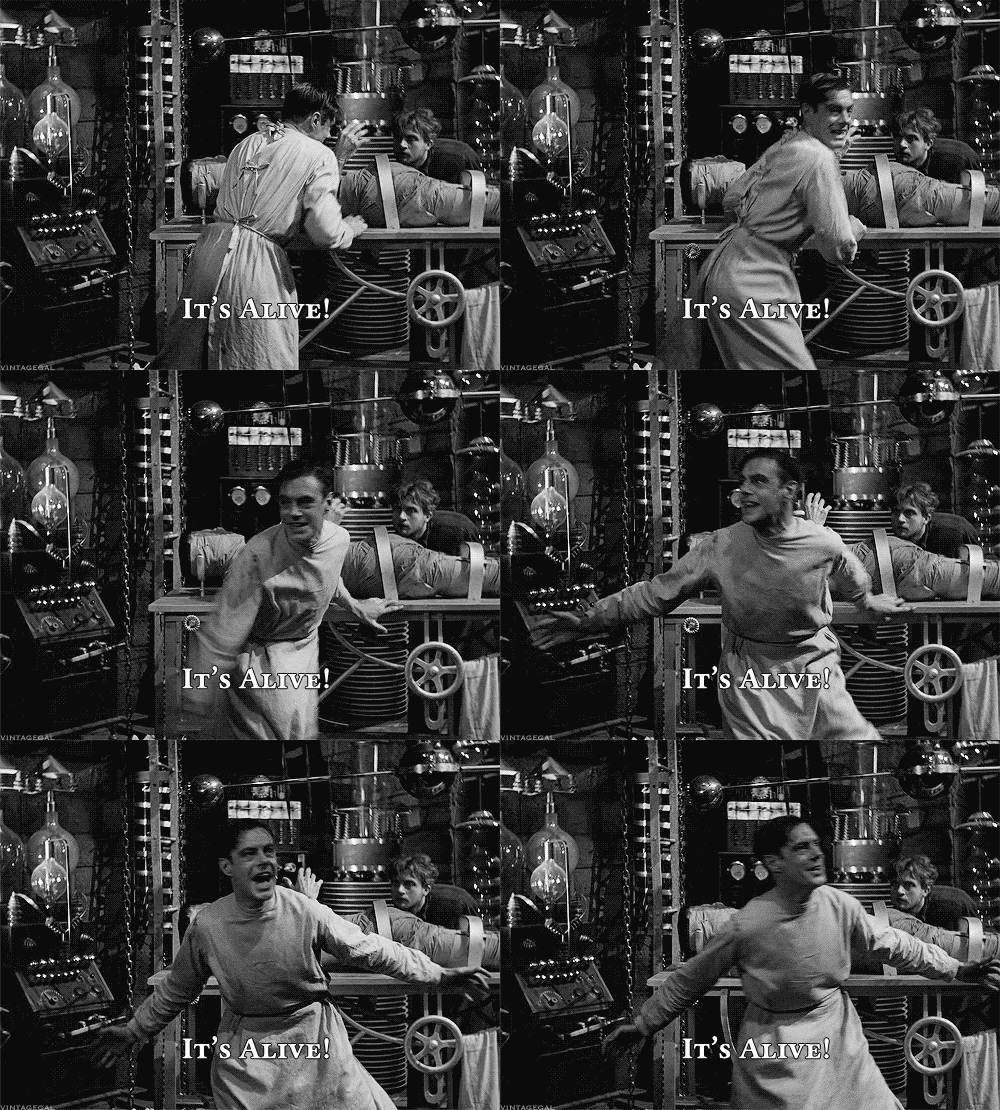
“It’s alive!” Merging IT with manufacturing to give birth to the digital factory

Digital transformation

Today’s business leaders have a greater awareness of the need for all-in digitalization and industrial safety solutions. Moreover, experts have no doubts that long-established industries, such as oil and gas, mining, metallurgy, and metal working, can experience a significant performance boost only through engaging information technologies. So how is it going? Well, let me use classical literature to explain.

Alexander Belyaev

Article by Alexander Belyaev
NNTC Technical Director
LinkedIn | Mail

Do you remember the notorious Frankenstein’s monster?

He was a sophisticated work of science and engineering meant to be a fully functional human ability to comprehend, think, move, and talk. Modern manufacturing is the same: it’s built from vital parts, which consistently solve given tasks. However, making a separate part digitally driven is the same as trying to bring only one limb – let’s say, a hand – of Frankenstein’s monster to life What’s the point if the rest doesn’t function?

Intelligent digitalization works like the lightning discharge that raised Frankenstein’s creature from the dead and started quite a thrilling story. You would even find yourself throwing hands up in the air and screaming “It’s alive! It’s alive!”, if you transformed an entire enterprise in an insightful way into a single information environment with correct data collection. So, this will be the main focus of today’s post, where I will also talk about how to coordinate transformation stages.

Make it digital

Information technologies keep penetrating into all business processes and directly impact workforce productivity. Bridging the gap between IT and business expertise results into synergy and provides business with solutions to digitalize multiple production processes.

For example, solutions to run diagnostics and avoid expensive equipment downtime. Some technologies even reduce the time it takes to gather information on equipment health, such as digital twins or drone-based industrial inspections. Environmental monitoring matters as well, so we can find solutions that forecast unplanned emissions, thus allowing us to minimize them and use the data as evidence in disputes with supervisory authorities.

And what if all these tasks could be solved comprehensively? What if we could put all technological achievements together, season it with new e-services, and build a unique environment, a digital ecosystem? Ladies and gentlemen, I proudly present the digital factory concept.

Digital factory vs. digital twin

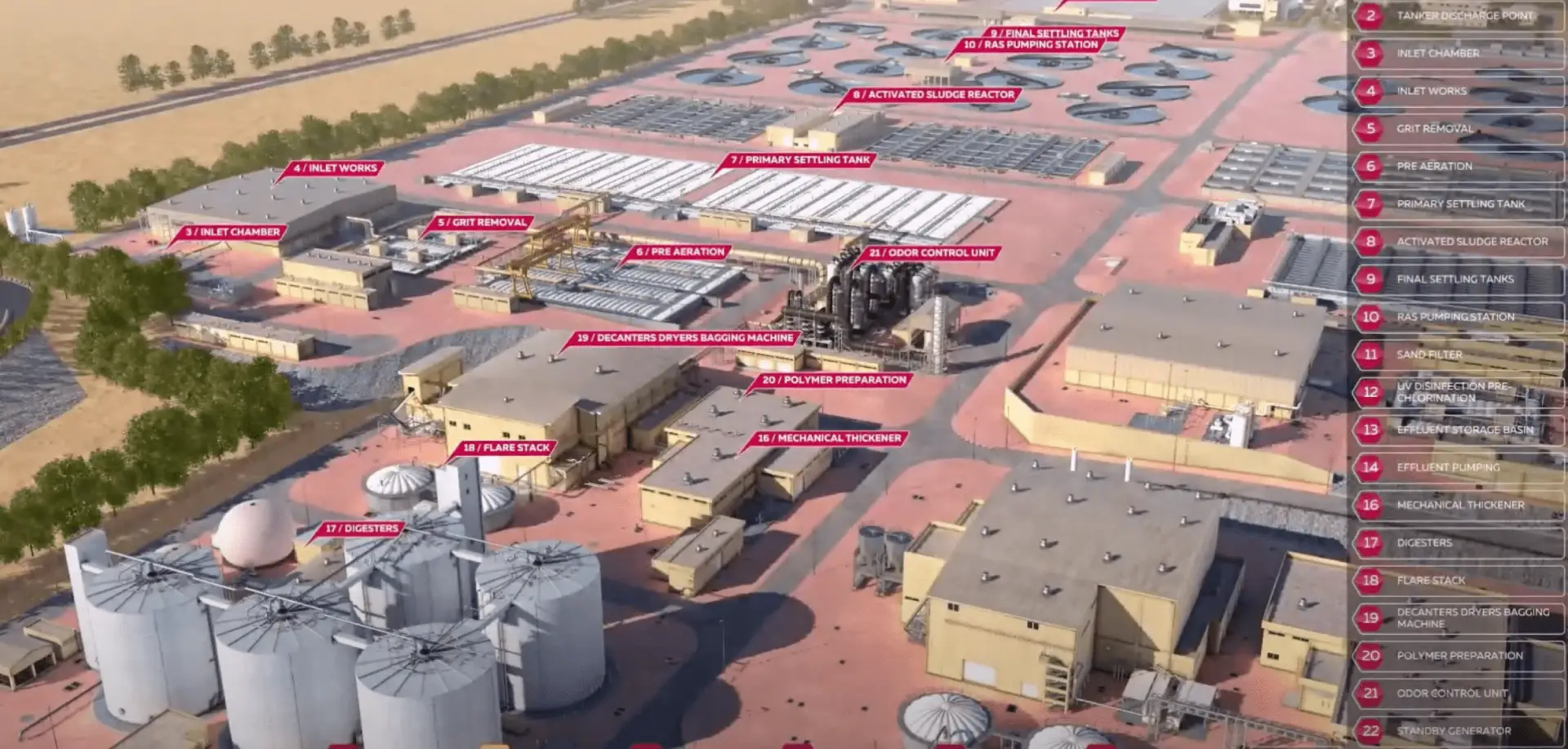
Digital twin is a replica of a certain process, a digital model of a physical asset, process, or technology. Companies can have digital twins of numerous things: wind turbines, wells and deposits, or production lines. The digital twin provides both design details and the dynamics of how something operates, thus allowing to anticipate its wear and tear and optimize operation. Despite everything, these are small replicas of certain parts that can’t make business truly digital.

Digital twin
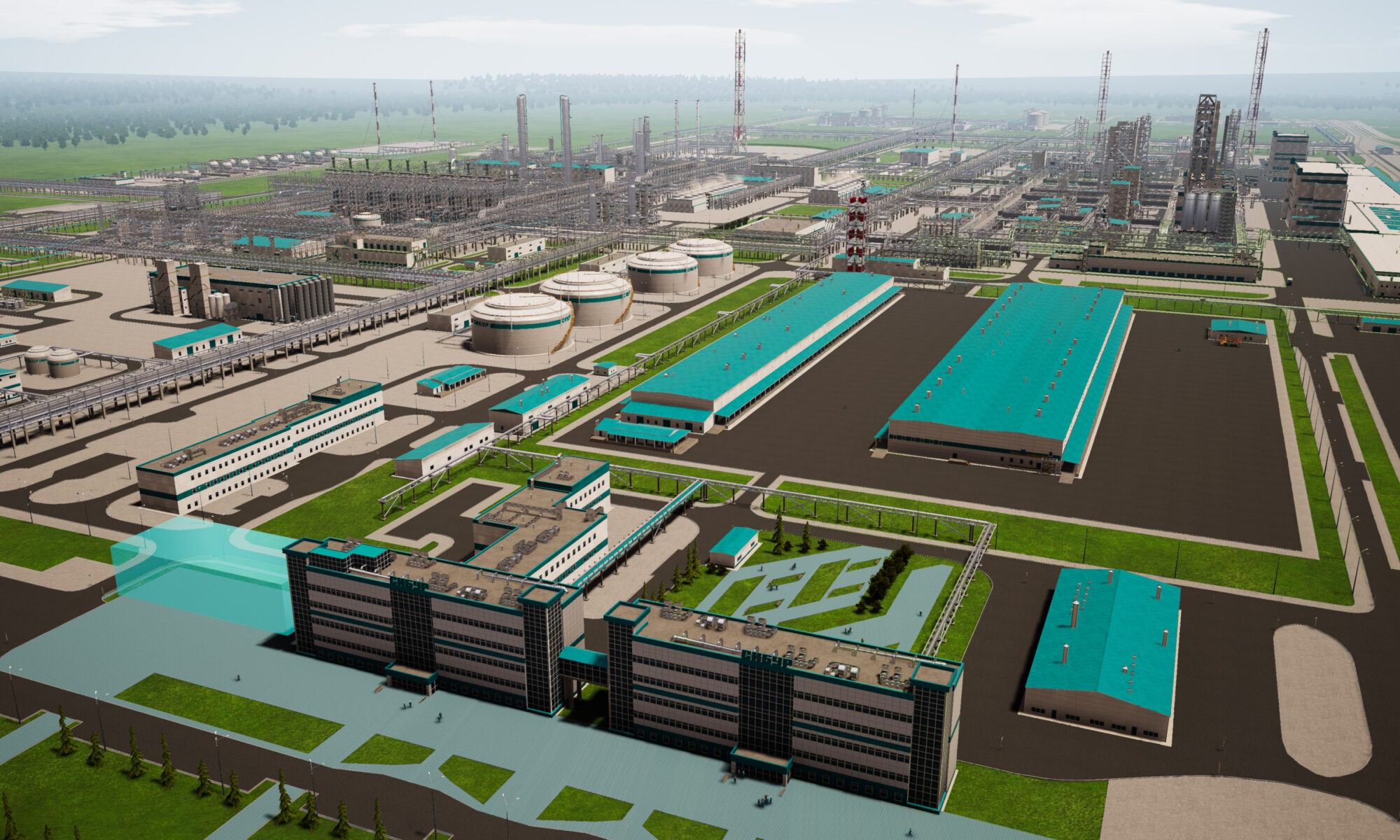
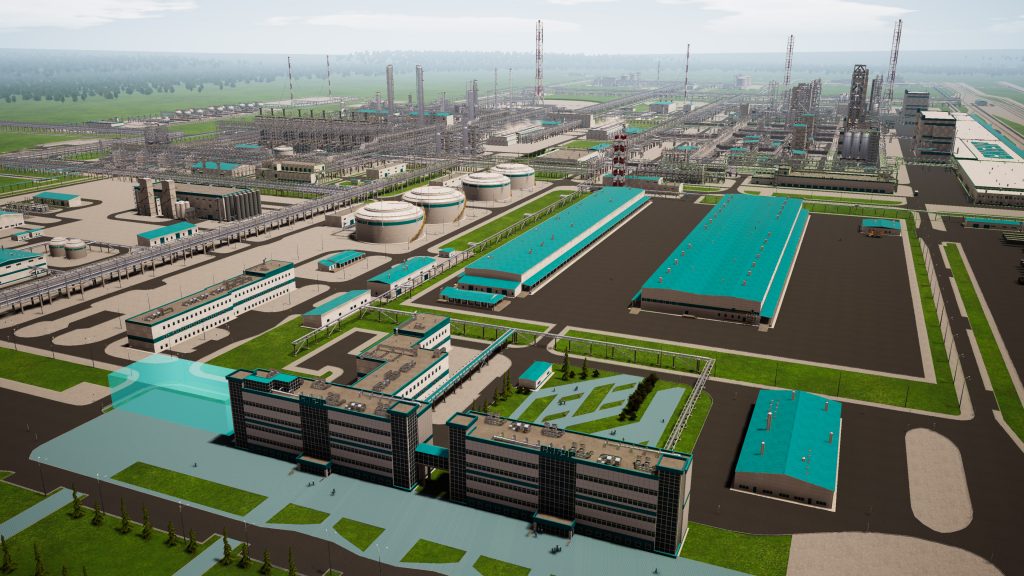
A digital twin of a factory

Digital factory is a wider concept. It describes an enterprise that leverages IT in its every aspect: automated manufacturing, optimized business processes, services, and product promotion. The concept implies a single information environment turning hectic data from multiple sources into a structured data-driven representation of the enterprise. Decisions of a company like this are guided by complete and constantly updated information.

Digital worker: industrial safety solution and business value for the digital factory

Industrial enterprises are overwhelmed with information. Let me tell you about Digital Worker IoT platform for industrial safety, one of our solutions, to illustrate. This platform integrates global and local positioning, video surveillance, video analytics, access control and management, and pre-shift examination systems, as well as smart devices. Integrated systems enable you to detect threats or HSE and occupational safety violators in real time; for example, those who misuse personal protective equipment (PPE). An event log keeps all records of hazardous situations.

Digital factory

The solution logs information about tens of thousands of actions and each can be analyzed to make forecasts. For example, a recurring error allows you to conclude that personnel should take additional training to master certain skills. It would be useful to share such information with HR department. And this is just analytics from one solution designed to ensure occupational safety. Business and production data flows can be combined to bring transparency in every single enterprise production process at all levels. Digital factory is an enterprise that seizes every IT opportunity.

Step-by-step digital transformation guide for enterprise

  • Step #1. Technology digitalization. Create advanced digital infrastructures and RPA-based systems to collect data and control both equipment and technological processes. It should be noted that already at this stage enterprise performance goes through the roof, although big changes are yet on their way. Our occupational safety services, particularly the above Digital Worker, are well-tuned and implemented in some real manufacturing facilities.
  • Step #2. Production digitalization. This stage requires the creation of a digital platform to collect, store, and process data, use some analytics tools (machine learning, digital twins), and engage production planning and management systems using the same models and data from the digital platform. Production meets technology here to give you a clear vision of technological processes and equipment health to manage business. A good example here is using RFID tags to label product components.
  • Stage #3 (Final). Digital services and apps are to be created on top of the rest to improve efficiency and performance. Data analytics tools allow for prompt and, ideally, automatic adjustment of production and technological processes, thus eventually raising product quality, reducing its cost, and improving other parameters (e.g. efficiency improvement services using digital prototypes or digital twins).

As for digital transformation project for a particular customer, it’s always a client-centric story since every project focuses on each company’s individual strategy to the maximum possible extent. A customer sets the goal, and our task is to help achieve it using digital tools. We unlock the full potential for automation and digitalization and advise the customer on the most economically beneficial technologies. The most important thing in our work is to ensure synergy so that each newly implemented service multiplies the business effect.

How do you know that enterprise has become a digital factory?

A unified information environment is a game-changer you won’t miss. According to different estimates, today, some 80% of decision-making time is spent on collecting and verifying data. Unified environment will optimize all this and dramatically accelerate decision-making.

Read more

Building the Hospital of the Future

Hospital-of-the-future

The hospital of the future may look quite different from what we are used to. Rapidly evolving technologies, along with demographic and economic changes, are expected to transform hospitals worldwide. Building the digital hospital of the future requires investments in people, technologies, processes, and premises. Therefore, hospital management should not expect ROI right away. However, in the long run, digital technologies will improve care quality, operational efficiency, and patient and staff experience.

Thank you, doctors!

With the COVID-19 spreading, hospitals worldwide are working at full capacity, and healthcare workers are saving lives every day. We admire and thank those heroes for their commitment and hard work. We wish them to stay strong in this hard time!

Moving towards hospital of the future

There is a range of solutions to improve customer experience and make hospitals more comfortable for patients and personnel. It will become a new normal sooner or later.

Digital experience

Digital solutions improve patient experience by providing real-time access to medical knowledge. The best way for hospitals to establish good relations with their customers is to become open and user friendly. Digital and AI technologies streamline the process of making appointments with doctors and reduce the number of forms patients need to fill out, while analytics, machine learning, IoT solutions, and portable devices analyze patient health condition and suggest treatment procedures to doctors.

Healing and well-being

Wristbands for patients and doctors plus visitor badges with RFID tags ensure appropriate access levels, while CCTV cameras with AI features recognize faces to locate patients who look unwell and need help, and accelerate recovery. Moreover, AI-enabled video analytics solutions can identify threatening situations as, or even before, they occur.

Hospital healing and well-being
Hospital operational efficiency

Hospital operational efficiency

RPA (Robotic Process Automation) solutions automate hospital’s ancillary and back-office services, considerably reducing costs and personnel work effort and improving service reliability; AI systems and electronic health records populated with data from various sources improve decision-making; while cognitive analytics tools sort through and find the most important personalized data points, thus boosting work speed and quality.

Talent development

VR solutions help surgeons practice upcoming surgeries, while Learning Management Systems transcend geographical boundaries and reduce costs allowing them to share their surgery footage and specialized expertise with a larger audience of students and colleagues. Cognitive analytics and RPA solutions automate hospital personnel recruitment and study patient information and requirements to match patients with doctors having appropriate competencies.

Hospital talent development

Project: Mohammed Bin Khalifa Cardiac Center

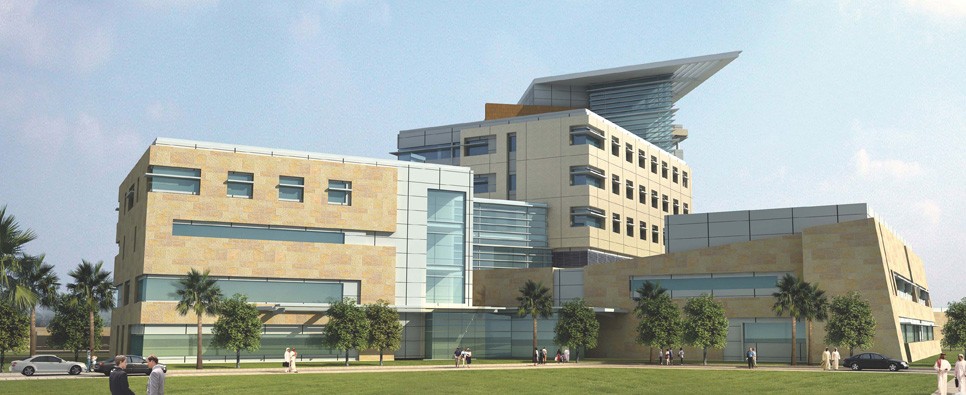
Our team was lucky to take part in the joint project with our strategic partner NGN International (Bahrain). We provided general design, control, and implementation of the end-to-end technology infrastructure for the Mohammed Bin Khalifa Cardiac Center in Manama, Bahrain, under the patronage of His Excellency Lieutenant General Doctor Sheikh Mohammed bin Abdullah Al Khalifa, President of the Supreme Council of Health.

Hospital Mohammed Bin Khalifa Cardiac Center
Mohammed Bin Khalifa Cardiac Center

The Center has a floor space of 172,765 sq.m and one of the fastest-growing IT networks in the world. It uses a sophisticated technology to combine resources of physical and virtual servers and connect the entire work environment to the cloud.

In addition, Vocera Communications smart badges enable effective hands-free information exchange between doctors in real time. Data analysis and business intelligence solutions gather data from all systems of the Center and provide accurate results for better decision-making. Redundant IT systems ensure business continuity during various internal and external emergencies, effective data flow, and data availability anytime, anywhere.

Step by step

The hospital of the future is not built in a day. It requires consistent development and global expansion of innovations. Increasing healthcare investments and concerns about lives and health of patients and medical personnel will make hospitals more and more technologically advanced, which, we believe, will save and improve people’s lives.

Read more

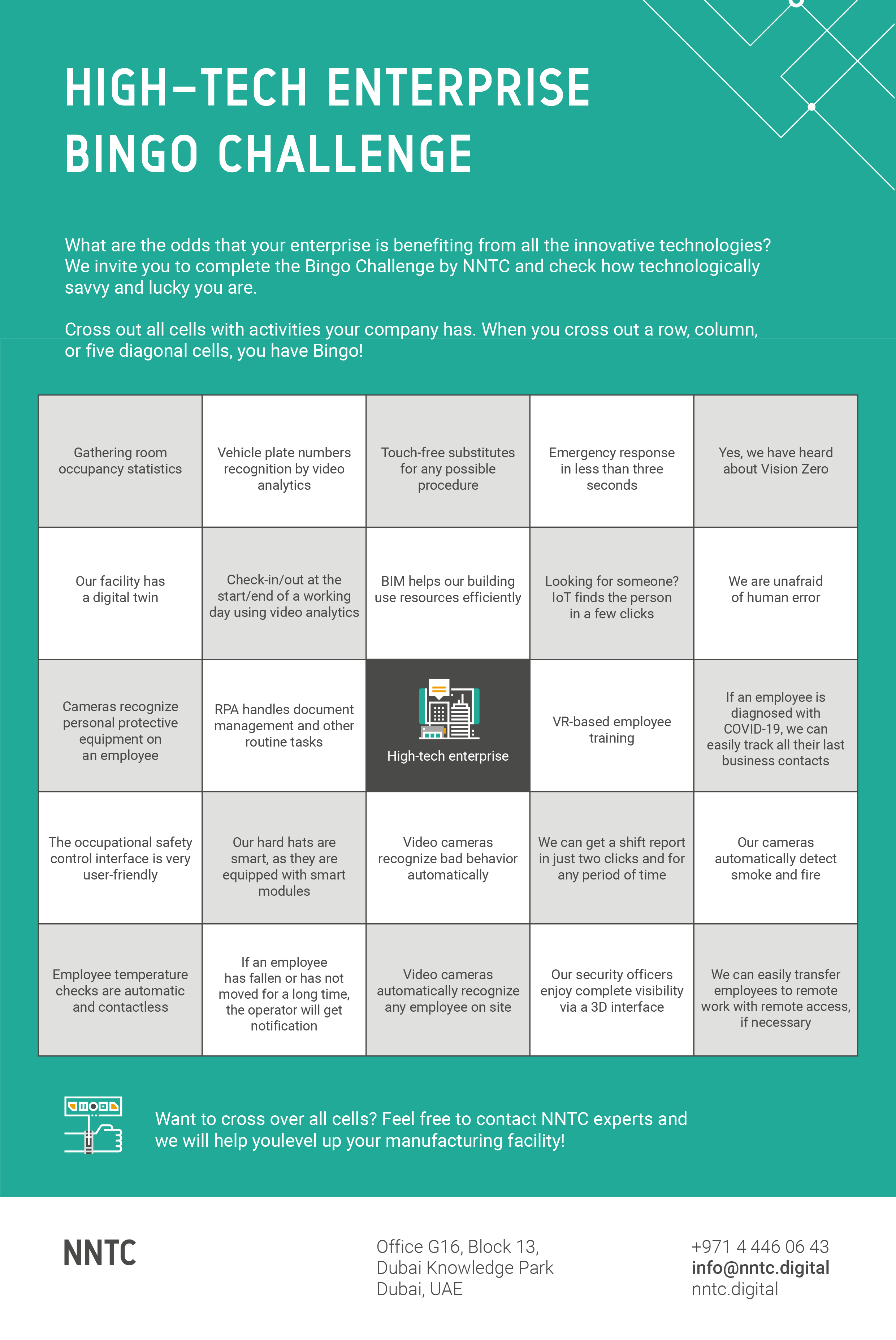
High-tech enterprise bingo challenge

Bingo challenge

What are the odds that your enterprise is benefiting from all the innovative technologies? We invite you to complete the Bingo Challenge by NNTC and check how technologically savvy and lucky you are.

RULES: Cross out all cells with activities your company has. When you cross out a row, column, or five diagonal cells, you have Bingo!

High-tech bingo challenge

You can download this high-tech enterprise bingo challenge in full resolution and share it with your colleagues!

Read more

Ahoy, Sailor: How innovative technologies keep ports safe

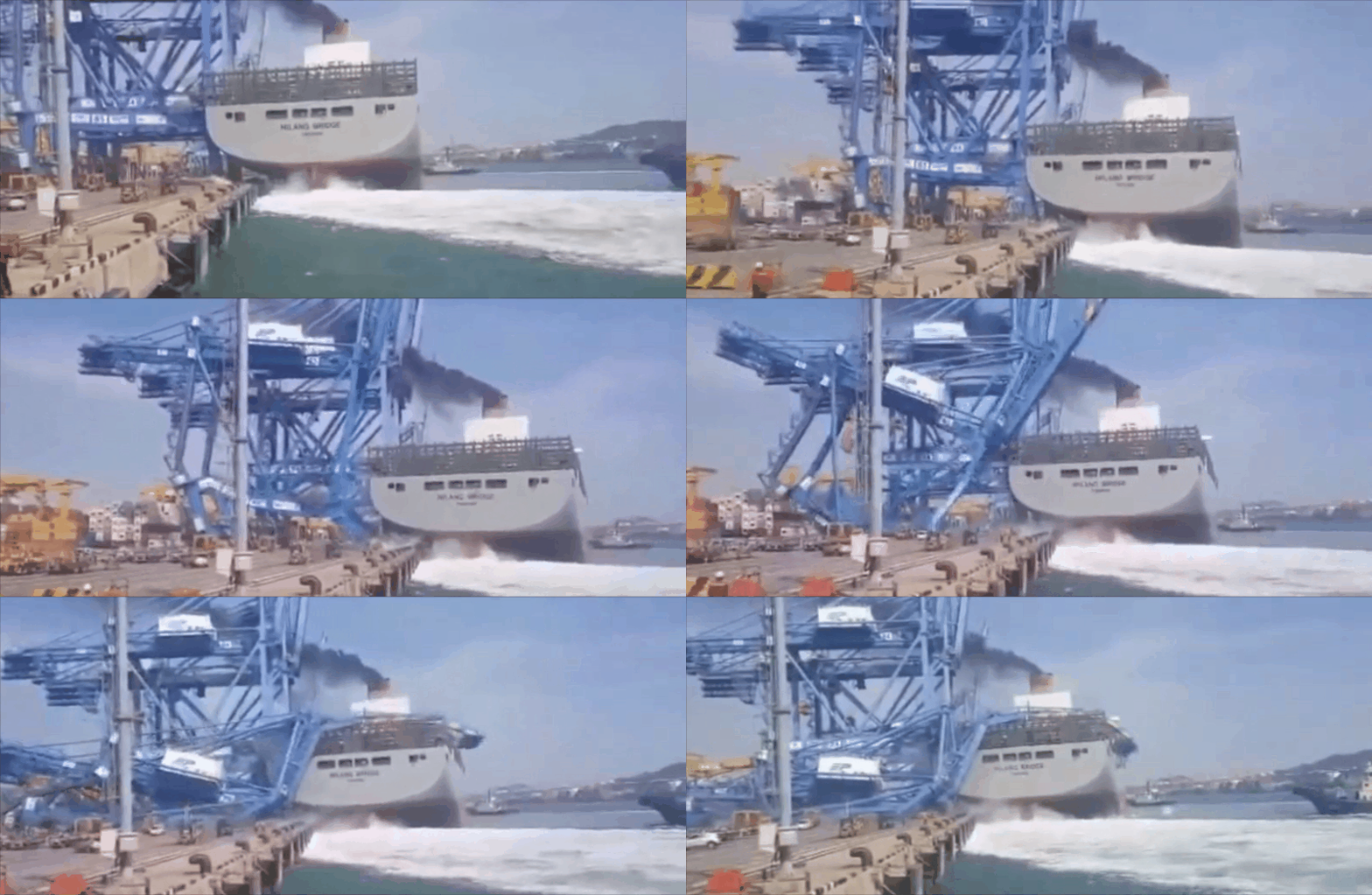
Slicing through waves a jumbo ship is moving ahead full sail to the dock. People can’t take the eyes off of the ship waiting for the next captain’s move with bated breath. Is he a newbie? Did something go wrong? Are we looking at the reason for today’s overtime? Anyway, the overspeeding ship starts to turn clumsily ignoring port operator’s radio distorted screams and shouts, as inertia steers the ship and a big wave pounds on the mooring — kaboom! The ship kisses the concrete shore. The next thing you see is a loading metal crane gently hugging the ship.

All this could have been avoided, should a system similar to car parking sensors alerting the driver about obstacles – curb or garage walls – be installed on vessels to do the same job for the skipper. A video recorder would be useful for documenting all events as well, if scaled proportionally, of course, to the size of large ships and moorings. In fact, all ships have such equipment to video ships approaching the shore and mooring, but this is barely enough. What we really need here is the next level mooring assistant familiar with all marine peculiarities, since natural forces influence sea travel and mooring greatly, unlike ordinary parking.

The ship always hits the mooring. It is just possible that the mooring perfectly maintains and serves ten ships in a row, but can’t survive the eleventh and falls apart, thus triggering a series of unfortunate events and causing port to lose money.

  • Firstly, a mooring costs a lot. If pipes, port facilities, and loading cranes are damaged in an accident, costs grow proportionally.
  • Secondly, every ship is on a tight schedule, so it has a narrow window for docking – 30 hours, for example. If a port manages to maintain and serve a ship within the deadline or earlier (25 hours, for example), it receives a bonus from a shipowner. Delays may occur as well, which means that the port owes a penalty. A broken mooring causes a sea of changes in the port’s schedule, and service delays become inevitable.
  • Thirdly, the port has to prove to the insurance company that it is not guilty of messing everything up. How to prove it? Captains do not feel like providing records from their ship systems. In a worst-case scenario, the port loses more money paying for the damage.

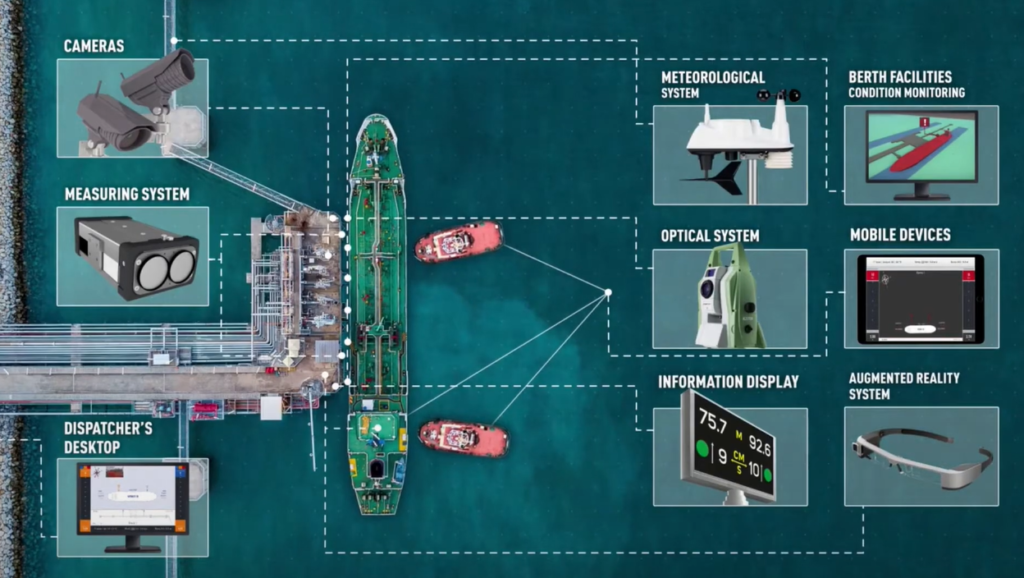
Thus appeared MOORiNET, a solution for vessel mooring and berthing designed to prevent any massive accidents involving ports or moored ships. MOORiNET system warns about undesirable ship movement and possible collisions to prevent ship or dock damage, oil hose or loading arms breaking, spread of hazardous and noxious substances. Remember those car parking sensors? MOORiNET is its big brother: a marine garage-scale mooring sensor keeping it safe from crazy skippers. How do you like that, Elon Musk?

Port control over vessel maneuvers

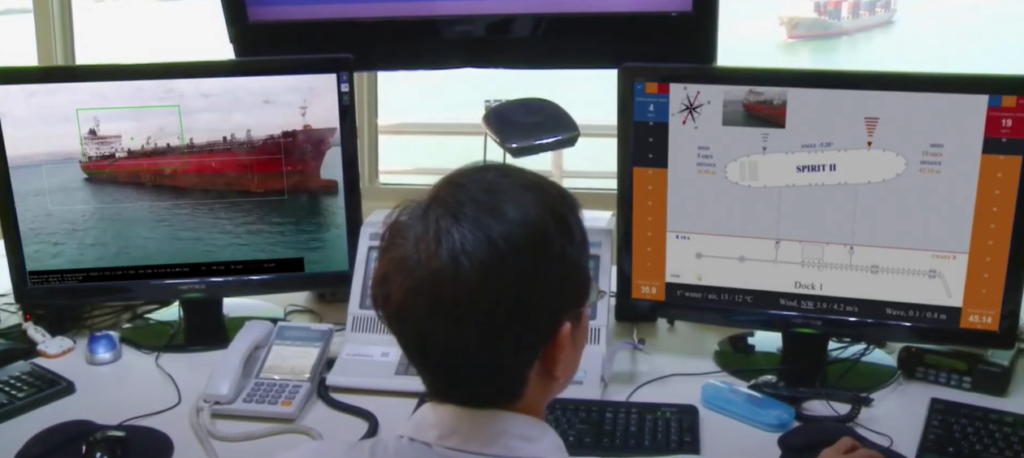
MOORiNET monitors where and how the ship is going and helps it to dock safely. The sensors detect various weather conditions and transmit the data to the port operator who supervises mooring rules. Weather sensors measure wind, wave, and visibility. A meteorological station monitors the outside temperature, atmospheric pressure, and the sea surface height. When a ship approaches, laser rangefinders and surveillance cameras automatically start monitoring the bow and stern using machine vision. The ship is captured from 300 meters, and the closer the ship gets, the more accurate the data are. The berth has a system that measures the impact during the mooring.

Therefore, an operator enjoys full port visibility. The ship’s speed is monitored as well in real time and displayed at the operator’s dashboard. Each vessel is highlighted with a color representing speed safety level range. In the case of any violations, the operator proactively warns the ship to take the situation under control. Should an accident happen, all sensor data records will be available to help investigate, whether a huge wave caused an accident or if the ship was violating mooring rules and overspeeding.

Loading accidents

There is a rule, and the rule says: Once the ship docks, the port is responsible for whatever happens to it then. Now, picture this: a moored ship is being loaded with oil. The vessel gets heavier with each new ton, and all this pressure goes down on the mooring… To keep the mooring from being depressed, load binders are used. These are automatically controlled metal devices to tighten chains holding the ship’s bow and stern fixed. Many ports shut them off, as they can loosen or tighten the ship too much. Usually, somebody controls load binders using nothing but natural intuition and experience. Sadly, either human errors caused accidents or the perfect storm occurred with all its wind, fog, sand in the face, the sun hurting the eyes, and heavy snowing in the northern countries. Chains break apart, the oil hose follows, and the hazardous chemical spills on the sea surface. Here is when oil spill detection solutions come in handy.

MOORiNET can be integrated with a load binders system. The algorithm uses video analytics and laser rangefinders to detect a slightest movement of the ship and automatically alert a person responsible, so that this person either loosens or tightens the chain. The same applies to the oil supply system.

Harbor pilot helper

There is a MOORiNET version designed specifically for harbor pilots. An Android app gives a pilot all necessary information such as the speed at the ship’s bow and stern and the weather. The app connects to the ship’s system via a connector and synchronizes data with the MOORiNET at the mooring, thus providing the port and the ship with consistent information for better safety.

Read more:

For more fresh news, subscribe to our newsletter

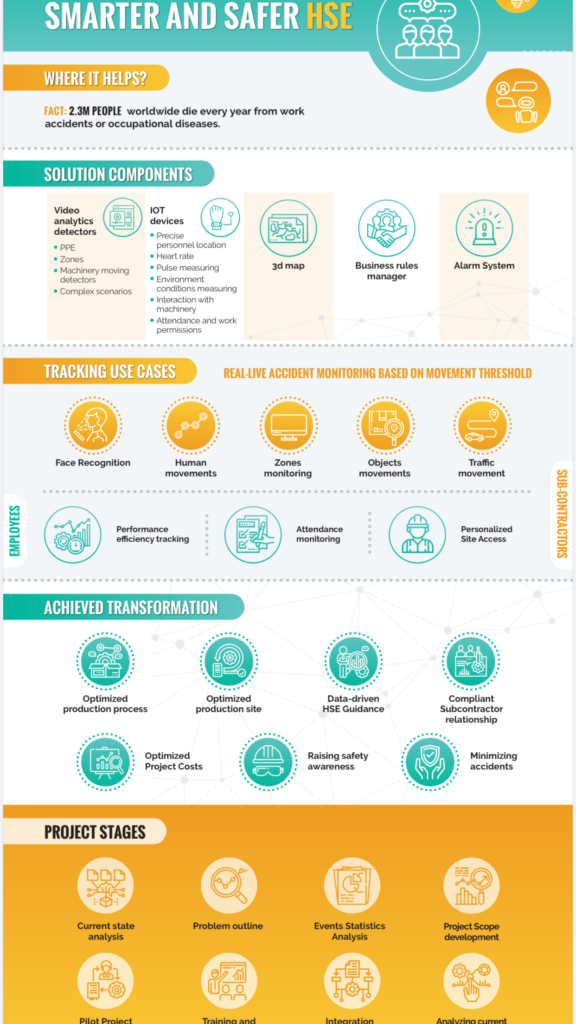
INFOGRAPHIC: DIGITAL WORKER FOR SMARTER AND SAFER HSE

Everyone at work is entitled to be provided with an environment where risks of health and safety are professionally controlled. Employers carry primary responsibility for safe and accident-free working sites. 

What are the key factors that have a direct impact on the number of accidents, people’s injuries, incurring unplanned costs and breaching projects’ timelines?

This list comprises but not limited to: 

  • Processes inefficiency 
  • Lack of visibility of specific areas in the processes and working sites 
  • Human factors
  • Inefficiency in security and safety guidelines
  • Employees performance 

NNTC’s Digital Worker is an IoT and video analytics-based platform that addresses these critical factors providing all required insights and allows to build a fully efficient, accident free industrial or construction site as well as eliminates breaches of projects’ scopes and timelines.

Here is why:

Learn how Digital Worker helps prevent workplace accidents and safety violations.

How Face Recognition System Puts Things Right on Construction Site and Helps Contractor Avoid Penalty 5

A mess on a construction site is quite a common thing and can be tolerated to some extent if it is an organized mess. However, when this mess creeps into core processes, a construction site turns into a hurrah’s nest, and a developer faces risk of large penalties, downtime, and even death toll. In this blog, we’ll tell you how CROC, our strategic partner, implemented a face recognition system on a construction site.

One fine, sunny day, when the site was buzzing with activity and dozens of workers were moving around cheerful and positive, a former workman penetrated the site. He passed through a checkpoint, greeted a guard who knew him well (but did not know that he had been fired already), entered the territory, and went to his friends. Half an hour later, a fire was burning, with the workers drinking tea, resting, and enjoying their lives.

The problem was that they made the fire near two gas cylinders, one of which suddenly exploded. Neither warning nor alert. Just exploded, and that’s it! Fortunately, people were just shocked, not injured, but a police came to the site the same day and initiated an inspection, which revealed some unpleasant facts for a contractor:

  • Many workers used forged documents. In other words, one family member obtained necessary documents, got hired at the construction site, and then his brother went for work instead of him.
  • For each worker using forged documents, a fine of $7,600 or even more may be imposed, and the construction process may be suspended for 14 – 90 days with almost catastrophic consequences for a general contractor and customer.

That is why the contractor asked CROC for help.

How to solve a problem?

Initially, the construction site was equipped with just run-of-the-mill employee recognition systems:

  • Palm vein identification, which performs poorly even in clean offices if people eat some greasy food there. After eating, this vein pattern changes causing recognition errors.
  • Iris identification, which is more expensive and time consuming. It is hardly the best option when every morning buses arrive at a construction site and some 600 workers have to pass the checkpoint within one hour, from 7 to 8 a.m. It’s as slow as a snail!

Therefore, it was the time to try video analytics.

Each turnstile is equipped with two cameras: one aimed at incoming people, and the other, at outgoing.

There is a small cooled server room on site, having a rack with two servers and a switch. The first server receives video stream from cameras and identifies frames containing faces and being of the best quality. The second server receives these “clear” frames with faces and runs a recognition algorithm to find a match in a database.

If a frame contains only one face and this person is authorized to pass through, then the turnstile opens. Otherwise, a guard is alerted.

No Internet connection is needed for the system, just a copper cabling on site. However, if connected, the system allows for continuous monitoring, email reports, and remote second line support for operators.

The system runs perfectly in typical situations:

  • Using a pass card of another person to enter — an alerted guard stops a trespasser and investigates the incident.
  • A former employee attempts to enter the site — a guard does not let him in.
  • An employee attempts to enter the site in wrong time — a guard asks the employee to get a pass card at an access control office and then come back to the checkpoint.

In addition, every evening, executives get a report on how many people were scheduled for work and how many arrived actually. It is very important since contractor’s favorite trick is to schedule 50 workers, provide only 30, and then report on 50.

Moreover, this information — like 600 people scheduled, only 450 arrived — shows if a project is running out of time already. And you see it right now, but not a week or month later.

Outcome

Morning queues have almost disappeared. Instead, it takes one hour for two turnstiles to let 700 people in, even including guard intervention cases. The customer enjoys reports on the actual number of people arrived at the construction site, which was a sad news for some of the contractors. Neither a $7,600 penalty nor work suspension for 14 – 90 days is pending now, with the system itself costing less than this penalty.

NNTC actively partners with CROC and implements face recognition solutions in GCC countries. If you are interested in this technology, feel free to contact our consultants.

INNOVATIVE MEDICAL KIOSK FOR THREE-MINUTE HEALTH CHECK

Any hazardous occupation calls for continuous health checks to make sure that manufacturing workers, bus drivers and pilots are medically fit to deal with their jobs, as well as nuclear operators are clean and sober before the shift. This job list can be continued.

Many plants make medical examinations a must for rank-and-file employees, too many for one physician to conduct but not so thorough as for pilots or nuclear operators. Such a health check includes measuring blood pressure, heart rate, temperature, blood oxygenation, and basic reflexes. Some local regulations prohibit robots from examining these health indicators, some do allow it, but still require a medical professional to approve the results. Thus, humans remain in change, but may enjoy great automation benefits.

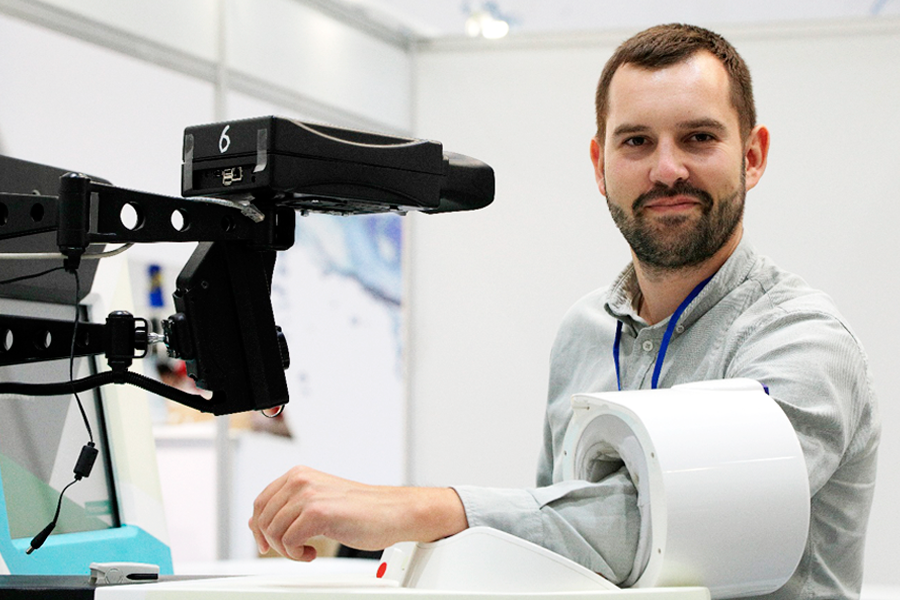
Medical kiosk is a comprehensive solution to measure all relevant indicators allowing workers to undergo every morning’s medical examination in just three minutes.

What is a medical kiosk? It is a Linux machine with a variety of medical sensors and the software to identify patients by a card, fingerprint, face or eye, run examinations, enter the results into a database, and even print them out. The database can either be inside the kiosk or stored in the company’s HR system or on another external server. 

Basic configuration consists of a case, vandal-proof touch screen (16 mm glass), printer, and camera for a doctor to supervise the examination or detect patient change after authentication. The default sensors measure heart rate, blood oxygenation by transillumination, blood pressure (a cuff), and alcohol intoxication. The advanced configuration provides additionally a pupillometer, touch-free thermometer, scales and any sensors of choice, like glucose meter or contact thermometer, etc.

Default sensors

The breathalyzer is a device consisting of an ethanol (or rather alcoholic fumes) sensor connected to the access control system. If a person is OK, the turnstile opens. If alcohol intoxication is detected, then security is notified and the turnstile remains closed.

Such kiosk at the entry turnstiles doesn’t substitute medical personnel but significantly reduces their workload and minimizes human factor impact on result accuracy.

Additional sensors

Thermal imaging cameras are not the news, so we decided to adapt them for touch-free thermometers that use the forehead to take a temperature. The point sensor is located right above a breathalyzer. Our test subject was savvy enough to quickly find a way of cheating the system by rubbing the forehead before examination, with the terminal immediately triggering an alarm and offering to call an ambulance, a quarantine control and neutralizing teams.

A pupillometer measures pupil response time: a flash – and the count begins. The response time helps determine nervous system condition, particularly nervous exaltation or slowness, which are usually caused by diseases, alcohol, drugs, medication, fatigue, sleepiness or mental disorders.

Summary

Full health check session takes three minutes (the more sensors, the longer it takes).

Doctors concur that the terminal can quickly identify hypertensive crisis with potential to develop into myocardial infarction or stroke, tachycardia (increased pulse rate) or bradycardia (decreased pulse rate), fever caused by acute infection, ARVI, influenza, and alcohol intoxication (a usual suspect for any plant).

Generally, this kiosk is a kind of a construction set that you can turn into a full-fledged and handy medical tool of choice. You can even choose the case.

Medical terminals are used for daily staff checks before shifts. The three-step employee identification process includes an individual USB key reading, photo recognition, and fingerprint scanning, while the comprehensive medical examination consists of blood pressure and heart rate measurement, and respiratory alcohol level testing.

The customer confirmed that daily pre-shift health checks via medical terminals help to reduce industrial injury and emergency risks, and improve staff behavior.